This article serves as a professional guide on What Is Slowloris Attack, one of the most interesting and dangerous techniques used in cyber security attacks against web servers. Cyber threats are evolving rapidly, and understanding these attacks helps website owners and developers protect their systems from potential damage.
A Slowloris attack is a type of denial-of-service (DoS) attack that targets web servers by keeping multiple connections open for a long time. Instead of flooding a server with huge traffic like traditional DDoS attacks, Slowloris attacks work slowly and silently by exhausting server resources.
Today, many websites rely on web servers like Apache, Nginx, and IIS, and poorly configured servers can become vulnerable to Slowloris attacks. Because the attack uses very little bandwidth, it is difficult to detect and can disrupt services even from a single attacker’s machine.
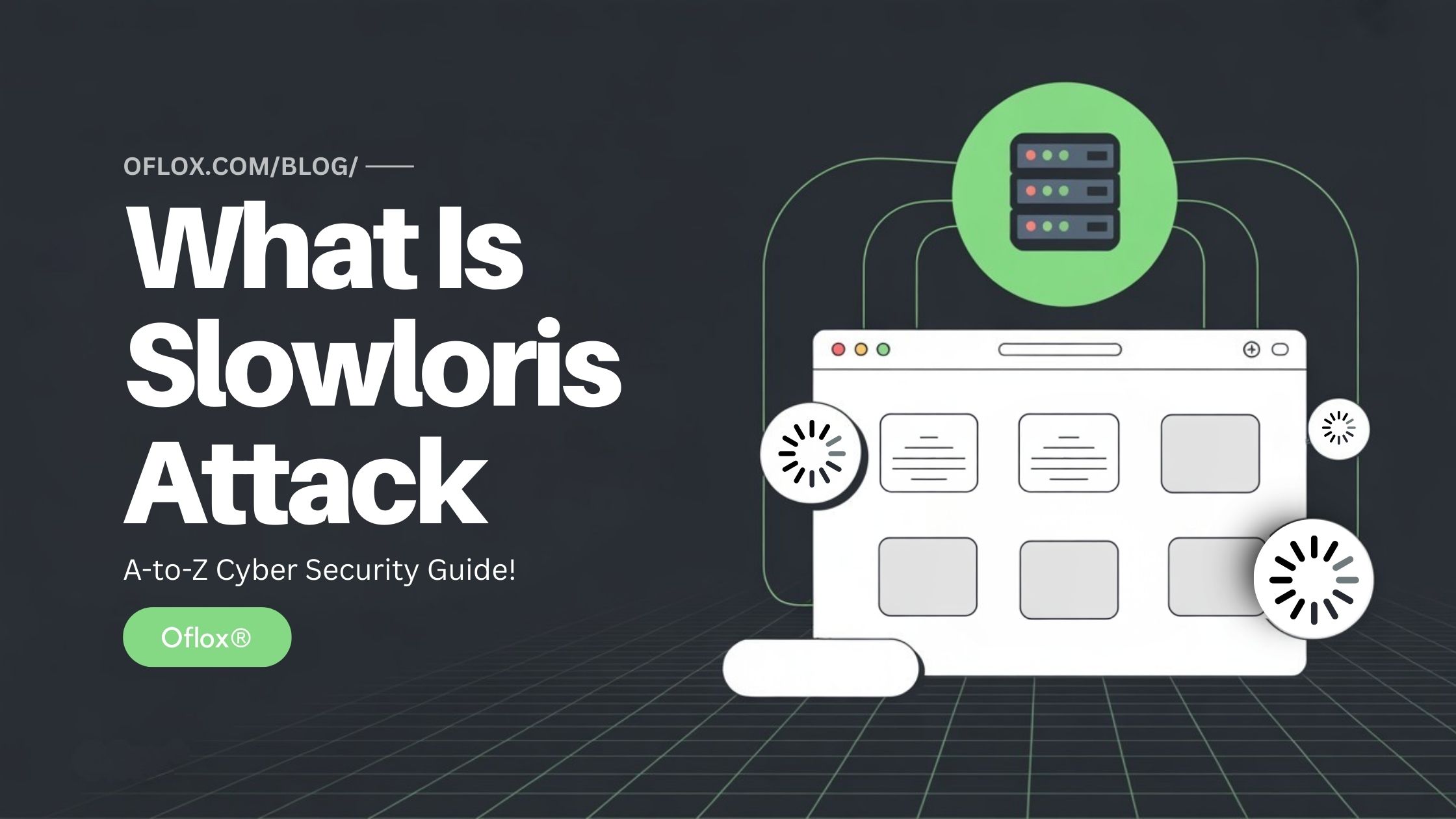
In this article, we will explore what a Slowloris attack is, how it works, real-world examples, prevention techniques, tools, and security best practices so that beginners can clearly understand this cyber security concept.
Let’s explore it together!
Table of Contents
What Is Slowloris Attack
A Slowloris attack is a type of application-layer denial-of-service (DoS) attack that targets web servers by keeping multiple HTTP connections open for as long as possible.
Instead of sending massive traffic, the attacker sends partial HTTP requests slowly and keeps the connection active. The server waits for the request to complete and keeps the connection reserved.
After enough connections are opened, the server’s connection pool becomes full, which means legitimate users cannot access the website.
Key characteristics of the Slowloris attack:
- Uses very low bandwidth
- Targets web server connection limits
- Hard to detect with traditional security tools
- Can be launched from a single computer
- Mainly targets Apache servers
Because the attack is slow and subtle, it is called Slowloris, inspired by the slow-moving animal called a loris.
History of Slowloris Attack
The Slowloris attack was introduced by a cyber security researcher named Robert “RSnake” Hansen in 2009.
He demonstrated how a single machine could bring down a large web server by opening many incomplete HTTP connections.
At the time, many web servers — especially Apache servers — were vulnerable because they allowed too many simultaneous connections.
The attack quickly gained attention in the cyber security community because it showed that:
- High bandwidth was not necessary to crash a server
- Even a small attacker could cause a big disruption
- Traditional DDoS protection systems might fail to detect it
Since then, many security updates and mitigation techniques have been introduced to protect servers from Slowloris attacks.
Why Slowloris Attack Is Dangerous
Slowloris attacks are considered dangerous because they can disable websites with minimal resources.
Unlike traditional attacks that rely on massive traffic, Slowloris works by exploiting server connection management.
Reasons why Slowloris attacks are dangerous:
- Low bandwidth requirement: Attackers do not need a powerful infrastructure to launch the attack.
- Hard to detect: Traffic appears normal because connections are legitimate HTTP requests.
- Silent attack: The attack happens slowly, making it difficult to detect quickly.
- Server resource exhaustion: The attack consumes connection slots instead of bandwidth.
- Single attacker capability: Even a single attacker can potentially disrupt services.
Because of these reasons, Slowloris attacks remain an important concept in cybersecurity training and server protection strategies.
How Slowloris Attack Works
To understand the Slowloris attack, it is important to understand how web servers handle connections.
When a user visits a website:
- The browser sends an HTTP request to the server.
- The server waits until the request is fully received.
- Then the server processes the request and returns the response.
During a Slowloris attack, the attacker exploits this process.
Instead of completing the request, the attacker:
- Opens many HTTP connections
- Sends incomplete headers
- Keeps sending small packets slowly
- Prevents the connection from closing
Because the server expects the request to finish, it keeps the connection open.
After thousands of connections are opened, the server cannot accept new connections from real users.
How Slowloris Attack Works (Step-by-Step)
Here is the step-by-step process of how a Slowloris attack works.
1. Target Selection
The first stage of a Slowloris attack is selecting a vulnerable web server. Attackers usually look for servers that are poorly configured or have weak connection management settings.
Many attackers perform basic reconnaissance before launching the attack. They may scan websites to identify which web server technology is being used and whether the server has strong security protections.
Common targets include:
- Apache web servers, especially older versions
- Poorly configured web servers with high connection limits
- Websites without request timeout settings
- Servers without Web Application Firewall protection
- Small websites hosted on shared servers
Servers that allow many simultaneous connections without strict time limits are particularly vulnerable. Attackers choose these systems because they can be easily overloaded using minimal traffic.
2. Opening Multiple Connections
Once the attacker identifies the target server, the next step is to open a large number of HTTP connections to the server.
Normally, when a user visits a website, their browser opens a connection, sends the request, receives the response, and then the connection closes. However, during a Slowloris attack, the attacker intentionally opens hundreds or thousands of connections simultaneously.
Each connection appears to the server as if it is coming from a normal user.
For example, the attacker may open:
- 500 connections
- 1,000 connections
- 5,000 connections
Because web servers have a limited number of connection slots, these connections begin to occupy server resources.
At this stage, the server still functions normally because it assumes these are legitimate client requests.
3. Sending Partial HTTP Requests
In a typical HTTP request, the browser sends complete headers to the server.
Example of a normal HTTP request:
GET / HTTP/1.1
Host: example.com
User-Agent: Browser
Connection: close
However, in a Slowloris attack, the attacker does not send the full request.
Instead, they send only partial HTTP headers.
Example:
GET / HTTP/1.1
Host: example.com
After sending these incomplete headers, the attacker stops sending data. The server waits for the rest of the request to arrive before processing it.
Because the request is incomplete, the server keeps the connection open.
If the attacker repeats this process thousands of times, the server ends up holding thousands of incomplete requests simultaneously.
4. Keeping Connections Alive
Normally, servers close inactive connections after a certain timeout period. However, Slowloris attackers bypass this protection by sending small packets periodically.
Instead of finishing the request, the attacker sends tiny additional headers at intervals.
Example:
X-a: 1
X-b: 2
These small packets reset the server’s timeout timer. As a result, the server believes the request is still active and continues waiting for completion.
This technique allows attackers to keep thousands of connections open indefinitely.
Because the packets are very small and sent slowly, the attack:
- consumes very little bandwidth
- appears like legitimate traffic
- becomes difficult for security systems to detect
5. Server Resources Get Exhausted
Web servers have a limited number of connection slots. For example, a server might allow only 500 or 1000 simultaneous connections.
When a Slowloris attack opens thousands of incomplete connections, these slots become occupied.
Eventually:
- The server connection pool becomes full
- The server cannot accept new requests
- Legitimate users cannot establish connections
At this stage, the server may begin experiencing:
- slow response times
- request failures
- system overload
The server is technically still running, but it becomes unable to serve real visitors.
6. Website Becomes Unreachable
In the final stage of the attack, legitimate users try to visit the website but cannot establish a connection because all server resources are already occupied.
Users may experience problems such as:
- extremely slow loading times
- connection timeout errors
- server unavailable messages
- complete website downtime
From the user’s perspective, the website appears down or broken, even though the server is technically still operational.
This is what makes the Slowloris attack particularly dangerous. The server is not overwhelmed by traffic, but by long-lasting incomplete connections that block real users.
Real-World Example of a Slowloris Attack
Imagine a small restaurant with 20 seats.
If 20 customers enter, the restaurant works normally.
But imagine 20 customers enter and sit at tables without ordering food.
They stay there for hours and do nothing.
Because all seats are occupied, new customers cannot enter.
This is exactly how a Slowloris attack works on web servers.
Connections are kept open but no real request is completed.
Difference Between Slowloris and DDoS Attack
Although Slowloris is related to denial-of-service attacks, it is different from typical DDoS attacks.
| Feature | Slowloris Attack | DDoS Attack |
|---|---|---|
| Traffic volume | Very low | Very high |
| Attack type | Application layer | Network layer |
| Required bandwidth | Low | Very high |
| Attack sources | Single attacker possible | Multiple bots |
| Detection difficulty | High | Moderate |
| Target | Web server connections | Entire network |
In simple words:
- Slowloris = slow connection attack
- DDoS = traffic flooding attack
Signs of a Slowloris Attack
Detecting Slowloris attacks early can help prevent service disruption.
Common signs include:
- Many open HTTP connections
- Unusually long connection durations
- Increased server response time
- Server resource exhaustion
- Website becoming slow or unreachable
- Many incomplete HTTP headers in logs
System administrators should monitor server logs regularly to detect such patterns.
How to Detect Slowloris Attack
Here are several effective methods used to detect Slowloris attacks.
1. Server Log Monitoring
One of the most reliable ways to detect a Slowloris attack is by analyzing server logs. Web servers such as Apache, Nginx, or IIS record detailed information about every connection request.
During a Slowloris attack, server logs may show a large number of incomplete or unusually long HTTP requests. Instead of normal request-response cycles, the logs may reveal that many connections remain open without being completed.
System administrators should look for warning signs such as:
- Many requests that never finish
- Repeated connections from the same IP address
- Unusually long connection durations
- Abnormal HTTP header behavior
By regularly reviewing logs, administrators can detect suspicious activity early and take preventive action before the server becomes overwhelmed.
2. Network Traffic Monitoring
Another important method for detecting Slowloris attacks is monitoring network traffic patterns.
Unlike high-volume DDoS attacks, Slowloris attacks generate very low bandwidth traffic. However, they create an unusually high number of long-lasting connections to the server.
Network monitoring tools can identify suspicious patterns such as:
- many open TCP connections from a single source
- connections that remain open for extended periods
- slow transmission of HTTP headers
- unusual request intervals
When administrators notice a large number of connections that remain active without being completed, it may indicate that a Slowloris attack is in progress.
3. Intrusion Detection Systems (IDS)
Intrusion Detection Systems (IDS) are specialized security tools designed to detect malicious behavior within a network.
Modern IDS tools analyze network activity and identify abnormal traffic patterns that may indicate an attack. When a Slowloris attack occurs, IDS systems may detect unusual behaviors such as:
- Repeated partial HTTP requests
- Abnormal connection persistence
- Suspicious request timing patterns
- Large numbers of simultaneous connections
Once detected, IDS systems can generate alerts for security teams so they can investigate and respond quickly.
4. Web Application Firewall (WAF) Alerts
A Web Application Firewall (WAF) provides an additional layer of protection for websites by filtering and monitoring HTTP traffic.
Advanced WAF solutions are capable of detecting slow HTTP attacks, including Slowloris. These systems analyze request behavior and identify traffic that appears suspicious or abnormal.
When a Slowloris attack is detected, the WAF may:
- block suspicious IP addresses
- limit connection rates
- terminate incomplete connections
- send alerts to administrators
Many modern security services such as Cloudflare, AWS Shield, and Sucuri include built-in protections against Slowloris-style attacks.
5. Connection Monitoring Tools
Another effective detection method involves monitoring the number of active server connections.
Web servers typically have a limited number of simultaneous connections they can handle. During a Slowloris attack, the number of open connections may suddenly increase and remain active for long periods.
Connection monitoring tools help administrators track metrics such as:
- total active connections
- connection duration
- incomplete requests
- abnormal connection spikes
If the number of long-lasting connections increases significantly, it may indicate a Slowloris attack attempting to exhaust server resources.
How to Prevent Slowloris Attack
Here are several effective methods to prevent Slowloris attacks.
1. Limit Maximum Connections
One of the most effective ways to protect a server is by limiting the number of connections a single client can open.
Web servers typically allow multiple simultaneous connections from each user. However, attackers exploit this feature by opening hundreds or thousands of connections from the same system.
By configuring the server to restrict connection limits, administrators can prevent attackers from exhausting server resources.
For example, servers can be configured to:
- Limit the number of requests per IP address
- Restrict simultaneous connections from one client
- Block clients that exceed the allowed limit
This ensures that even if an attacker attempts to open many connections, the server will automatically block or throttle the activity.
2. Configure Connection Timeout
Another important protection technique is setting short connection timeout limits.
Normally, servers wait for clients to finish sending their HTTP request before processing it. Slowloris attacks exploit this behavior by sending partial requests and keeping them open indefinitely.
By reducing the allowed timeout period, servers can automatically close incomplete connections that take too long.
For example, administrators can configure:
- header timeout limits
- request timeout settings
- idle connection timeout
This prevents attackers from keeping connections open for extended periods.
3. Use Reverse Proxy Servers
A reverse proxy server sits between users and the main web server and acts as an intermediary that filters incoming requests.
Reverse proxies such as Nginx, HAProxy, or Varnish help protect web servers by handling client connections before they reach the backend server.
These systems can:
- filter suspicious requests
- limit connection rates
- detect incomplete HTTP headers
- close malicious connections quickly
Because reverse proxies are optimized to handle large numbers of connections efficiently, they significantly reduce the risk of Slowloris attacks affecting the main server.
4. Enable Web Application Firewall (WAF)
A Web Application Firewall (WAF) is one of the most effective security tools for protecting websites from application-layer attacks.
WAF systems analyze incoming HTTP requests and detect suspicious traffic patterns. When a Slowloris attack is detected, the firewall can automatically block or filter malicious connections.
Key advantages of WAF protection include:
- real-time traffic inspection
- automatic blocking of suspicious IP addresses
- detection of abnormal request behavior
- protection against multiple web attacks
Many security providers such as Cloudflare, Sucuri, and AWS WAF offer advanced protection against Slowloris attacks.
5. Use Content Delivery Networks (CDN)
A Content Delivery Network (CDN) distributes website content across multiple global servers. Instead of connecting directly to the origin server, users connect to the CDN’s network.
This architecture provides strong protection against many cyber attacks, including Slowloris attacks.
CDN services help by:
- filtering malicious traffic
- distributing requests across multiple servers
- absorbing attack traffic
- providing DDoS protection
Popular CDN providers such as Cloudflare, Akamai, and Fastly include built-in protections that reduce the risk of Slowloris attacks affecting a website.
6. Use Load Balancing
Load balancers distribute incoming traffic across multiple servers instead of relying on a single system.
When a Slowloris attack attempts to overload connections, load balancers can redirect requests across several servers, preventing any single server from becoming overwhelmed.
Load balancing improves both performance and security.
Benefits include:
- better traffic distribution
- improved website reliability
- reduced risk of server overload
- faster response times
Large websites and enterprise platforms commonly use load balancing to protect against various cyber threats.
7. Update Server Software
Keeping server software updated and properly maintained is an essential security practice.
Older versions of web server software may contain vulnerabilities that make them more susceptible to Slowloris attacks. Developers regularly release updates that improve connection handling and introduce better security features.
Administrators should regularly:
- Update web server software
- apply security patches
- Update firewall systems
- Monitor vulnerability reports
Regular updates help ensure that servers remain protected against both known and emerging cyber threats.
5+ Best Tools to Protect Against Slowloris Attack
Here are some of the most effective tools used worldwide to protect servers from Slowloris attacks.
1. Cloudflare
Cloudflare is one of the most widely used security platforms for protecting websites from cyber attacks, including Slowloris attacks. It operates as a global Content Delivery Network (CDN) and security service that sits between visitors and the website server.
Because Cloudflare filters traffic before it reaches the origin server, it can detect suspicious patterns such as abnormal connection behavior and slow HTTP requests.
Key features of Cloudflare include:
- Advanced DDoS protection
- Global Content Delivery Network (CDN)
- Built-in Web Application Firewall (WAF)
- Real-time traffic filtering and monitoring
- Automatic blocking of malicious IP addresses
- Protection against application-layer attacks
By routing website traffic through Cloudflare’s network, website owners can significantly reduce the impact of Slowloris and other web-based attacks.
2. ModSecurity
ModSecurity is a powerful open-source Web Application Firewall (WAF) widely used to protect web servers from various types of attacks.
It works by analyzing incoming HTTP requests and applying security rules to detect suspicious behavior. When a potential attack is detected, ModSecurity can block or filter the request before it reaches the server.
This makes ModSecurity effective at identifying abnormal traffic patterns associated with Slowloris attacks.
Key features of ModSecurity include:
- Rule-based traffic filtering
- Real-time attack detection
- Protection against web application vulnerabilities
- Detailed request logging and monitoring
- Customizable security policies
- Integration with Apache, Nginx, and IIS servers
Many organizations use ModSecurity alongside other security solutions to create an additional layer of protection.
3. Nginx
Nginx is a high-performance web server and reverse proxy that is widely used for improving both website performance and security.
Unlike some traditional web servers, Nginx handles connections very efficiently and includes several built-in features that help prevent Slowloris attacks.
Administrators can configure Nginx to limit abusive behavior and terminate suspicious connections quickly.
Security features provided by Nginx include:
- Connection limits per client
- Request rate limiting
- Reverse proxy protection
- Efficient handling of concurrent connections
- Automatic closing of slow or incomplete requests
Because of its efficient connection handling, Nginx is often recommended as a front-end reverse proxy to protect backend web servers from slow request attacks.
4. Fail2Ban
Fail2Ban is a lightweight yet powerful security tool used to protect servers from malicious login attempts and suspicious network activity.
It works by continuously monitoring server logs for suspicious patterns. When repeated malicious activity is detected, Fail2Ban automatically blocks the offending IP address using firewall rules.
In the case of Slowloris attacks, Fail2Ban can detect unusual connection behavior and prevent attackers from continuing the attack.
Key features of Fail2Ban include:
- Automated IP blocking based on log analysis
- Integration with firewall systems
- customizable detection rules
- protection against brute-force and slow connection attacks
- lightweight and easy to configure
Fail2Ban is commonly used in Linux servers to add an additional layer of automated protection.
5. AWS Shield
AWS Shield is a managed security service provided by Amazon Web Services that protects cloud-based applications from DDoS and application-layer attacks.
It is designed to protect websites hosted on AWS infrastructure by automatically detecting and mitigating malicious traffic.
AWS Shield provides both basic and advanced protection levels, making it suitable for businesses of all sizes.
Key features of AWS Shield include:
- automatic DDoS detection and mitigation
- protection against application-layer attacks
- real-time traffic monitoring
- integration with AWS security services
- automatic scaling during attack traffic
When combined with other AWS services such as AWS WAF and CloudFront, AWS Shield offers strong protection against Slowloris and other advanced web attacks.
Pros & Cons of Slowloris Technique
Understanding both sides of a cyber attack helps security professionals prepare better defenses.
Pros
- Requires very low bandwidth
- Hard to detect
- Can work from a single machine
- Exploits server connection management
Cons
- Modern servers include mitigation techniques
- Security tools can detect abnormal patterns
- Connection limits reduce attack effectiveness
- WAF and CDN services block attacks
Cyber Security Best Practices for Servers
To protect servers from Slowloris and similar attacks, organizations should follow good security practices.
Important best practices:
- regularly update server software
- configure connection limits
- enable Web Application Firewall
- Monitor server logs continuously
- Use CDN protection services
- Implement rate limiting
- Deploy intrusion detection systems
These practices significantly improve server resilience against cyber attacks.
Future of Application Layer Attacks
Cyber attacks are constantly evolving.
Application-layer attacks like Slowloris are becoming more advanced because:
- They require fewer resources
- They are harder to detect
- They target application behavior instead of networks
Modern cybersecurity strategies focus on:
- behavioral detection
- AI-based traffic analysis
- advanced firewall technologies
- zero-trust architecture
As web technologies evolve, security solutions must also evolve to stay ahead of attackers.
FAQs:)
A. A Slowloris attack is a denial-of-service attack that keeps many HTTP connections open to exhaust server resources.
A. It is technically a DoS attack, but it can also be used as part of a DDoS campaign.
A. Servers with poor connection management, especially older Apache servers, can be vulnerable.
A. Yes. The attack targets the connection management system, not the encryption.
A. Prevention methods include connection timeouts, WAF protection, CDN usage, and rate limiting.
Conclusion:)
Slowloris attacks demonstrate that cyber threats do not always require massive traffic or powerful botnets. By simply keeping connections open and slowly sending incomplete requests, attackers can exhaust server resources and make websites unavailable to legitimate users.
Understanding how Slowloris attacks work helps developers, website owners, and cyber security professionals design stronger protection mechanisms. Proper server configuration, monitoring tools, firewalls, and CDN services can significantly reduce the risk of these attacks.
“Cyber security is not about stopping every attack — it is about building systems strong enough to survive them.” – Mr Rahman, CEO Oflox®
Read also:)
- What Is DDoS Attack in Cyber Security: A-to-Z Guide for Beginners!
- What is IP Spoofing in Cyber Security: A Step-by-Step Guide!
- What Is Brute Force Attack: A-to-Z Cyber Security Guide!
Have you ever learned about Slowloris attacks or other web server attacks before? Share your experience or ask your questions in the comments below — we’d love to hear from you!