This article provides a professional guide on What is the Difference Between Solopreneur and Entrepreneur. If you are planning to start your own business, understanding these two concepts is very important for making the right decision.
A solopreneur is someone who runs a business alone, while an entrepreneur builds and manages a business with a team. Both paths are powerful, but they serve different goals, lifestyles, and growth strategies.
In today’s digital world, many people are choosing between freelancing, solo businesses, startups, and large companies. That’s why knowing the difference between solopreneur vs entrepreneur can help you choose the best career path.
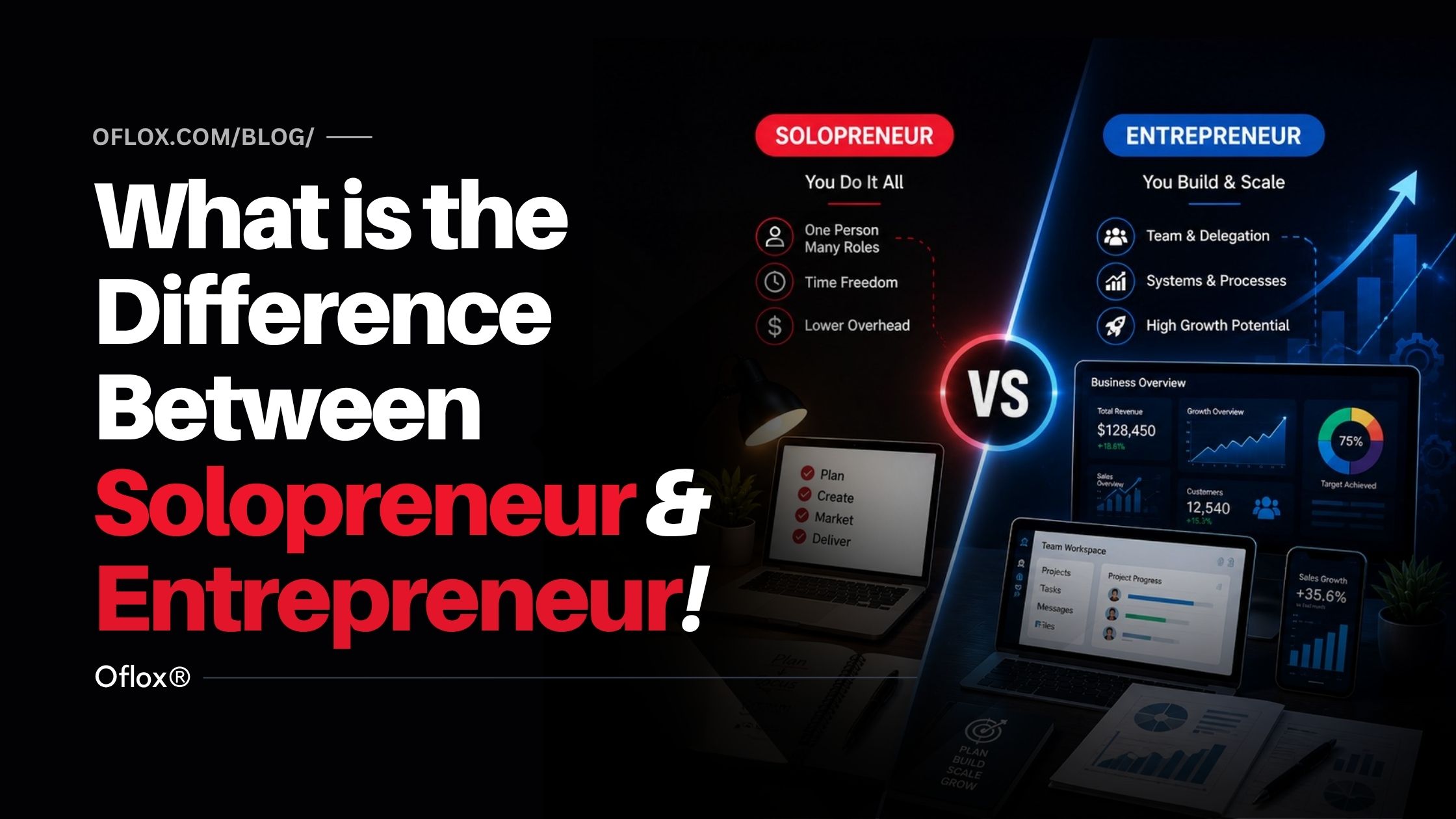
This article will explain everything in simple English with examples, comparisons, pros & cons, and step-by-step guidance.
Let’s explore it together!
Table of Contents
What is a Solopreneur?
A solopreneur is a person who starts and runs a business alone without hiring a team. They manage everything themselves—from marketing and sales to customer service and delivery.
Simple Definition:
A solopreneur is a one-person business owner who handles all operations independently.
Key Characteristics:
- Works alone
- No employees
- Low investment
- Full control over decisions
- Focus on freedom and flexibility
Real-Life Examples:
- Freelance graphic designer
- Blogger earning via ads
- YouTuber
- Digital marketer
- Online coach or consultant
Example:
A freelancer who builds websites and manages clients alone is a solopreneur.
What is an Entrepreneur?
An entrepreneur is a person who starts a business with the goal of growth and scalability. They build a team, delegate tasks, and focus on expanding the business.
Simple Definition:
An entrepreneur is a business owner who builds and manages a company with employees and systems.
Key Characteristics:
- Builds a team
- Focus on growth and scaling
- Delegates tasks
- Higher investment
- Manages operations and strategy
Real-Life Examples:
- Startup founders
- E-commerce business owners
- Tech company founders
- Restaurant owners with staff
Example:
A person who launches a startup, hires employees, and scales it into a company is an entrepreneur.
Solopreneur vs Entrepreneur (Quick Comparison)
| Feature | Solopreneur | Entrepreneur |
|---|---|---|
| Team | Works alone | Builds a team |
| Goal | Freedom & lifestyle | Growth & scaling |
| Investment | Low | High |
| Risk | Lower | Higher |
| Income | Limited | Unlimited potential |
| Control | Full control | Shared control |
| Workload | Everything alone | Delegates tasks |
| Growth | Limited | Scalable |
Key Differences Explained in Detail
Here are the most important differences that clearly separate a solopreneur from an entrepreneur in the real business world.
1. Work Style
A solopreneur handles everything alone. They are responsible for every task, including marketing, operations, and customer service.
On the other hand, an entrepreneur manages a team. They assign tasks to employees and focus more on decision-making and strategy.
2. Business Goal
The goal of a solopreneur is usually to earn income while maintaining freedom and flexibility.
An entrepreneur aims to build a large business, generate high revenue, and scale operations.
3. Investment and Risk
Solopreneurs usually start with low investment. They use their skills to generate income.
Entrepreneurs require higher investment because they hire staff, build infrastructure, and invest in growth.
4. Growth Potential
A solopreneur’s growth is limited because one person can only handle a certain amount of work.
An entrepreneur’s business can grow infinitely because they can expand their team and operations.
5. Decision Making
Solopreneurs make all decisions themselves, which gives them full control.
Entrepreneurs share decisions with partners, managers, or teams.
Pros & Cons of Solopreneur
Let’s explore the key benefits and drawbacks of being a solopreneur to better understand if this model fits your goals.
Pros
Cons
Pros & Cons of Entrepreneur
To choose the right path, you must clearly understand the pros and cons of entrepreneurship in the real business world.
Pros
Cons
Real-World Examples
Here are some real-world examples that highlight how solopreneurs and entrepreneurs build and grow their businesses.
1. Solopreneur Example
A digital marketer working independently, managing clients, and earning through freelancing platforms is a solopreneur.
Another example is a blogger who writes content and earns through ads and affiliate marketing.
2. Entrepreneur Example
A startup founder who launches a tech company, hires developers and marketers, and builds a team is an entrepreneur.
Another example is an e-commerce store owner who manages inventory, employees, and logistics.
Lesson:
Both solopreneur and entrepreneur paths can lead to success. The right choice depends on your goals and mindset.
Which One Should You Choose?
Choosing between solopreneur and entrepreneur depends on your personality, goals, and resources.
Choose Solopreneur if:
- You want freedom
- You prefer working alone
- You want low risk
- You have a skill-based business
Choose Entrepreneur if:
- You want to build a big company
- You want high income potential
- You can manage a team
- You are ready for risk
How to Start as a Solopreneur (Step-by-Step)
Starting as a solopreneur is one of the easiest ways to enter the business world with low investment and high flexibility. However, success depends on choosing the right strategy and building a strong foundation.
1. Identify Your Skill
The first step is to understand what you are good at. Your skill is your biggest asset as a solopreneur.
Ask yourself:
- What can I do better than others?
- What skills can people pay for?
- What do I enjoy doing daily?
Popular high-income skills:
- Content writing
- Graphic design
- SEO & digital marketing
- Web development
- Video editing
Tip: Start with one strong skill instead of trying to do everything.
2. Choose a Niche
Instead of targeting everyone, focus on a specific audience or industry.
Example:
- Instead of “Digital Marketing,” → Choose “SEO for Local Businesses.”
- Instead of “Design,” → Choose “Logo Design for Startups.”
Benefits of niche:
- Less competition
- Higher authority
- Better pricing power
Tip: The more specific your niche, the easier it is to get clients.
3. Build Online Presence
Your online presence is your digital identity. Clients will trust you only when they can see your work.
Must-have platforms:
- Personal website or portfolio
- LinkedIn profile
- Instagram (for creative fields)
- Freelancing profiles
What to include:
- Your services
- Past work (portfolio)
- Client testimonials
- Contact details
Tip: A simple website using WordPress can increase your credibility.
4. Get Clients
This is the most important step. Without clients, there is no business.
Ways to get clients:
- Freelancing platforms (Upwork, Fiverr)
- LinkedIn outreach
- Facebook groups
- Referrals from friends or clients
- Cold emailing
Simple strategy:
- Offer value first
- Build relationships
- Focus on solving problems
Tip: Your first 3–5 clients are the hardest—stay consistent.
5. Scale Slowly
Once you start earning, focus on improving and growing step-by-step.
Ways to scale:
- Increase your pricing
- Improve your skills
- Automate repetitive tasks
- Build a personal brand
Advanced scaling:
- Create digital products
- Offer premium services
- Build recurring income
Tip: Don’t rush growth—focus on quality and consistency.
How to Become an Entrepreneur (Step-by-Step)
Becoming an entrepreneur is about building a scalable business system, not just working alone. It requires vision, planning, and execution.
1. Find a Business Idea
Every successful business starts with solving a problem.
Ask yourself:
- What problem exists in the market?
- Can I provide a better solution?
- Is there demand for this idea?
Examples:
- Food delivery service
- Online education platform
- E-commerce store
Tip: Validate your idea before investing money.
2. Create a Business Plan
A business plan is your roadmap to success.
It should include:
- Business model
- Target audience
- Revenue strategy
- Marketing plan
- Budget & expenses
Why important?
- Helps in planning
- Attracts investors
- Reduces risk
Tip: Keep your plan simple but clear.
3. Build a Team
You cannot scale a business alone. You need the right people.
Key roles to hire:
- Marketing expert
- Sales executive
- Developer or operations manager
What to look for:
- Skills
- Experience
- Attitude
Tip: Hire slowly but carefully.
4. Raise Funding
To grow faster, you may need financial support.
Funding options:
- Personal savings (bootstrapping)
- Bank loans
- Angel investors
- Venture capital
Important:
- Don’t take unnecessary debt
- Use funds wisely
Tip: Start small, then raise funds when needed.
5. Scale Your Business
Scaling means growing your business beyond limits.
Ways to scale:
- Expand to new markets
- Launch new products
- Increase marketing
- Use automation
Focus areas:
- Systems & processes
- Team efficiency
- Customer experience
Tip: Build systems, not just a business.
Common Mistakes to Avoid
Avoiding common mistakes can save you time, money, and effort—here are the key errors you should be careful about.
| For Solopreneurs: | For Entrepreneurs: |
| Trying to do everything alone without tools | Hiring wrong people |
| Not charging properly | Poor financial planning |
| Ignoring marketing | Scaling too fast |
| Overworking without balance | Hiring the wrong people |
Future Trends (2026 & Beyond)
The business landscape is evolving rapidly—let’s explore the key trends that will shape solopreneurs and entrepreneurs in the coming years.
1. Rise of Solopreneurs
With the growth of AI tools and automation, more people are starting businesses alone.
Why this trend is growing:
- Low investment required
- Work from anywhere flexibility
- Easy access to global clients
- AI tools help manage multiple tasks
Example:
A single person can now handle content creation, marketing, and client work using AI tools.
2. Smart Entrepreneurs
Entrepreneurs are becoming smarter by using technology and data to grow faster.
Key changes:
- AI-based decision making
- Automation in business operations
- Data analytics for better marketing
Benefits:
- Faster growth
- Better customer targeting
- Higher efficiency
Insight:
Modern entrepreneurs focus on working smart with systems and technology, not just hard work.
3. Hybrid Model (Solopreneur → Entrepreneur)
A new trend is the hybrid model, where people start alone and later build a team.
How it works:
- Start as a solopreneur
- Earn and validate the idea
- Hire or outsource
- Scale into a business
Insight:
This is one of the safest and most practical ways to build a business today.
5+ Best Tools for Solopreneurs & Entrepreneurs
Using the right tools can save time, increase productivity, and help both solopreneurs and entrepreneurs manage their business more efficiently.
| For Solopreneurs: | For Entrepreneurs: |
| Canva (design) | Shopify (e-commerce) |
| Fiverr / Upwork (clients) | HubSpot (CRM) |
| WordPress (website) | Slack (team communication) |
| Notion (task management) | Zoho (business tools) |
| Grammarly (writing & editing) | QuickBooks (finance & accounting) |
| Google Drive (file storage & sharing) | Trello (project management) |
Pro Tip:
Use automation tools to save time and increase productivity.
FAQs:)
A. A solopreneur is a person who runs a business alone.
A. An entrepreneur is someone who builds and grows a business with a team.
A. It depends on your goals—freedom vs growth.
A. Yes, by hiring a team and scaling the business.
A. Yes, freelancing is a type of solopreneur business.
Conclusion:)
Solopreneur and entrepreneur are both powerful paths in the business world. A solopreneur focuses on independence and flexibility, while an entrepreneur focuses on building a scalable business with a team. The right choice depends on your vision, risk-taking ability, and long-term goals.
“Success is not about working alone or with a team — it’s about choosing the path that matches your vision.” – Mr Rahman, CEO Oflox®
Read also:)
- What is Grant in Startup: A-to-Z Guide for Beginners!
- What is Subscription Business Model: A-to-Z Guide for Beginners!
- What is Net Profit vs Gross Profit: A-to-Z Guide for Beginners!
Have you tried becoming a solopreneur or entrepreneur for your business? Share your experience or ask your questions in the comments below — we’d love to hear from you!