This article provides a professional guide on How to Start a One Person Company. Many people today want to start their own business without depending on partners or large teams. A One Person Company (OPC) is one of the best business structures for solo entrepreneurs in India.
A One Person Company allows a single person to run a legally registered company with limited liability protection. It combines the advantages of a private limited company with the simplicity of a sole proprietorship.
Whether you are a freelancer, digital marketer, blogger, developer, consultant, designer, trader, or startup founder, OPC can help you build a professional business identity with better credibility and legal protection.
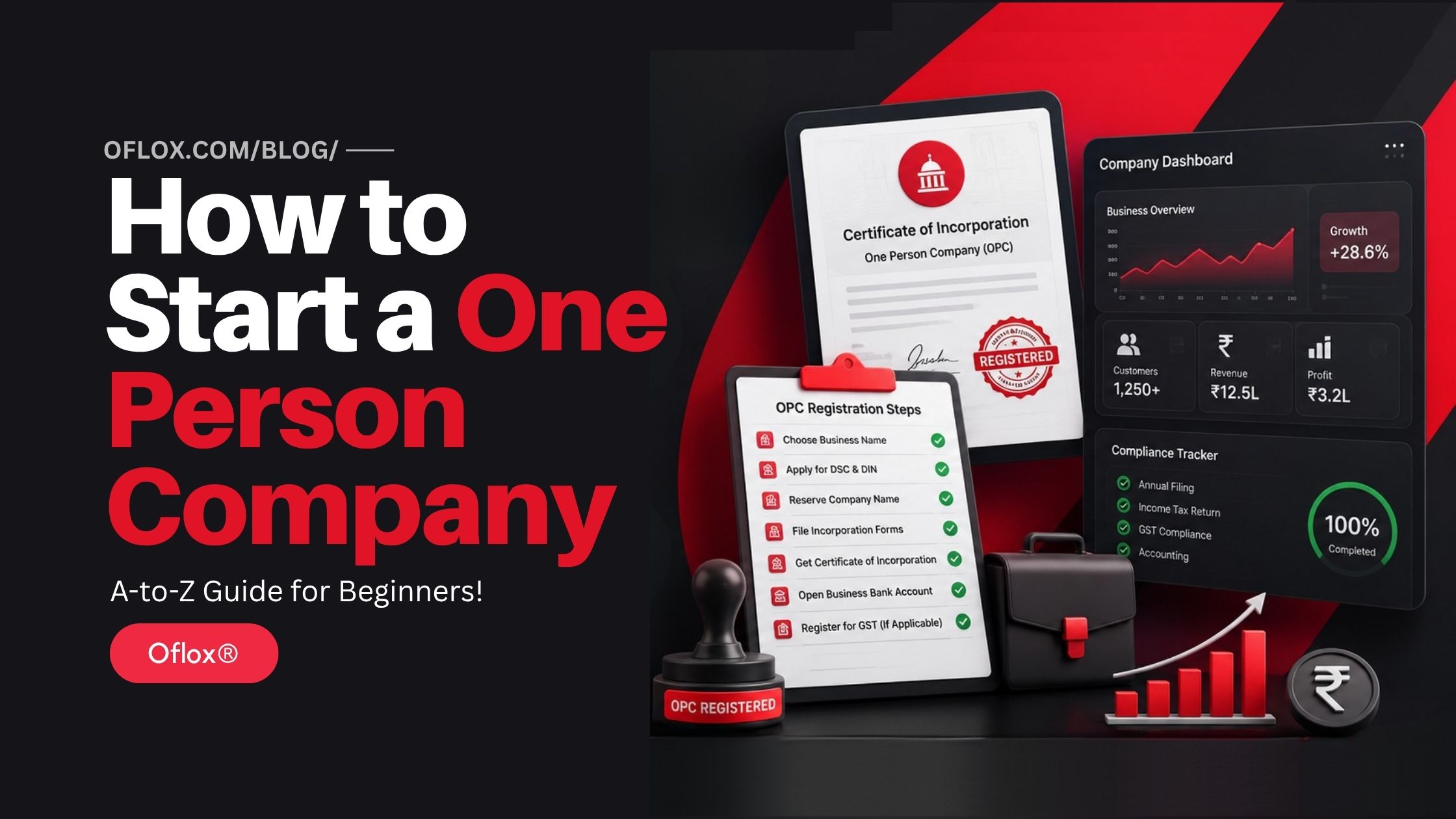
In this detailed guide, you will learn everything about OPC registration, documents, eligibility, benefits, taxation, compliance, practical tips, mistakes to avoid, and future business trends in India for 2026 and beyond.
Let’s explore it together!
Table of Contents
What is a One Person Company?
A One Person Company (OPC) is a type of company that can be started and operated by a single individual.
It was introduced under the Indian Companies Act, 2013 to encourage solo entrepreneurs and small business owners.
In an OPC:
- Only one owner is required
- The owner gets limited liability protection
- The company becomes a separate legal entity
- The business gets better credibility
Unlike a sole proprietorship, an OPC protects the personal assets of the owner in most business situations.
History of OPC in India
The concept of One Person Company was introduced by the Government of India through the Companies Act, 2013.
Before OPC existed:
- Single entrepreneurs mainly used sole proprietorship
- Many small businesses stayed unregistered
- Limited liability benefits were unavailable to solo founders
The Government introduced OPC to:
- Promote entrepreneurship
- Support startups
- Encourage formal business registration
- Simplify company formation
Today, thousands of freelancers, consultants, agencies, and online businesses use OPC structures across India.
Why OPC is Important
A One Person Company provides legal security, professional branding, and growth opportunities for solo business owners.
- Legal Protection: An OPC protects personal assets from business liabilities.
- Professional Image: Registered companies appear more trustworthy to clients and investors.
- Easier Business Growth: OPCs can scale more professionally compared to informal businesses.
- Better Banking Opportunities: Banks and payment gateways prefer registered companies.
- Startup-Friendly Structure: Perfect for solo founders and online businesses.
Features of One Person Company
The features of a One Person Company help individuals run a professional business with limited liability benefits.
- Single Owner: Only one shareholder is required.
- Separate Legal Entity: The company is treated separately from the owner.
- Limited Liability: Personal assets remain protected.
- Perpetual Succession: The company continues even after ownership transfer.
- Nominee Requirement: A nominee must be appointed during registration.
- Better Business Credibility: Helps build trust among customers and clients.
Benefits of Starting an OPC
The benefits of starting an OPC make it a popular choice for freelancers, consultants, and startup founders in India.
1. Limited Liability Protection
This is one of the biggest advantages.
If the company faces losses or debts, the owner’s personal assets usually remain protected.
2. Complete Control
The founder controls:
- Decision-making
- Operations
- Profits
- Branding
- Strategies
No partner conflicts occur.
3. Better Brand Trust
Clients often trust registered companies more than individuals.
Example:
A digital marketing client may prefer hiring:
- “ABC Digital OPC Pvt Ltd”
instead of - “Rahul Freelancer”
4. Easy Fund Management
Maintaining separate business bank accounts enhances financial management.
5. Tax and Compliance Advantages
Some tax planning benefits become easier under company structures.
6. Easy Business Expansion
You can later convert OPC into:
- Private Limited Company
- LLP
- Larger corporate structure
7. Continuous Business Existence
The business continues even if ownership changes.
Challenges of Starting an OPC
Although OPC offers many advantages, it also comes with certain challenges that business owners should understand before registration.
- Higher Compliance: Compared to sole proprietorships, OPC requires ROC filings, Accounting, Annual returns, & Compliance maintenance.
- Limited Fundraising: Investors usually prefer Private Limited Companies.
- Tax Complexity: Corporate taxation may be more complex for beginners.
- Penalties for Non-Compliance: Missing deadlines can cause penalties.
Eligibility Criteria for OPC
To register an OPC in India:
| Requirement | Details |
|---|---|
| Citizenship | Must be Indian citizen |
| Residency | Must be resident of India |
| Directors | Minimum 1 |
| Shareholder | Only 1 |
| Nominee | Mandatory |
| Age | 18+ years |
Documents Required for OPC Registration
The documents required for OPC registration help the government verify the owner, business address, and legal business details.
| Personal Documents: | Address Proof: | Office Address Proof: |
| PAN Card | Bank statement | Rent agreement |
| Aadhaar Card | Electricity bill | Utility bill |
| Passport-size photo | Passport | NOC from owner |
| Mobile number | Voter ID | |
| Email ID |
How to Start a One Person Company in India
Starting a One Person Company in India involves several important steps, from selecting a business name to completing legal registration and compliance.
1. Choose Business Name
Choose a unique business name.
Tips:
- Keep it short
- Easy to remember
- Brandable
- Domain availability check
- Trademark check
Example:
- Sample OPC Pvt Ltd
- DigitalNest OPC Pvt Ltd
2. Apply for DSC
DSC stands for Digital Signature Certificate.
It is required for:
- Online filings
- MCA submissions
- Legal documents
3. Apply for DIN
DIN means Director Identification Number.
Required for company directors.
4. Reserve Company Name
Use the MCA portal for name reservation.
Important Tips:
- Avoid trademark conflicts
- Avoid copied names
- Keep business relevance
5. Prepare MOA & AOA
MOA (Memorandum of Association)
Defines company objectives.
AOA (Articles of Association)
Defines internal company rules.
6. File Incorporation Forms
Submit registration forms on the MCA portal.
Required forms include:
- SPICe+
- AGILE-PRO
- e-MOA
- e-AOA
7. Get Certificate of Incorporation
After approval:
- CIN number issued
- PAN & TAN generated
- Company legally registered
8. Open Business Bank Account
Use:
- PAN
- Incorporation certificate
- KYC documents
9. Register for GST (If Needed)
GST registration becomes important if:
- Turnover exceeds limits
- Interstate selling
- E-commerce business
10. Start Business Operations
Now you can:
- Create invoices
- Hire employees
- Accept payments
- Build brand identity
OPC Registration Cost in India
| Expense | Estimated Cost |
|---|---|
| DSC | ₹1000–₹2000 |
| Government Fees | ₹2000–₹5000 |
| Professional Fees | ₹5000–₹15000 |
| GST Registration | Optional |
| Compliance Costs | Annual |
Total estimated cost:
₹7000–₹25000 depending on professional support.
OPC vs Sole Proprietorship vs Pvt Ltd
| Feature | OPC | Sole Proprietorship | Pvt Ltd |
|---|---|---|---|
| Owners | 1 | 1 | 2+ |
| Liability | Limited | Unlimited | Limited |
| Legal Entity | Separate | No | Separate |
| Funding | Moderate | Low | High |
| Compliance | Medium | Low | High |
| Trust Level | High | Medium | Very High |
Taxation of OPC Company
OPCs are taxed similarly to private limited companies.
1. Important Taxes
- Corporate tax
- GST
- TDS
- Professional tax (state-based)
2. Tax Planning Tips
- Maintain proper records
- Separate personal and business expenses
- Use accounting software
- File returns on time
Compliance Requirements for OPC
Proper compliance management helps OPC owners avoid fines, legal issues, and business interruptions.
1. Annual Filings
Mandatory filings include:
- Annual return
- Financial statements
- Income tax return
2. Accounting Requirements
Maintain:
- Balance sheet
- Profit & Loss Account
- Expense records
3. Auditor Appointment
Auditors may be required depending on conditions.
Best Businesses for OPC
Choosing the right business type for an OPC can help entrepreneurs grow faster and manage operations more professionally.
- Digital Marketing Agency: Perfect for solo marketers.
- Blogging Business: Professional structure for bloggers and publishers.
- IT Services: Software development companies commonly use OPC.
- Consulting Services: Legal, SEO, finance, and business consultants use OPC.
- E-commerce Business: Online sellers can build brand credibility.
- AI & SaaS Startups: Many AI founders start alone initially.
Real-World Examples of OPC Usage
Real-world examples of OPC usage help entrepreneurs understand how solo business owners successfully use this business structure.
1. Freelancer to Agency
A freelancer starts as an individual.
After gaining clients:
- Registers OPC
- Opens a company account
- Builds team gradually
2. Blogger to Media Company
A blogger creates:
- Website
- Affiliate business
- Courses
- Sponsorship deals
An OPC structure improves professionalism.
3. Developer Startup
A solo developer launches:
- SaaS product
- Mobile app
- AI tool
Later converts OPC into Pvt Ltd after growth.
5+ Best Tools for OPC Company Owners
Many successful One Person Companies use smart digital tools to manage their business operations smoothly and professionally.
1. Zoho Books
Zoho Books is one of the best accounting and invoicing tools for OPC owners in India. It helps businesses manage:
- Invoices
- GST billing
- Expense tracking
- Financial reports
- Bank reconciliation
It is beginner-friendly and useful for freelancers, agencies, consultants, and startups.
Best for: Small businesses and startups
2. Tally Solutions
Tally is one of the most popular accounting software platforms in India. Many OPC businesses use it for:
- Accounting
- GST management
- Payroll
- Tax filing
- Inventory management
It is widely trusted by Indian businesses and accountants.
Best for: Accounting and tax management
3. Canva
Canva helps OPC owners create professional branding materials without graphic design experience.
You can design:
- Logos
- Social media posts
- Presentations
- Business cards
- Marketing banners
- Website graphics
It saves time and reduces design costs for startups.
Best for: Branding and marketing design
4. Google Workspace
Google Workspace provides professional business communication and collaboration tools.
Features include:
- Professional email
- Google Meet
- Google Docs
- Google Drive
- Shared calendars
- Team collaboration
It helps OPC businesses appear more professional and organized.
Best for: Business communication and productivity
5. Razorpay
Razorpay is a trusted Indian payment gateway used by many startups and online businesses.
It supports:
- UPI payments
- Credit cards
- Debit cards
- Subscription billing
- Payment links
- Online checkout systems
It is useful for e-commerce stores, freelancers, SaaS businesses, and agencies.
Best for: Online payment collection
6. Hostinger
Hostinger is an affordable and beginner-friendly web hosting platform.
It offers:
- Fast website hosting
- Free SSL
- WordPress hosting
- Business email
- Domain services
- Website builder tools
A professional website is important for OPC businesses to build trust and attract customers online.
Best for: Website hosting and online presence
Benefits of Starting an OPC
| Benefit | Explanation |
|---|---|
| Professional Identity | Builds trust |
| Legal Safety | Limited liability |
| Brand Growth | Easier scaling |
| Better Banking | Professional accounts |
| Easier Contracts | Business credibility |
| Long-Term Expansion | Can convert later |
Common Mistakes Beginners Make
Learning about common mistakes early can save OPC owners time, money, and unnecessary legal complications.
- Choosing Wrong Business Structure: Some businesses may need LLP or Pvt Ltd instead.
- Ignoring Compliance: Missing annual filings causes penalties.
- Mixing Personal & Business Money: Always maintain separate accounts.
- Poor Branding: Weak business branding affects trust.
- No Financial Planning: Cash flow problems destroy many startups.
- Ignoring Tax Rules: Late tax filings create legal problems.
Expert Tips for Starting a Successful OPC
Learning expert tips for OPC management can help solo entrepreneurs build a stable and scalable company.
- Start Small but Professional: Even small businesses should appear professional.
- Build Digital Presence Early: Create a Website, Social profiles, Business email, & Google Business profile.
- Focus on Branding: Strong branding improves credibility.
- Automate Business Operations: Use tools for Billing, CRM, Marketing, & Accounting.
- Maintain Compliance Properly: Hire professionals if needed.
- Protect Your Brand: Register Trademark, Domain name, & Social handles.
Future Trends of OPC in 2026 & Beyond
The future of OPC in India looks promising as more entrepreneurs, freelancers, and digital businesses move toward professional company structures.
- AI-Based Businesses Rising: Solo AI founders are increasing rapidly.
- Remote Businesses Growing: Online-first companies are becoming normal.
- Digital Compliance Simplification: Government systems are becoming easier online.
- More Freelancers Becoming Companies: Creators and freelancers are formalizing businesses.
- SaaS & Automation Growth: Single founders can now run scalable businesses using AI tools.
FAQs:)
A. Yes, OPC is excellent for beginners who want legal protection and professional business identity.
A. Yes, through the One Person Company structure.
A. GST depends on turnover and business type.
A. Yes, OPC can hire employees legally.
A. Currently, no minimum paid-up capital requirement exists.
A. Yes, it can later become a private limited company.
A. Yes, freelancers often use OPC for professionalism and legal safety.
A. Usually around 7–15 working days.
A. Generally, Indian residency requirements apply.
A. For legal protection and credibility, OPC is usually better.
Conclusion:)
Starting a One Person Company is one of the smartest ways for solo entrepreneurs to build a professional and legally protected business in India. Whether you are a freelancer, consultant, blogger, marketer, developer, or startup founder, OPC gives you better credibility, limited liability, and long-term growth opportunities. With the rise of AI businesses, remote work, and digital startups, OPC structures are becoming more popular than ever in 2026 and beyond.
“One small business idea can become a powerful company when backed by legal structure, branding, and consistency.” – Mr Rahman, CEO Oflox®
Read also:)
- What is Startup Valuation: A-to-Z Guide for Beginners!
- How to Raise Funds for Startup Business in India (A-to-Z Guide!)
- 5+ Best AI Digital Marketing Agencies: A-to-Z Guide for Beginners!
Have you tried starting your own One Person Company for your business idea? Share your experience or ask your questions in the comments below — we’d love to hear from you!