This article offers a professional guide on 5+ Best Random Business Name Generators and how they help entrepreneurs, startups, freelancers, and creators instantly discover unique business name ideas. Choosing the right business name is one of the most important steps when starting any venture, but it is also one of the most confusing.
A business name is not just a word—it represents your brand identity, trust, memorability, and long-term growth. Many founders struggle with creative blocks, domain availability issues, or naming something that sounds too common or copied. This is where random business name generators become extremely useful.
In this guide, we will explain what a random business name generator is, how it works, why it is helpful, and which tools are the best in 2026. You will also see real examples, tips, mistakes to avoid, and FAQs to help you choose the perfect business name.
Let’s explore it together!
Table of Contents
What Is a Random Business Name Generator?
A random business name generator is an online tool that automatically creates business name ideas using algorithms, keywords, industry filters, or AI logic. These tools generate unique, brand-ready names within seconds.
Unlike manual brainstorming, random name generators remove creative pressure and give you hundreds of naming options instantly. Some tools focus on creativity, while others prioritize brandability, domain availability, or startup-friendly names.
Who Should Use It?
- Startup founders
- Small business owners
- Freelancers & agencies
- Ecommerce sellers
- SaaS & tech entrepreneurs
- Content creators & influencers
Why Use a Random Business Name Generator?
Using a random business name generator provides multiple advantages:
- Saves time: Get hundreds of ideas in seconds
- Boosts creativity: Overcomes naming blocks
- Brand inspiration: Unique and modern naming styles
- Beginner-friendly: No branding experience required
- Free access: Most tools are completely free
For first-time founders, these tools act like a virtual branding assistant.
How Does a Random Business Name Generator Work?
Most business name generators follow a simple process:
- You enter keywords related to your business
- The tool analyzes naming patterns and word combinations
- It applies algorithms or AI logic
- Names are generated randomly or creatively
- Optional filters (industry, style, and domain availability) are applied
Some advanced tools also check:
- Domain availability
- Brand uniqueness
- Pronunciation ease
5+ Best Random Business Name Generators
Below are the 5+ best random business name generators, carefully selected based on ease of use, creativity, domain availability, and suitability for startups, freelancers, and growing businesses.
1. Design.com Business Name Generator
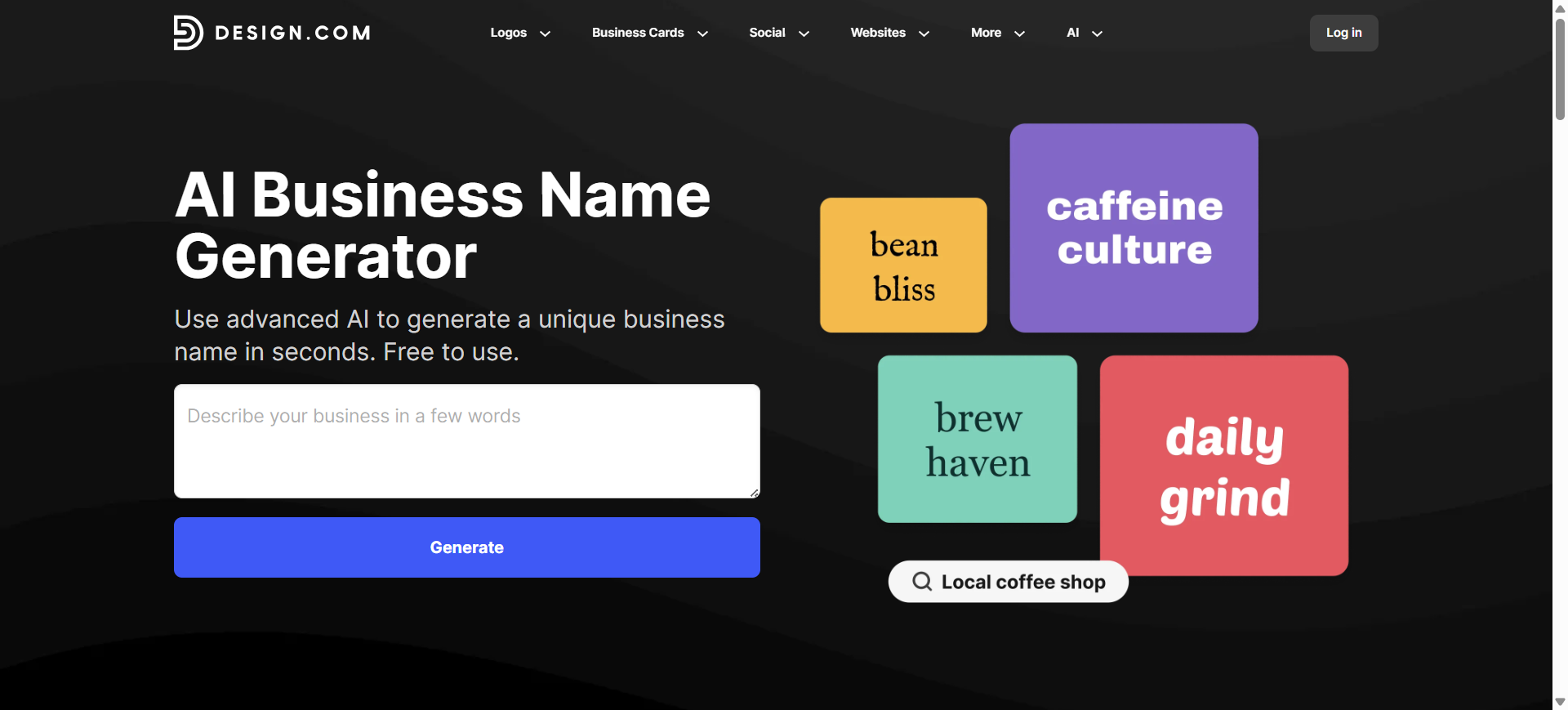
Design.com’s business name tool (plus their AI business name generator) are perfect for small businesses and startups looking to not just to start a business but build a lasting brand. The tool provides name ideas that aren’t just random, but unique, catchy, and 100% tailored to your keyword and industry.
Top Features:
- Fast name generation
- Names are tailored to keywords and industry
- Option to filter via style and length
- Option to get matching brand assets such as logos or websites based on your name
- Over 1M+ designs for other marketing assets
Pros
- Brandable and tailored names
- Get matching brand assets
- Simple and easy to use
Cons
- Results will depend on your keyword or prompt
- Web-based only, no native app
Verdict: Great for small businesses, startups, and solopreneurs looking to build a brand.
2. BrandCrowd Business Name Generator
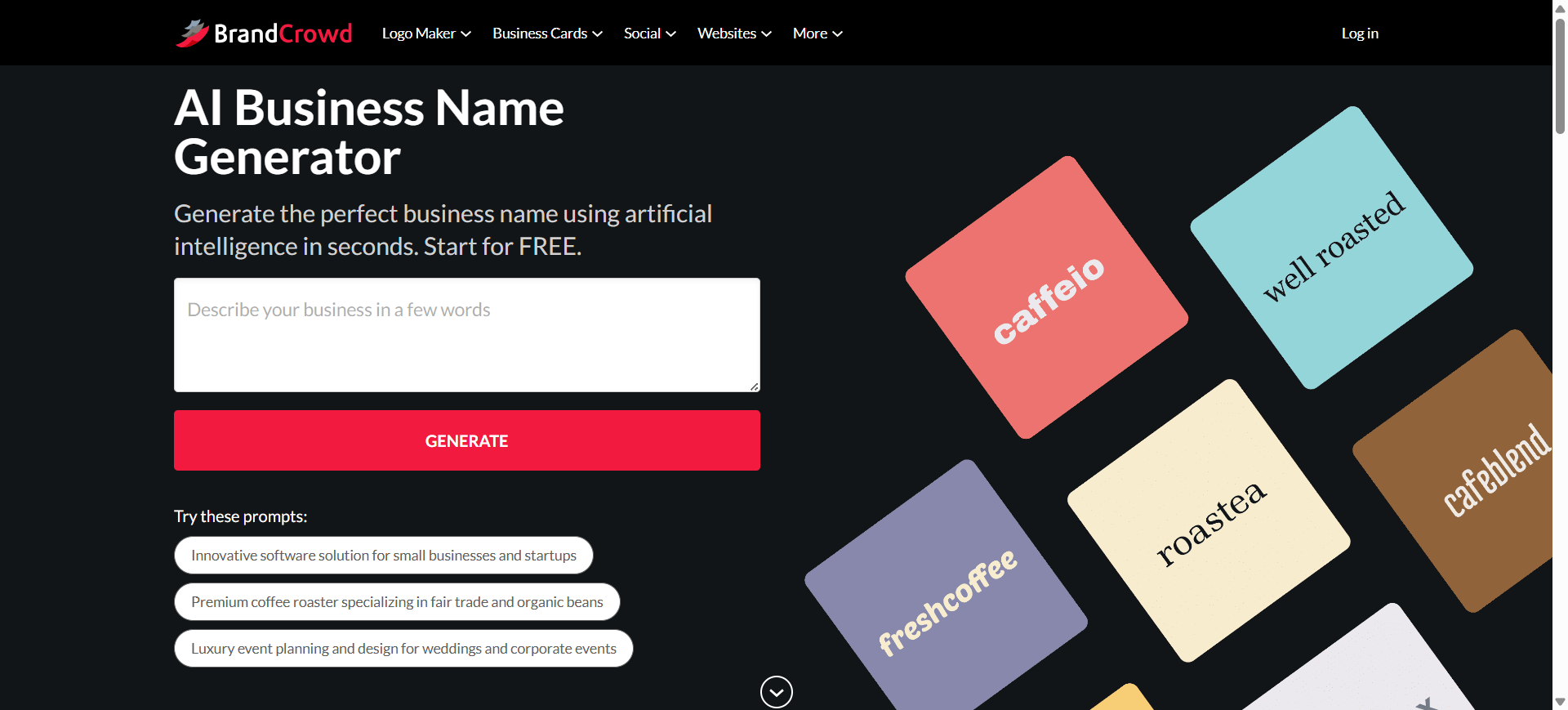
BrandCrowd’s business name maker gives you logo ideas alongside their wide range of name ideas. It’s a great way to visualize how the name will work as an actual brand, rather than just one piece of a puzzle.
Top Features:
- Matching logos based on the name
- Option to customize the logo suggestion
- Easy to refine and regenerate the name ideas
- Fast and easy to use
Pros
- Very easy to use
- Matching logos alongside the names
Cons
- Premium logos are locked behind paid plans
Verdict: Best for entrepreneurs who want to see how the name would work as a brand, and not just a simple name idea
3. Shopify Business Name Generator (Best for E-commerce)
Shopify’s business name generator is one of the most popular tools for e-commerce entrepreneurs. It generates simple, brand-friendly names and checks domain availability instantly.
Top Features:
- Keyword-based name generation
- Instant domain availability check
- Ecommerce-focused names
- 100% free to use
- Beginner-friendly interface
Pros
- Extremely easy to use
- Trusted by millions
- No signup required
Cons
- Limited creativity
- Not ideal for non-ecommerce brands
Verdict: Best for online stores and dropshipping businesses looking for fast, domain-ready names.
4. Namelix Random Name Generator
Namelix uses AI to generate short, modern, and brandable business names. It learns from your preferences and improves suggestions over time.
Top Features:
- AI-powered name generation
- Style & length filters
- Logo suggestions included
- Domain availability checks
- Startup-focused branding
Pros
- Highly creative names
- Smart AI logic
- Great for tech startups
Cons
- Some premium features locked
- Limited free logo exports
Verdict: Ideal for startups and SaaS founders who want modern, AI-generated brand names.
5. Oberlo Business Name Generator
Oberlo’s tool is extremely simple and focuses on generating clean, usable business names quickly.
Top Features:
- Instant random name generation
- Free and fast
- Domain availability checking
- No login required
Pros
- Beginner-friendly
- Quick results
- No distractions
Cons
- Basic naming logic
- Limited customization
Verdict: Perfect for beginners who want quick business name ideas without complexity.
6. Looka Business Name Generator
Looka focuses on brand identity. It not only generates business names but also suggests logos and visual branding.
Top Features:
- AI-based brand naming
- Logo preview integration
- Industry-specific suggestions
- Domain availability
Pros
- Strong branding focus
- High-quality name ideas
- Professional feel
Cons
- Paid branding services
- Limited free downloads
Verdict: Best for founders who want business names with branding and logo ideas.
7. Zyro Business Name Generator
Zyro offers a lightweight AI-powered business name generator suitable for small businesses and personal brands.
Top Features:
- AI-assisted random naming
- Clean UI
- Domain availability check
- Free to use
Pros
- Simple interface
- Fast results
- Good for local businesses
Cons
- Limited advanced features
- Less creative output
Verdict: Great for small businesses and freelancers who want simple brand names.
8. BrandBucket Business Name Generator
BrandBucket is a well-known platform that focuses on high-quality, brandable, and premium business names. Unlike basic random generators, BrandBucket curates unique names that sound professional, global, and investor-ready.
Top Features:
- Handpicked brandable business names
- Premium startup-style naming ideas
- Domain included with names
- Industry-based name discovery
- Ideal for global brands & startups
Pros
- Very high-quality and unique names
- Perfect for serious startups
- Strong brand credibility
Cons
- Most names are paid
- Not ideal for low-budget founders
Verdict: BrandBucket is best for entrepreneurs who want premium, investment-ready business names and are willing to pay for strong brand value.
Quick Comparison Table!
Below is a quick overview of the best random business name generator tools to help you choose faster.
| Tool Name | Free | AI-Based | Domain Check | Best For |
|---|---|---|---|---|
| Shopify Name Generator | Yes | No | Yes | Ecommerce |
| Namelix | Yes | Yes | Yes | Startups |
| Oberlo Name Generator | Yes | No | Yes | Online Stores |
| Looka | Yes | Yes | Yes | Brand-focused names |
| Zyro Name Generator | Yes | AI-Lite | Yes | Small businesses |
| BrandBucket | Yes | No | No | Small businesses |
Random Business Name Generator vs AI Business Name Generator
| Feature | Random Generator | AI Generator |
|---|---|---|
| Logic | Algorithm-based | AI-based |
| Creativity | Medium | High |
| Personalization | Low | Advanced |
| Brand Learning | No | Yes |
Random Business Name Examples (By Category)
Here are some random business name examples by category, generated using popular naming patterns commonly recommended by modern business name generators.
1. Tech Startup Names
- Nexvora
- Cloudifyx
- Bitlance
2. E-commerce Brand Names
- Shopora
- BuyNest
- Cartiva
3. Marketing Agency Names
- BrandPilot
- GrowthHive
- ClickNova
4. Personal Brand Names
- RahmanWorks
- BuildWithArif
- DigitalRahul
5+ Tips to Choose the Best Business Name
Choosing a business name is not just about sounding good — it directly impacts branding, trust, marketing, SEO, and long-term growth. Here are the most important tips explained in detail.
1. Keep It Short and Simple
A good business name should be easy to remember, easy to type, and easy to share.
- Short names are easier to recall
- Customers can remember them without effort
- They look better on logos, apps, and social media
- They reduce spelling mistakes
Bad example:
SuperAdvancedDigitalMarketingSolutions
Good example:
GrowthHive, Brandify, Nexora and Oflox
Note: Aim for 1–3 words, ideally 6–12 characters.
2. Ensure Easy Pronunciation
If people cannot pronounce your business name easily, they will hesitate to:
- Talk about it
- Recommend it
- Search for it online
Your business name should pass the “phone test”:
If someone hears it once, can they spell it correctly?
Bad example:
Xqlyz, Zyphnx
Good example:
Cloudify, Shopora, ClickNova
Note: Simple pronunciation builds word-of-mouth marketing automatically.
3. Avoid Numbers and Hyphens
Numbers and hyphens usually create confusion and reduce brand trust.
Problems with numbers & hyphens:
- People forget where to place them
- Hard to say verbally
- Looks unprofessional
- SEO becomes weaker
Bad examples:
- Fast-Shop-24
- Tech4U
Better alternatives:
- FastShop
- TechForYou
Note: Clean names always perform better in branding and SEO.
4. Check Domain & Social Media Availability
A business name is useless if:
- The domain is already taken
- Social media handles are unavailable
Before finalizing a name, always check:
- .com domain availability
- Instagram, X (Twitter), Facebook, LinkedIn handles
- YouTube channel name (if relevant)
Best practice: Use tools like domain checkers or name generators that show availability instantly.
Note: A consistent name across platforms builds strong brand authority.
5. Think Long-Term Brand Growth
Many founders choose names based only on their current product or service, which becomes a problem later.
Example mistake:
“DelhiMobileRepair” (What if you expand to laptops, tablets, or other cities?)
Smarter approach:
“Fixora”, “TechNest”
Ask yourself:
- Will this name still work in 5–10 years?
- Can it support new products or services?
- Does it sound scalable and global?
Note: A flexible name supports future expansion.
6. Check Cultural, Language, and Regional Meaning
A business name may sound great in English but can have negative, funny, or confusing meanings in other languages or regions—especially important if you plan to target India or global markets.
Why this matters:
- India has multiple languages and cultures
- Global brands reach international audiences
- A wrong meaning can damage brand trust
- Cultural mistakes can lead to backlash
- Mean something offensive in Hindi
- Sounds funny in another language
- Have a negative slang meaning elsewhere
What you should do:
- Google the name with “meaning”
- Check translations in major languages
- Ask a few real people for feedback
- Ensure it feels neutral or positive
Note: A culturally safe name builds trust, respect, and long-term brand acceptance.
Common Mistakes to Avoid While Choosing a Business Name
Even with name generators, many founders make costly mistakes. Avoid these at all costs.
1. Not Checking Trademark Availability
This is one of the most dangerous mistakes.
If a name is already trademarked:
- You may face legal notices
- Forced rebranding
- Financial loss
- Domain or social account suspension
Always check:
- National trademark databases
- Google search
- Existing registered businesses
Note: A unique name legally protects your brand.
2. Choosing Overly Complex Names
Trying to look “too unique” often backfires.
Overly complex names:
- Are hard to remember
- Difficult to spell
- Poor for SEO
- Confuse customers
Bad example:
ZyphoraXentix
Better example:
Zyphora
Note: Simplicity beats complexity in branding.
3. Copying Competitor Names
Some businesses slightly modify competitor names, which is risky.
Problems:
- Brand confusion
- Legal issues
- Lack of originality
- Weak trust
Example:
Amazonee, Flipcartz
Customers prefer original brands, not copies. And your name should stand on its own.
4. Ignoring Domain Extensions
Some founders choose names where:
- .com is taken
- Only weird extensions are available
While extensions like .in, .io, and .ai are okay, avoid:
- Very long or spam-looking extensions
- Hard-to-remember domains
Best options:
- .com (best)
- .in (India-focused)
- .ai (AI startups)
Note: Domain clarity directly affects trust and traffic.
5. Picking Trendy but Short-Lived Words
Trends fade quickly.
Words like:
- “NFT”
- “Web3”
- “Meta”
- “AI” (when overused)
may become outdated.
Risk: Your business name may feel old within a few years. Only choose timeless words that age well.
6. Finalizing the Name Without Real-World Validation
Many founders finalize a business name without testing how real people react to it.
Why this is risky:
- Customers may not understand it
- It may sound confusing when spoken
- It might not feel trustworthy
- The emotional connection could be missing
How to validate properly:
- Ask friends, colleagues, or potential customers
- Share 2–3 name options and get feedback
- Observe which name people remember
- Test pronunciation and recall
Quick validation test:
If people forget the name after one conversation, it’s not strong enough.
Note: Real feedback prevents branding mistakes before launch.
FAQs:)
A. Yes, most tools are completely free to use.
A. Yes, but always check trademarks before final use.
A. They are randomly generated, but uniqueness must be verified.
A. Namelix and Looka are best for startups.
Conclusion:)
Random business name generators make the branding process faster, easier, and stress-free—especially for beginners and first-time founders. By using the right tools, you can discover unique, brand-ready business names without spending days brainstorming.
“A strong business name is the first promise you make to your customer.” — Mr Rahman, CEO Oflox®
Read also:)
- 5+ AI Business Name Generator (Free & Paid Tools for 2026)
- How to Check Trademark Name Availability in India (Step-by-Step)
- What is a Premium Domain Name: A Step-by-Step Guide!
Have you tried a random business name generator for your startup or brand? Share your experience or ask your questions in the comments below — we’d love to hear from you!