This article provides a detailed guide on How Top Businesses Use AI to Get Media Coverage Without a PR agency. In today’s competitive digital world, startups and small businesses often struggle to gain press attention because traditional PR services are expensive and time-consuming.
Getting your business covered in the press used to be a game reserved for companies with deep pockets. You either hired a PR agency on a monthly retainer, leaned on personal industry connections, or got lucky with a journalist who happened to stumble across your work.
For most small and growing businesses, that meant media coverage was something that happened to other companies. The ones with funding. The ones based in big cities. The ones that already had a name.
That dynamic has shifted significantly in the past couple of years. AI-powered tools are now making it possible for any business to identify the right journalists, podcast hosts, and newsletter authors, reach them with personalised pitches, and build genuine media relationships without a PR team or a large budget to back it up.
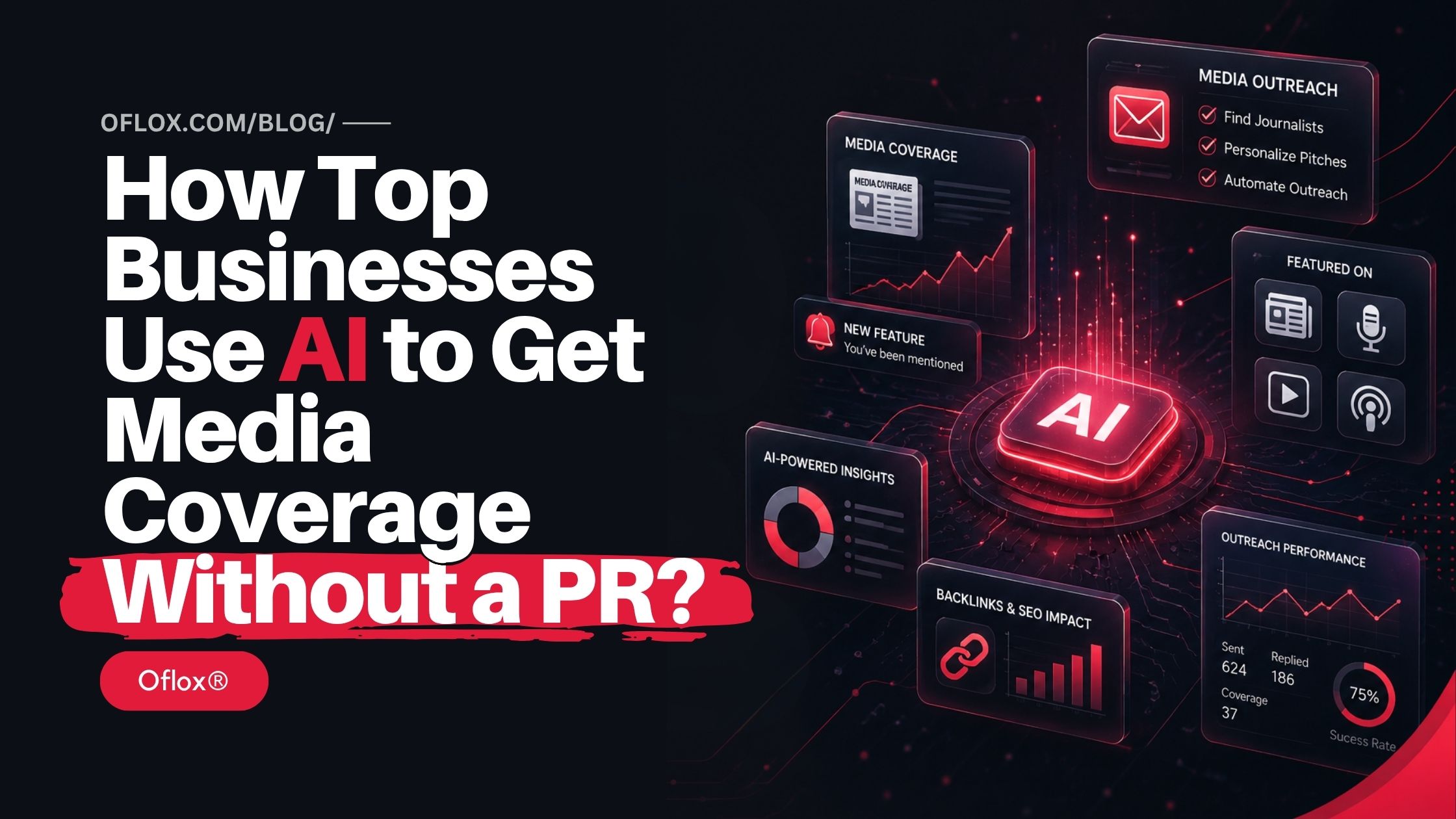
This post covers why media coverage matters for growing businesses, what has historically made it difficult to access, and how tools like Magic Pitch are changing who gets to play.
Let’s explore it together!
Table of Contents
Why Media Coverage Still Matters in a World Full of Digital Marketing Options
With so many digital marketing channels available, it is worth asking whether earned media is still worth pursuing. The answer is yes, and for a few reasons that have not changed despite how much the marketing landscape has evolved.
1. Credibility that paid channels cannot replicate
When a journalist writes about your business, or a podcast host recommends your product to their audience, or a newsletter author includes you in their roundup, it carries a completely different weight than anything you produce yourself. Third-party endorsement from a source your audience already trusts is one of the most powerful credibility signals in marketing. It tells people that someone with no financial stake in your success thinks you are worth paying attention to.
2. Reach into audiences you cannot easily buy
Podcast audiences, newsletter subscribers, and publication readers are communities built around specific interests. Many of the people in those communities are not cost-effectively reachable through standard paid advertising. A single feature in the right newsletter can put your brand in front of thousands of exactly the right people in a way that would cost far more to replicate through ads.
3. SEO value that compounds over time
Every piece of press coverage that links back to your website builds domain authority. That authority improves your search rankings, which brings more organic traffic, which reduces your dependence on paid channels over time. A feature in a respected publication from two years ago can still be driving traffic today. Very few marketing activities have that kind of shelf life.
4. It makes your other marketing work harder
When someone receives a cold email from your business, sees your ad, or finds your website through search, one of the first things many of them do is look you up. If they find press coverage, podcast mentions, and newsletter features alongside your own content, it builds a level of trust that is very hard to manufacture any other way. Earned media does not just generate its own traffic. It improves the conversion rate of everything else you are doing.
Why Most Growing Businesses Give Up on Media Outreach
The gap between knowing media coverage is valuable and actually getting it has always been wide. Here is why most businesses struggle with it.
Finding the right contacts is time-consuming. Not every journalist covers your industry. Not every podcast host has an audience that matches your customer base. Building a targeted list of relevant contacts requires research that most business owners do not have time for on top of everything else.
Writing a pitch that gets a response is harder than it looks. Journalists and podcast hosts receive more pitches than they can count. The ones they respond to are specific, relevant, and clearly written for that particular person rather than sent to a generic list. Achieving that level of personalisation for every contact on your outreach list is not practical to do manually at any meaningful scale.
Following up consistently is easy to let slip. A pitch that does not get an immediate response does not necessarily mean rejection. Many media placements happen on the second or third follow-up. But managing that consistently across multiple contacts while running a business is genuinely difficult without a system.
What Magic Pitch Does and Why It Changes the Calculation
Magic Pitch is an AI-powered media outreach platform that handles the parts of the process that make it impractical for most growing businesses to do properly on their own.
The platform gives you access to a database of 700,000 plus journalists, 3.8 million podcasts, and every Substack newsletter author with a verified email address. All of it is searchable in one place. Instead of spending hours trying to find the right contacts, you describe who you want to reach in plain language and Magic Pitch surfaces the most relevant options for your specific story and audience.
The part that makes it genuinely useful rather than just another database tool is what happens next. Magic Pitch uses AI to generate a personalised pitch for each contact based on their recent work and coverage history. The pitches reference what each journalist or host has actually been covering recently, which means they read as considered and specific rather than broadcast to a list. That specificity is what drives response rates up significantly compared to generic outreach.
Before you send anything, the platform shows you predicted response rates, recommended pitch length, best send times, and preferred communication tone for each contact. All of this is drawn from data across over a million pitches sent through the platform, so the recommendations reflect what actually works rather than general best practices.
After the initial pitch goes out, follow-up sequences run automatically. No manual reminders, no spreadsheets, no contacts going cold because someone forgot to chase them. The entire outreach workflow from finding contacts to sending personalised pitches to following up consistently becomes something a small team can manage without it taking over their week.
How to Use It Effectively as a Growing Business
Getting the most out of a tool like Magic Pitch comes down to a few things that are worth getting right from the start.
1. Be specific about your story
The quality of the outreach Magic Pitch generates scales with the clarity of what you give it. Before you start, spend time thinking about the specific angles that make your business worth covering. A growth milestone, a perspective on something happening in your industry, a customer success story, a product that solves a problem in a genuinely new way. The more specific your narrative, the more targeted and relevant the outreach will be.
2. Build separate lists for separate angles
A journalist covering business growth wants a different pitch than a podcast host whose audience is small business owners. A newsletter author writing about AI tools wants a different framing than one focused on marketing strategy. Building focused outreach lists for each narrative means each pitch feels tailored to the right audience rather than generalised across all of them.
3. Review the output before sending
Magic Pitch does the heavy lifting on research and first drafts, but the best results come when a team member reviews each pitch before it goes out. Adding a specific detail that only your business knows, a recent customer win, a market observation, a piece of traction data, makes the difference between a pitch that reads as polished and one that reads as genuinely personal.
4. Treat it as an ongoing activity
The businesses that get the most from media outreach are the ones doing it consistently rather than in bursts around major announcements. Regular outreach builds familiarity with journalists and hosts in your space over time. Someone who has seen your name a few times is far more likely to respond than someone receiving a cold pitch with no prior context.
What a Consistent Media Presence Builds Over Time
The compounding effect of consistent media outreach is something most businesses do not experience because they give up before it kicks in. But for the ones that stick with it, what tends to happen over twelve to eighteen months is significant.
- Coverage in one publication leads to coverage in others as journalists cross-reference and build on each other’s work
- Podcast appearances build an audience that follows your work across platforms
- Newsletter features drive targeted traffic that converts at higher rates than most paid sources
- The backlinks from coverage accumulate and steadily improve search rankings
- The brand becomes recognisable in its category in a way that makes every other marketing activity more effective
None of this happens overnight. But it also does not require a large budget or a dedicated PR team to get started. It requires a clear story, a systematic approach to outreach, and a tool that makes it practical to do properly at scale.
Pairing Media Outreach With SEO for Maximum Visibility
Media coverage and search visibility work best when they are built together rather than in isolation. The backlinks earned from press coverage build domain authority, which improves search rankings. Strong search rankings mean your business gets discovered by people who were not already aware of you. Combining a consistent media outreach program with a focused link building strategy from a specialist SEO link building services partner creates a digital presence that compounds significantly faster than either approach alone.
Conclusion:)
Media coverage is no longer something that only well-funded companies with established PR agencies can access. The tools exist now to make it practical for any growing business to reach the right journalists, podcast hosts, and newsletter authors with personalised outreach that actually gets responses.
Magic Pitch is one of the most complete platforms available for this. The database is large, the AI personalisation is genuinely above template quality, and the workflow from contact discovery to automated follow-up is straightforward enough that a small team can run it without it becoming a dedicated function.
If your business has a story worth telling and has not been getting the media coverage it deserves, the barrier is no longer budget or connections. It is having a system. Magic Pitch is that system.
“In the AI era, smart outreach matters more than expensive PR.” – Mr Rahman, CEO Oflox®
Read also:)
- How to Raise Funds for Startup Business in India (A-to-Z Guide!)
- What is Subscription Business Model: A-to-Z Guide for Beginners!
- 5+ Best Business Name Generator Tools (Free & AI-Powered)
Have you tried AI-powered media outreach for your business growth? Share your experience or ask your questions in the comments below — we’d love to hear from you!