This article serves as a professional guide on What Is Digital Arrest in India. And how the scam works, and how you can protect yourself and your family from becoming victims. In recent years, thousands of Indians have received shocking video calls from fake police officers claiming they are “under digital arrest.” Many people panic, transfer money, and later realize they were scammed.
Digital arrest is not a real legal concept. It is a psychological cyber fraud method used by scammers to threaten victims using fear of police, jail, and legal action. These criminals pretend to be officers from agencies like CBI, Mumbai Police, or Cyber Crime Department and force people to transfer money.
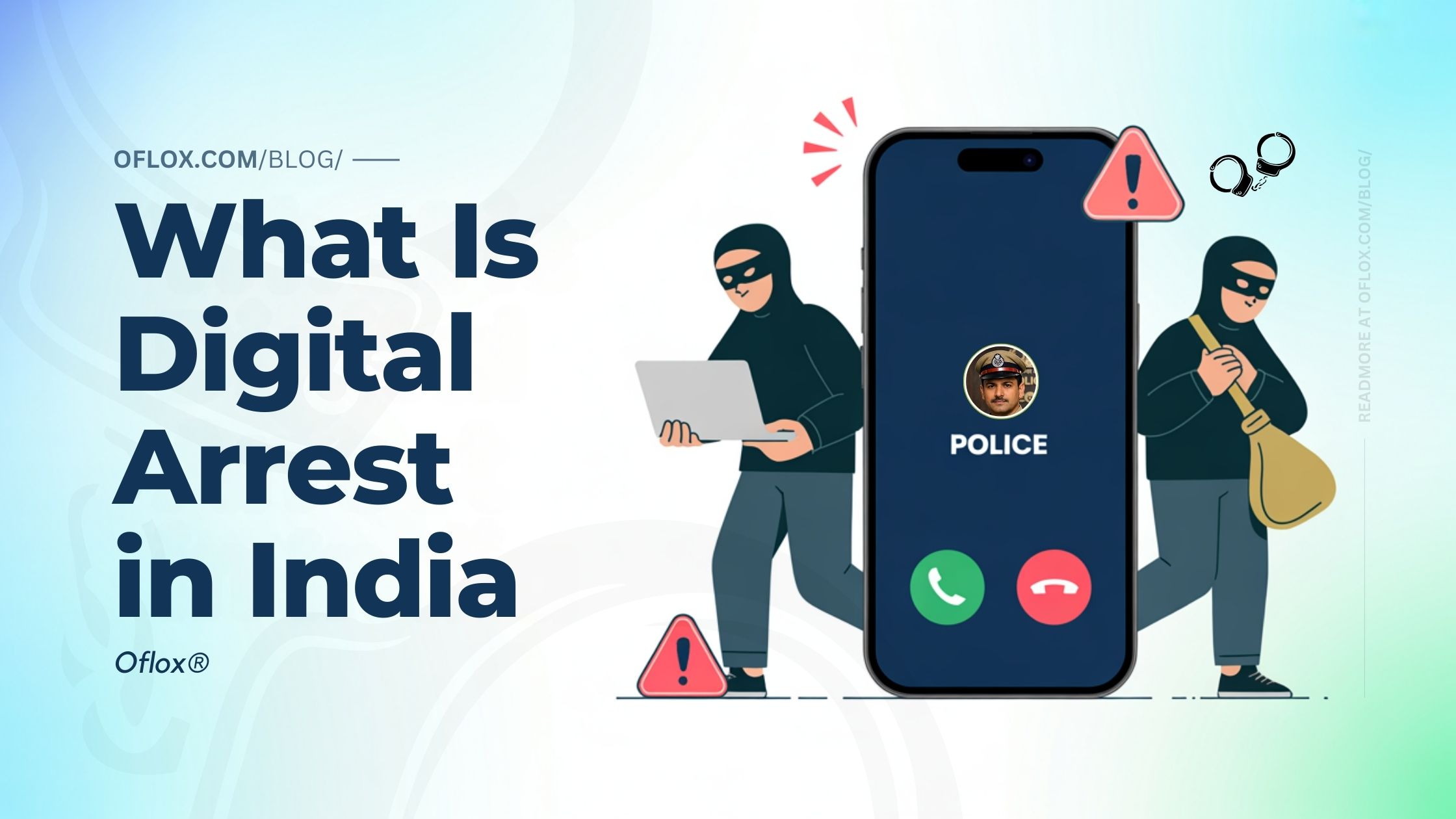
In this detailed guide, we will understand what digital arrest means, how the scam works step-by-step, legal facts, real examples, warning signs, safety tips, and what to do if you become a victim.
Let’s explore it together!
Table of Contents
What Is Digital Arrest in India?
Digital arrest is a cyber scam in which fraudsters pretend to be police or government officers and claim that you are under “online arrest” or “digital custody” to scare you and demand money.
There is no such legal term as digital arrest in India.
It is completely fake.
What Scammers Say?
Fraudsters usually say:
- “You are involved in money laundering.”
- “Your Aadhaar is linked to illegal activity.”
- “A parcel under your name contains drugs.”
- “You are under digital arrest. You cannot disconnect the call.”
- “If you cut the call, the police will arrest you physically.”
These statements are designed to create panic.
Real Arrest vs Digital Arrest (Comparison Table)
| Feature | Real Arrest | Digital Arrest Scam |
|---|---|---|
| Legal basis | Yes | No |
| Physical presence | Yes | No |
| Official documents | Yes | Fake or none |
| Court process | Mandatory | None |
| Demand money | Never | Always |
Note: Police never arrest through WhatsApp or video calls.
How Digital Arrest Scam Works (Step-by-Step)
Let’s understand the complete scam process in detail so you can clearly recognize each stage.
1. Fake Call (Initial Contact)
The scam usually begins with a sudden phone call.
The caller may introduce themselves as:
- A police officer from Mumbai Police / Delhi Police
- A CBI or Cyber Crime officer
- A courier company executive (FedEx / DHL type claim)
- A telecom department official
- A bank compliance officer
Sometimes the caller ID looks genuine because scammers use caller ID spoofing technology. This makes the number appear official or government-linked.
The tone is serious from the beginning. They may use your full name and city to sound authentic.
Their goal at this stage: Create shock and grab your full attention.
2. Serious Allegation (Fear Creation Stage)
After introducing themselves, they immediately accuse you of serious crimes such as:
- Drug trafficking through international parcel
- Money laundering case
- Aadhaar card linked to illegal SIM cards
- Bank account involved in suspicious transactions
- Financial fraud investigation
They often say:
- “Your case is under investigation.”
- “Non-bailable warrant is being prepared.”
- “Your account will be frozen.”
- “You can be arrested within 2 hours.”
The voice becomes aggressive and urgent.
They may even mention sections of law to sound technical.
Their goal at this stage: Trigger fear and panic so you stop thinking logically.
3. Video Call With Fake Police Setup
Once you are scared, they move the conversation to a video platform such as:
- WhatsApp Video Call
- Skype
- Telegram
- Google Meet
During the video call:
- The scammer may wear a police uniform.
- They may sit in front of a fake police station background.
- Sometimes they show fake ID cards.
- They may display a “fake arrest warrant” on screen.
Some advanced scammers use:
- AI deepfake videos
- Voice modulation software
- Pre-recorded police station visuals
This visual setup increases psychological pressure.
Their goal at this stage: Make the scam look legally official and unavoidable.
4. Isolation & Psychological Control
Now comes the most dangerous part.
They instruct you:
- “Do not inform anyone.”
- “This is a confidential national investigation.”
- “You are under digital surveillance.”
- “If you disconnect, police team will reach your home.”
They may force you to:
- Stay on video call for hours
- Keep your camera on
- Not speak to family members
- Share your screen
This is psychological isolation. When you are alone and scared, you are more likely to obey.
Their goal at this stage: Break your emotional stability and gain full control.
5. Demand for Money (Extortion Stage)
After creating maximum fear, they offer a “solution.”
They may say:
- “You can avoid arrest by verifying your funds.”
- “Pay a security deposit for investigation.”
- “Transfer amount for clearance certificate.”
- “We need to audit your bank balance.”
They demand payment through:
- Bank transfer
- UPI
- Cryptocurrency
- Gift cards
- RTGS/NEFT
They may even ask you to:
- Take a loan
- Break FD
- Transfer all savings temporarily
They promise:
“Money will be returned after verification.”
This is false.
Their goal at this stage: Extract maximum money before you realize the fraud.
6. Disappearance
Once money is transferred:
- They immediately block your number.
- They delete chats.
- They deactivate accounts.
- The phone number becomes unreachable.
The fake identity disappears completely.
At this point, victims realize they were scammed.
Their goal at this stage: Escape before you report.
Why Digital Arrest Scam Is Increasing in India
Here are the main reasons why digital arrest fraud cases are growing in India year after year.
1. Rapid Digital Growth
India is one of the largest digital economies.
More UPI transactions = more opportunities for scammers.
2. Fear of Law Enforcement
Most people panic when they hear:
- CBI
- ED
- Police
- Income Tax
Scammers use fear psychology.
3. Lack of Awareness
Many people:
- Don’t know legal procedures
- Don’t know arrest rules
- Believe video call authority
4. Use of AI & Deepfake
Modern scammers use:
- AI voice cloning
- Deepfake video
- Fake documents
- Spoofed caller IDs
This makes scams more convincing.
Is Digital Arrest Legal in India?
Short Answer: No.
There is no provision under:
- Indian Penal Code (IPC)
- Criminal Procedure Code (CrPC)
- Information Technology Act 2000
Police cannot:
- Arrest via WhatsApp
- Conduct trial on video call randomly
- Demand money for bail through UPI
Real Arrest Procedure in India (Basic Overview)
- FIR registration
- Investigation
- Notice under Section 41A CrPC
- Physical arrest (if required)
- Production before magistrate
There is always documentation.
Common Red Flags of Digital Arrest Scam
Look for these warning signs:
- Urgent threat
- Asking for secrecy
- Demanding money immediately
- Asking OTP
- Asking to install screen-sharing apps
- Long video calls
- No official paperwork
If you see 2–3 of these signs → It is 99% scam.
Real Scenarios Used by Scammers
Here are the typical situations fraudsters create to make the digital arrest scam look real.
- Courier Parcel Scam: They say, “A parcel under your name contains illegal drugs.”
- Aadhaar Linking Scam: They say, “Your Aadhaar is linked to 17 SIM cards used in crime.”
- Bank Account Scam: They say, “Your account is involved in money laundering.”
- Digital Custody Room: They keep the victim on video call for 4–6 hours and monitor them.
This is psychological torture.
Who Are the Main Targets?
- Senior citizens
- Housewives
- Students studying abroad
- Business owners
- NRI families
- Working professionals
Scammers often target educated people.
What To Do If You Receive Such Call
| Immediately: | Verify Officially: |
| Disconnect call. | Call the local police station directly. |
| Do not share OTP. | Call local police station directly. |
| Do not transfer money. | Ask family members. |
| Do not install unknown apps. | Search the official police website. |
What If You Already Paid Money?
Act quickly.
1. Call 1930 (Cyber Crime Helpline)
This is the Government of India’s official helpline.
2. Report on Portal
Visit: https://cybercrime.gov.in
File complaint under: “Financial Fraud.”
3. Inform Your Bank
Immediately block transactions.
4. File FIR
Visit the nearest police station.
Time is very important.
Money recovery chances reduce after 24 hours.
Government Actions Against Digital Arrest Scam
Indian government is:
- Blocking fake SIM cards
- Monitoring suspicious bank accounts
- Running awareness campaigns
- Strengthening cyber cells
But awareness is still the strongest protection.
Role of AI & Deepfake in Digital Arrest Scam
Modern scammers use:
- AI-generated police faces
- Voice cloning
- Deepfake video calls
- Fake courtroom visuals
- Screen sharing manipulation
This makes scam look real.
But remember: Technology can fake visuals. Law cannot be faked.
Pros & Cons of Awareness of Digital Arrest
Here are the major advantages and potential drawbacks of digital arrest awareness.
Pros
- Prevents financial loss
- Protects family members
- Reduces panic
- Helps identify scam calls quickly
- Builds legal awareness
- Encourages quick reporting
- Improves digital safety
Cons
- May create temporary fear
- Can increase suspicion
- Overthinking genuine calls
- Stress among elderly
- Information overload
Still, awareness is better than ignorance.
FAQs:)
A. No. It is completely fake.
A. No. Arrest requires legal procedure.
A. Nothing. It is scam.
A. Possible if reported quickly to 1930.
A. Yes. Always cut the call.
Conclusion:)
Digital arrest is not a real legal concept in India. It is a dangerous cyber scam designed to scare innocent people into transferring money. Scammers use fake uniforms, AI tools, and psychological pressure to trap victims. But once you understand how it works, you become stronger than the scam.
Always remember: No genuine police officer will ever ask for money over video call.
“Fear is the biggest weapon in digital scams. Awareness is the only shield.” – Mr Rahman, CEO Oflox®
Read also:)
- What is 360 Digital Marketing: A-to-Z Guide for Beginners!
- Best Digital Marketer in the World: Icons of Digital Success!
- What Is Search Arbitrage: A Complete Guide for Digital Marketers!
Have you ever received a suspicious police video call? Share your experience or ask your questions in the comments below — we’d love to hear from you!