This article offers a professional guide on What Is Link Structure in SEO. If you want to understand how websites are connected internally, how search engines read your pages, and how link structure directly impacts rankings, traffic, and crawlability, you are in the right place.
Link structure is one of the most underrated yet powerful SEO concepts. Many websites fail to rank not because their content is bad, but because search engines cannot properly discover, understand, or prioritize their pages due to poor link structure.
In simple words, link structure defines how pages on your website are connected using links. These links guide users and search engines from one page to another, creating a logical path across your site.
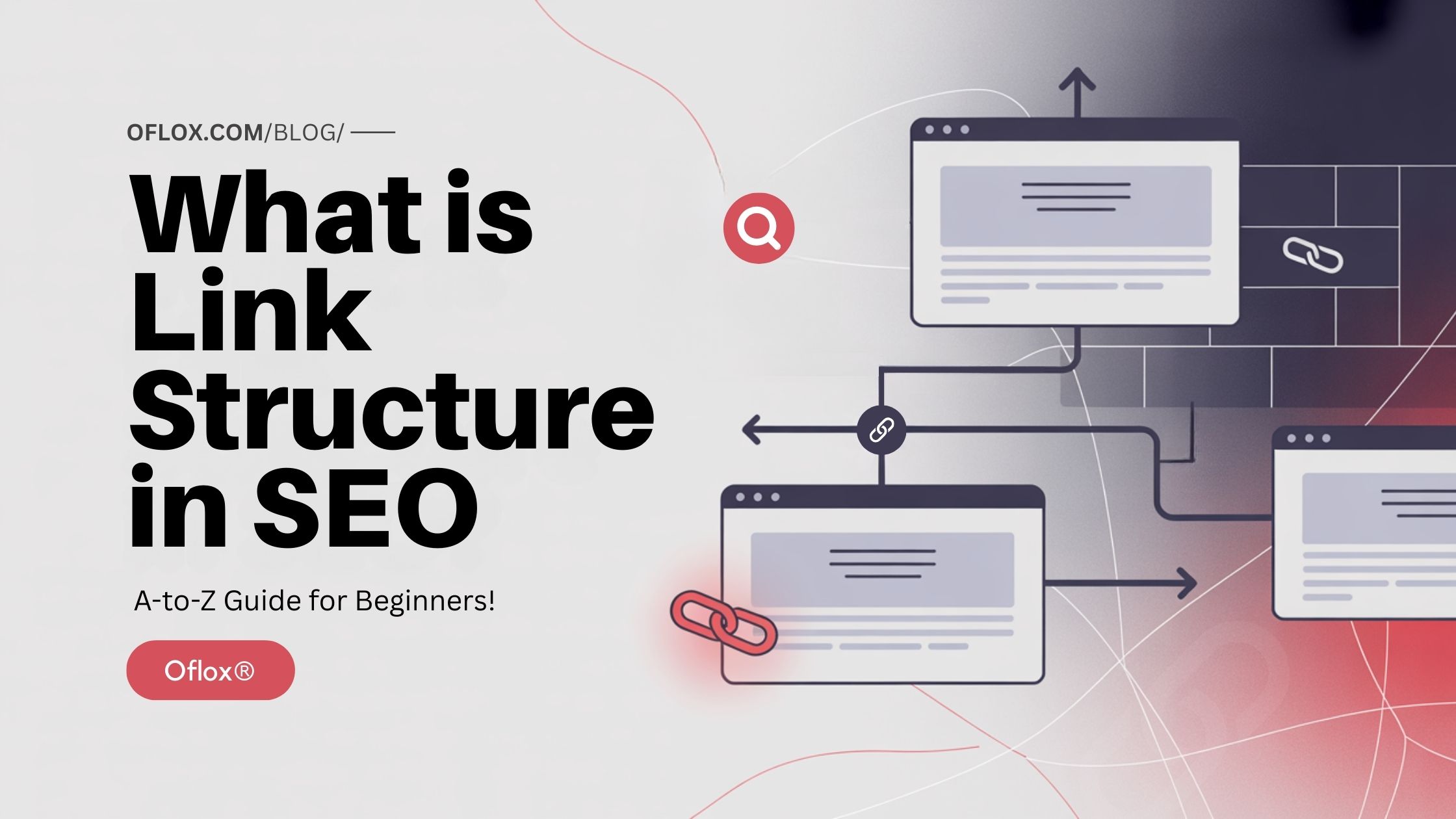
In this article, we will deeply explore what link structure in SEO means, how it works, its types, best practices, common mistakes, tools, examples, and FAQs — explained in very simple language.
Let’s explore it together!
Table of Contents
What Is Link Structure in SEO?
Link structure in SEO refers to the way internal and external links are organized and connected across a website.
It defines:
- Which page links to which page
- How easily a page can be found
- How link authority (link juice) flows
- How search engines crawl and index content
In SEO terms, link structure is also called:
- Website link architecture
- Internal linking structure
- SEO site structure
Simple Definition:
Link structure is the roadmap of your website that tells search engines and users how your pages are related.
If your website were a city:
- Pages = buildings
- Links = roads
- Link structure = city planning
Bad planning = traffic jams (poor SEO)
Good planning = smooth flow (better rankings)
Why Link Structure Is Important for SEO
Link structure directly affects how Google understands your website.
1. Helps Search Engines Crawl Your Website
Search engines use bots (crawlers) to discover pages by following links.
If a page has no internal links, it may never be crawled.
👉 Poor link structure = poor crawling
2. Improves Indexing
When pages are well linked:
- Crawlers find them faster
- Pages get indexed properly
- New content gets discovered quickly
3. Distributes Link Equity (Link Juice)
Internal links pass authority from:
- Strong pages → weaker pages
- Homepage → blog posts
- Category pages → subpages
A good structure ensures important pages receive more authority.
4. Prevents Orphan Pages
Orphan pages are pages with zero internal links.
Bad link structure creates:
- Invisible pages
- Wasted content
- Ranking loss
5. Enhances User Experience (UX)
Good linking helps users:
- Navigate easily
- Discover related content
- Spend more time on your site
SEO + UX always go together.
Types of Link Structure in SEO
There are different types of link structures in SEO, and each one plays a unique role in how search engines crawl pages, distribute authority, and understand website hierarchy.
1. Hierarchical (Tree) Structure
This is the most SEO-friendly structure.
Example:
Homepage
 └── Category
      └── Subcategory
           └── Page
Used by:
- Blogs
- E-commerce sites
- Corporate websites
Benefits
- Clear navigation
- Easy crawling
- Strong topical relevance
2. Flat Link Structure
In a flat structure, most pages are reachable within 2–3 clicks from the homepage.
Best for SEO because:
- Reduces crawl depth
- Improves index speed
- Passes authority faster
3. Silo Structure (Topic Clusters)
Pages are grouped by topic relevance.
Example:
- SEO
- On-page SEO
- Technical SEO
- Link Building
Each silo links internally but not randomly across topics.
Perfect for:
- Authority blogs
- Niche websites
4. Linear Link Structure
Pages are linked in a step-by-step sequence.
Used in:
- Funnels
- Tutorials
- Courses
SEO impact is limited but UX-focused.
Internal Link Structure Explained
Internal links connect pages within the same website.
Types of Internal Links
- Navigational links
(Menus, headers, footers) - Contextual links
(Links inside content — most powerful for SEO) - Breadcrumb links
(Shows page hierarchy)
Why Internal Linking Matters Most
- Controls link flow
- Builds topical authority
- Helps Google understand page relationships
“Internal linking is the backbone of scalable SEO.” — Mr Rahman, CEO Oflox®
External Link Structure (Outbound Links)
External links point from your website to other websites.
SEO Benefits:
- Signals trust & relevance
- Helps with content validation
- Improves topical depth
Linking to authoritative sources (like Google Docs, research studies) is a good practice.
Good vs Bad Link Structure (Comparison)
| Good Link Structure | Bad Link Structure |
|---|---|
| Clear hierarchy | Random linking |
| Logical anchor text | Keyword stuffing |
| Balanced internal links | Too many links |
| No orphan pages | Broken pages |
| Flat crawl depth | Deep buried pages |
How to Build an SEO-Friendly Link Structure?
Creating an SEO-friendly link structure means designing your website’s internal links in a way that improves crawlability, distributes authority evenly, and supports better rankings.
1. Plan Website Hierarchy
Before content creation, decide:
- Categories
- Subcategories
- Priority pages
2. Use the Homepage Wisely
Your homepage has maximum authority.
Link to:
- Important categories
- Money pages
- Core services
3. Follow the 3-Click Rule
Any page should be reachable within 3 clicks.
4. Use Contextual Internal Links
Inside content:
- Link related articles
- Use natural anchor text
- Avoid forced links
5. Use Breadcrumbs
Breadcrumbs help:
- Navigation
- Search engine understanding
- Rich results in SERP
Common Link Structure Mistakes (Avoid These)
- Too many links on one page
- Orphan blog posts
- Broken internal links
- Over-optimized anchors
- Deep nested pages
- Random cross-topic linking
Tools to Analyze Link Structure
Use these tools to audit and improve link structure:
- Google Search Console – crawl & coverage
- Screaming Frog – internal link audit
- Ahrefs – internal link flow
- SEMrush – site audit
- Sitebulb – visual structure analysis
Link Structure vs Site Structure
| Aspect | Link Structure | Site Structure |
|---|---|---|
| Focus | Links | Pages |
| Role | Connectivity | Organization |
| SEO Impact | Crawling & authority | Indexing |
| Dependency | Depends on site structure | Independent |
Both must work together for the best SEO results.
Link Structure SEO Best Practices
- Use descriptive anchor text
- Link relevant content only
- Maintain logical hierarchy
- Fix broken links regularly
- Update internal links for new content
- Use HTML links (not JS only)
FAQs:)
A. Link structure is how pages are connected using internal and external links to help search engines crawl, index, and rank content.
A. There is no fixed number. Focus on relevance, not quantity.
A. Yes. Poor link structure can block crawling and reduce page authority.
A. A silo + flat structure works best for blogs.
A. Yes. It can cause orphan pages, crawl issues, and ranking drops.
Conclusion:)
Link structure is not just an SEO technicality — it is the foundation of how your website communicates with search engines and users. A clear, logical, and SEO-friendly link structure improves crawling, indexing, rankings, and user experience all at once.
When your links are planned strategically, your content works harder without extra effort.
“Link structure is the silent SEO architect — it decides how authority flows, how pages are discovered, and how rankings are earned.” — Mr Rahman, CEO Oflox®
Read also:)
- What Is Brand Mentions in SEO: A-to-Z Guide for Beginners!
- What Is Web Crawler: A-to-Z Guide for Beginners!
- What Is Backlink in Blogging: A-to-Z Guide for Blogger!
Have you tried improving your link structure for better SEO results? Share your experience or ask your questions in the comments below — we’d love to hear from you!