This article offers a professional guide on What Is WebSocket Protocol. And how it works internally, and why it has become essential for modern real-time web applications.
WebSocket is a communication protocol that allows two-way, continuous communication between a client (browser or app) and a server over a single persistent connection.
Today’s digital products — such as chat apps, live dashboards, trading platforms, online games, and collaboration tools — demand instant data updates, which traditional HTTP struggles to deliver efficiently.
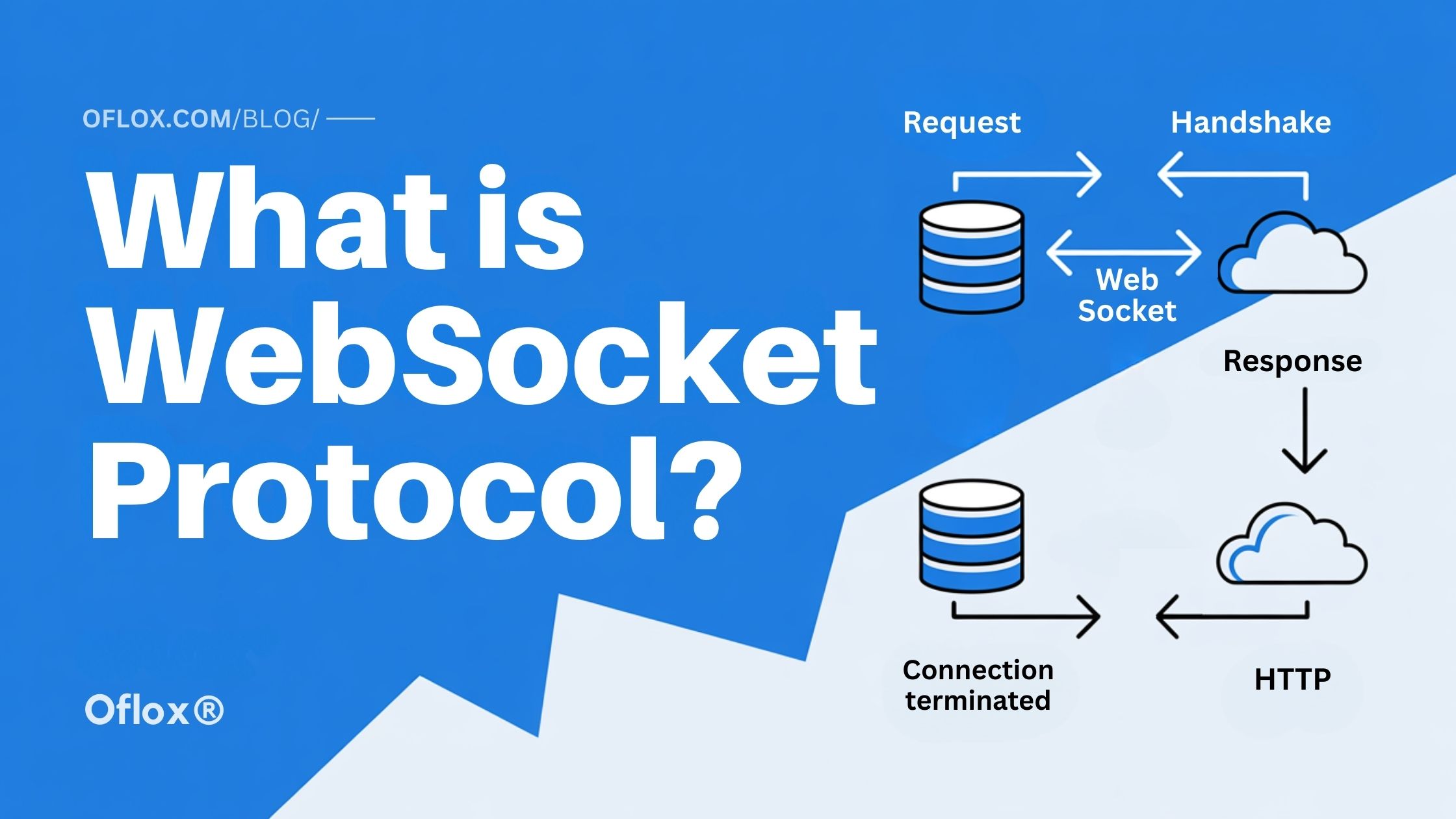
That is exactly where WebSocket protocol comes into play. In this article, we will explore WebSocket from scratch, including how it works, real-life examples, advantages, limitations, security, and when you should use it.
Let’s explore it together!
Table of Contents
What Is WebSocket Protocol?
The WebSocket protocol is a full-duplex, bidirectional communication protocol that enables real-time data transfer between a client and a server over a single TCP connection.
Simple Definition:
WebSocket allows the client and server to send data to each other at any time, without repeatedly requesting a new connection.
Official Explanation:
WebSocket is standardized by the IETF as RFC 6455 and works on top of TCP. It begins as an HTTP request and then upgrades the connection to WebSocket.
Why Was WebSocket Needed?
Before WebSocket, most web communication relied entirely on HTTP, which has major limitations for real-time use cases.
1. Limitations of the HTTP Protocol
- Request–Response Model: HTTP works only when the client requests data first. The server cannot push data on its own.
- Stateless Communication: Each request is independent, causing repeated overhead.
- High Latency: Repeated requests increase delays.
- Inefficient for Real-Time Apps: Chat messages, live prices, or notifications feel slow.
2. Traditional Workarounds Before WebSocket
- HTTP Polling: The client repeatedly requests updates from the server every few seconds.
- Long Polling: The server holds the request open until data is available.
- Server-Sent Events (SSE): One-way server-to-client communication only.
All these methods are inefficient, resource-heavy, and slow compared to WebSocket.
How WebSocket Protocol Works (Step-by-Step)
Understanding WebSocket is easier when broken down into clear steps.
1. Initial HTTP Handshake
The process starts as a normal HTTP request.
The client sends headers like:
- Upgrade: websocket
- Connection: Upgrade
This tells the server:
“I want to switch from HTTP to WebSocket.”
2. Connection Upgrade
If the server supports WebSocket, it responds with:
- HTTP status 101 Switching Protocols
Now the connection is upgraded from HTTP to WebSocket.
3. Persistent Connection Is Established
Once upgraded:
- The connection remains open
- No need to reconnect
- No repeated headers
4. Full-Duplex Communication
Both client and server can:
- Send messages anytime
- Receive messages instantly
- Communicate simultaneously
This is what makes WebSocket real-time.
WebSocket Architecture (Client & Server)
Key Components:
- WebSocket Client
- Browser
- Mobile app
- Desktop app
- WebSocket Server
- Node.js
- Python
- Java
- Go
- Persistent TCP Connection
- Always open
- Low latency
- Data Frames
- Text frames
- Binary frames
WebSocket vs HTTP (Quick Comparison Table)
| Feature | WebSocket | HTTP |
|---|---|---|
| Connection Type | Persistent | Temporary |
| Communication | Bidirectional | One-way |
| Latency | Very Low | High |
| Server Push | Yes | No |
| Real-Time Support | Excellent | Poor |
| Overhead | Minimal | High |
WebSocket vs Polling vs Long Polling
| Method | Efficiency | Real-Time | Server Load |
|---|---|---|---|
| Polling | Low | Poor | High |
| Long Polling | Medium | Better | Medium |
| WebSocket | High | Excellent | Low |
WebSocket Protocol Syntax (WS & WSS)
1. What is ws://?
- Non-secure WebSocket
- Similar to HTTP
- Not recommended for production
2. What is wss://?
- Secure WebSocket
- Uses TLS encryption
- Similar to HTTPS
- Recommended for all real-world apps
Real-Life Examples of WebSocket Protocol
WebSocket protocol is widely used in applications where instant, continuous, and two-way communication is critical.
Common Real-World Use Cases:
- Chat Applications
- WhatsApp Web
- Slack
- Discord
- Live Stock Trading Platforms
- Price updates
- Order book changes
- Online Multiplayer Games
- Real-time player movement
- Score updates
- Live Sports Score Apps
- Instant score refresh
- Real-Time Dashboards
- Analytics tools
- Monitoring systems
- Collaboration Tools
- Google Docs-like editing
Advantages of WebSocket Protocol
The WebSocket protocol offers multiple performance and scalability benefits over traditional communication methods.
Key Advantages:
- Real-time data transfer
- Extremely low latency
- Reduced server load
- Efficient bandwidth usage
- Smooth user experience
- Scalable for large systems
Disadvantages & Limitations of WebSocket
Despite its power, WebSocket is not perfect.
Limitations:
- Stateful connections
- Requires careful scaling
- More complex than REST APIs
- Not ideal for simple CRUD apps
- Needs load balancer support
Is WebSocket Secure?
| Security Measures | Common Security Risks |
| Use WSS (WebSocket Secure) | DDoS attacks |
| TLS encryption | Unauthorized access |
| Authentication tokens | Data leakage (if misconfigured) |
| Origin validation | |
| Rate limiting |
When implemented properly, WebSocket is highly secure.
Popular Use Cases of WebSocket Protocol
- FinTech platforms
- IoT dashboards
- Live tracking systems
- Messaging platforms
- Online gaming
- Streaming analytics
WebSocket in Modern Frameworks
Most modern frameworks support WebSocket to enable real-time, bidirectional communication in applications.
1. WebSocket in JavaScript
Native browser support via WebSocket API.
2. WebSocket with Node.js
Libraries like:
- ws
- Socket.ID (built on WebSocket)
3. WebSocket in Python
- websockets
- FastAPI
4. WebSocket in Java
- Spring Boot WebSocket
5. WebSocket in Frontend Frameworks
- React
- Angular
- Vue
When Should You Use WebSocket?
| Use WebSocket When: | Avoid WebSocket When: |
| You need real-time updates | App is simple CRUD |
| Data changes frequently | Data updates are rare |
| Low latency is critical | SEO crawling is important |
| The server needs to push data |
WebSocket vs REST API (Conceptual Difference)
- REST API → Request-based communication
- WebSocket → Event-based communication
Both can coexist in modern architectures.
Common WebSocket Interview Questions
- Is WebSocket TCP or UDP? → TCP
- Can WebSocket replace HTTP? → No
- Is WebSocket scalable? → Yes, with proper architecture
- WebSocket vs SSE? → WebSocket is bidirectional
FAQs:)
A. Yes, WebSocket is significantly faster for real-time communication.
A. Yes, WebSocket works on mobile and desktop apps.
A. Yes, all modern browsers support it.
A. Yes, with load balancing and horizontal scaling.
Conclusion:)
WebSocket protocol is a powerful solution for building real-time, responsive, and modern web applications. By maintaining a persistent, bidirectional connection, it overcomes the limitations of traditional HTTP communication and delivers instant data updates efficiently.
“Real-time communication is no longer a luxury — it’s a necessity in modern digital experiences.” — Mr Rahman, CEO Oflox®
Read also:)
- How to Clone a Website for Free: A Step-by-Step Guide!
- Scamra – Fake Website Scanner (Trust Score & Scam Check)
- 5+ Best Websites to Create an App for Free (No Code Required)
Have you tried the WebSocket protocol for your real-time application? Share your experience or ask your questions in the comments below — we’d love to hear from you!