This article serves as a professional guide on What is AI Operating System (AI OS), how it works, and why it is becoming the foundation of next-generation intelligent systems. Read on for a comprehensive overview and valuable insights.
Artificial Intelligence is no longer just a feature inside apps — it is becoming the core layer of computing. Just like Windows or Linux manage your computer, a new concept called AI Operating System (AI OS) is emerging to manage AI models, AI agents, data flows, and autonomous decision-making.
In simple words, an AI Operating System is a smart infrastructure layer that controls how AI models run, learn, interact, and execute tasks across systems.
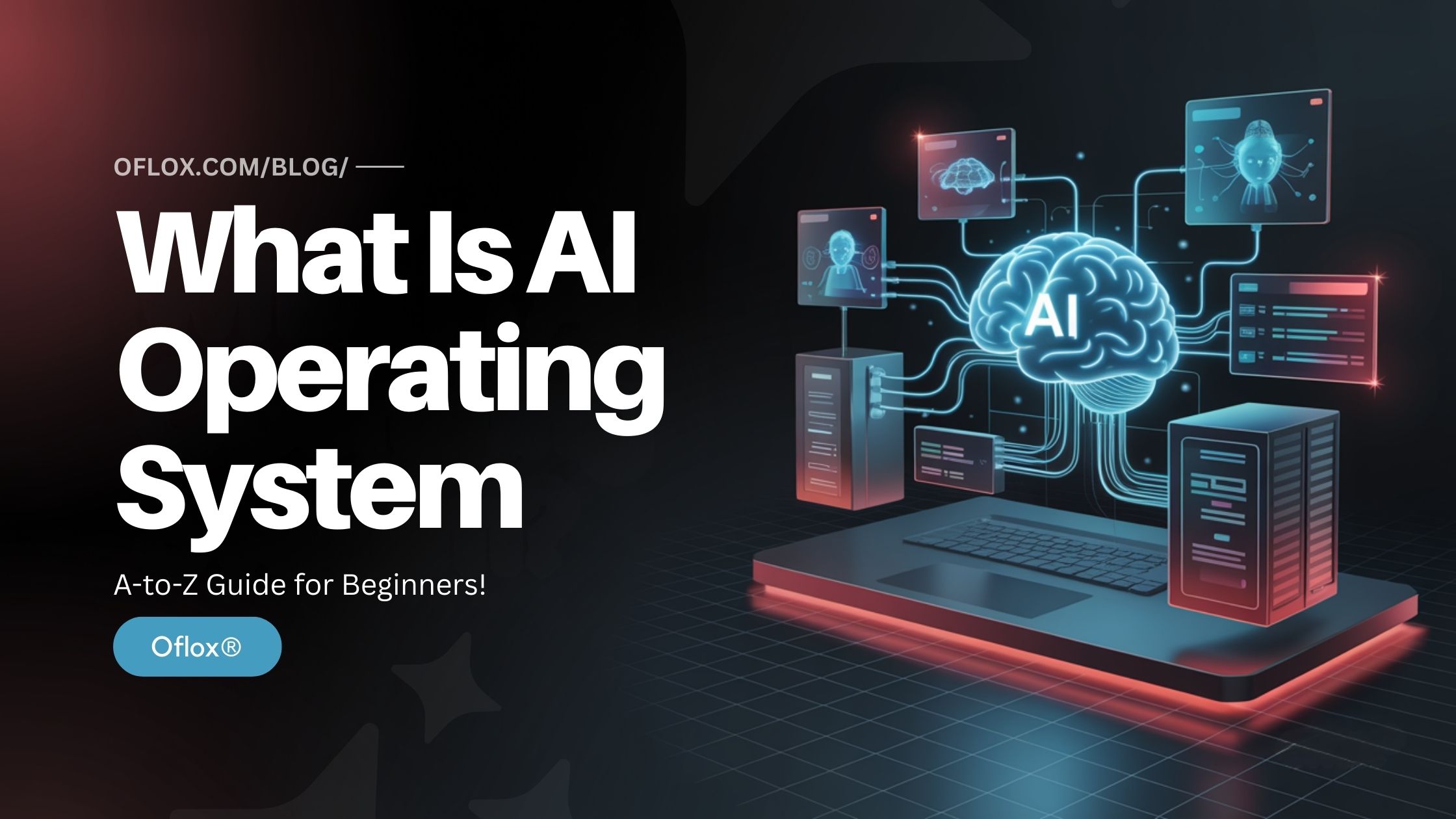
If you are hearing about AI OS for the first time or want a deep understanding from beginner to advanced level, this guide will explain everything in simple English.
Let’s explore it together!
Table of Contents
What Is an Operating System?
Before understanding AI OS, let’s quickly revise what a normal Operating System (OS) does.
An Operating System is system software that:
- Manages hardware (CPU, RAM, storage)
- Runs applications
- Handles files
- Controls input/output devices
- Manages processes
Examples:
- Windows
- macOS
- Linux
Without an operating system, your computer cannot function properly.
Think of OS as a manager that controls everything inside a computer.
What Is AI Operating System?
An AI Operating System (AI OS) is a software layer designed to manage AI models, AI agents, data pipelines, automation workflows, and intelligent decision-making systems.
It is not just running apps. It is managing intelligence.
Simple Explanation:
If a traditional OS manages hardware, AI OS manages intelligence.
It coordinates:
- Large Language Models (LLMs)
- AI agents
- Memory systems
- Context tracking
- Automated decision engines
- Multi-agent workflows
In short:
AI OS is the control center for intelligent systems.
Why Do We Need an AI Operating System?
Here are the main reasons AI OS is becoming necessary:
1. AI Models Are Complex
Modern AI systems use:
- Multiple models
- Real-time data
- Multi-step reasoning
Managing them manually is not scalable.
2. Multi-Agent Systems Are Growing
AI agents now:
- Book meetings
- Manage workflows
- Write code
- Analyze data
Someone has to coordinate them. That’s AI OS, something many systems today are being built around by an AI development company.
3. Autonomous Decision Making
AI systems are starting to:
- Make recommendations
- Trigger actions
- Optimize processes automatically
Traditional OS cannot handle this level of intelligence orchestration.
4. Enterprise AI Infrastructure
Businesses need:
- Secure AI deployment
- Model monitoring
- Resource allocation
- Compliance tracking
AI OS provides structured control.
AI OS vs Traditional Operating System
Let’s compare clearly.
| Feature | Traditional OS | AI Operating System |
|---|---|---|
| Manages | Hardware & Apps | AI Models & Agents |
| Intelligence | No | Yes |
| Learning ability | No | Yes |
| Decision-making | Human controlled | AI driven |
| Automation | Basic | Advanced |
| Memory | Static | Contextual & dynamic |
Key Difference:
- Traditional OS runs programs.
- AI OS runs intelligence.
Core Components of an AI Operating System
An AI Operating System is built on multiple intelligent layers working together.
1. AI Model Manager
Controls:
- Model loading
- Model switching
- Performance optimization
2. Data Pipeline Layer
Handles:
- Data ingestion
- Cleaning
- Processing
- Real-time updates
3. Agent Orchestrator
Coordinates:
- Multiple AI agents
- Task allocation
- Agent communication
4. Memory & Context Engine
Stores:
- Conversation history
- User preferences
- Long-term context
This makes AI systems smarter over time.
5. Decision Engine
Analyzes:
- Inputs
- Predictions
- Risk factors
Then triggers actions.
6. API & Integration Layer
Connects AI system with:
- CRM
- ERP
- Databases
- Cloud services
7. Security & Governance Layer
Ensures:
- Access control
- Data privacy
- Compliance monitoring
How AI Operating System Works (Step-by-Step)
Let’s understand the working in simple steps.
1. Data Input
User or system provides:
- Query
- Command
- Sensor data
- Business data
2. Model Activation
AI OS selects:
- Best AI model
- Appropriate agent
3. Context Loading
Memory engine loads:
- Past interactions
- Stored preferences
4. Decision Processing
Decision engine:
- Evaluates options
- Predicts outcomes
- Selects the best action
5. Action Execution
System:
- Sends email
- Updates database
- Generates report
- Triggers automation
6. Continuous Learning
Feedback is stored. The system improves performance over time.
Real-World Examples of AI Operating Systems
Several tech giants are building AI infrastructure that functions like AI OS.
1. OpenAI
Building AI model orchestration systems for:
- ChatGPT
- API integrations
- AI agents
2. Microsoft
AI-powered Copilot infrastructure across:
- Office tools
- Azure cloud
- Enterprise automation
3. Google DeepMind
Advanced multi-agent systems and AI reasoning frameworks.
4. NVIDIA
AI enterprise stack with GPU-accelerated platforms.
These companies are building the backbone of AI-native computing.
AI Operating System in Business & Enterprise
AI OS is highly valuable for:
1. Customer Support Automation
- AI chat agents
- Smart ticket routing
2. Finance & Risk Analysis
- Fraud detection
- Predictive modeling
3. Healthcare
- Patient data analysis
- AI diagnosis assistance
4. Supply Chain Optimization
- Demand forecasting
- Logistics automation
5. Marketing Automation
- Personalized campaigns
- Behavioral analysis
Businesses using AI OS gain:
- Speed
- Scalability
- Intelligence
- Automation
Pros & Cons of an AI Operating System
Like every advanced technology, AI OS has strengths and limitations.
Pros
- High-level automation
- Faster decision-making
- Intelligent workflow orchestration
- Real-time learning
- Better scalability
- Centralized AI control
Cons
- Complex architecture
- High implementation cost
- Requires skilled professionals
- Data privacy concerns
- Security risks
- Ethical challenges
Technology is powerful — but responsibility matters.
Future of AI Operating Systems
The future of AI OS looks transformative.
We may soon see:
- AI-native computers
- Autonomous companies
- Self-optimizing software systems
- Agent-based operating environments
- AI-driven decision networks
AI OS may become as important as Windows or Linux are today.
“The future of computing will not be app-driven, it will be intelligence-driven.” – Mr Rahman, CEO Oflox®
FAQs:)
A. It is a smart software layer that manages AI models, AI agents, and intelligent workflows.
A. Yes. Windows manages hardware and applications. AI OS manages AI systems and intelligence.
A. Not fully. It works alongside traditional systems.
A. Companies like OpenAI, Microsoft, Google DeepMind, and NVIDIA are building AI infrastructure similar to AI OS.
A. It depends on security implementation and governance controls.
Conclusion:)
AI Operating System represents the next evolution of computing. Just as traditional operating systems made personal computing possible, AI OS is enabling intelligent automation, autonomous decision-making, and scalable AI infrastructure. It is not just a software upgrade — it is a shift toward intelligence-driven systems.
As AI becomes more powerful, the role of AI Operating Systems will become central in businesses, cloud infrastructure, and even personal devices.
“In the coming decade, companies that master AI infrastructure will lead the digital economy.” – Mr Rahman, CEO Oflox®
Read also:)
- What is Open Artificial Intelligence: A-to-Z Guide for Beginners!
- How to Make Artificial Intelligence Like JARVIS: (Step-by-Step)
- How to Earn 1 Lakh Per Month Using AI (Zero to ₹1L System)
Have you explored AI infrastructure for your business or learning journey? Share your experience or ask your questions in the comments below — we’d love to hear from you!