This article provides a complete guide on How to Improve Student Learning Experience, including its meaning, importance, history, key components, effective teaching strategies, modern technologies, benefits, challenges, practical examples, expert tips, mistakes, and future trends.
Every student hopes to study well, retain information, and develop self-confidence at school. Yet, studying is not just about reading books and receiving high marks. A quality education process makes a student enjoy studying, gain new knowledge,e and develop skills that will be useful for him throughout his life.
Many factors positively affect the learning process for the learner, including the teacher, the parent, the institution of learning, and the student himself. If the learner is motivated, involved, and feels secure during the learning process, he acquires confidence.
In fact, according to the OECD’s PISA 2022 study, 75% of students reported feeling they belonged at school, and those with a stronger sense of belonging were more motivated and engaged in learning. This shows that creating a supportive learning environment can make a big difference in a student’s success.
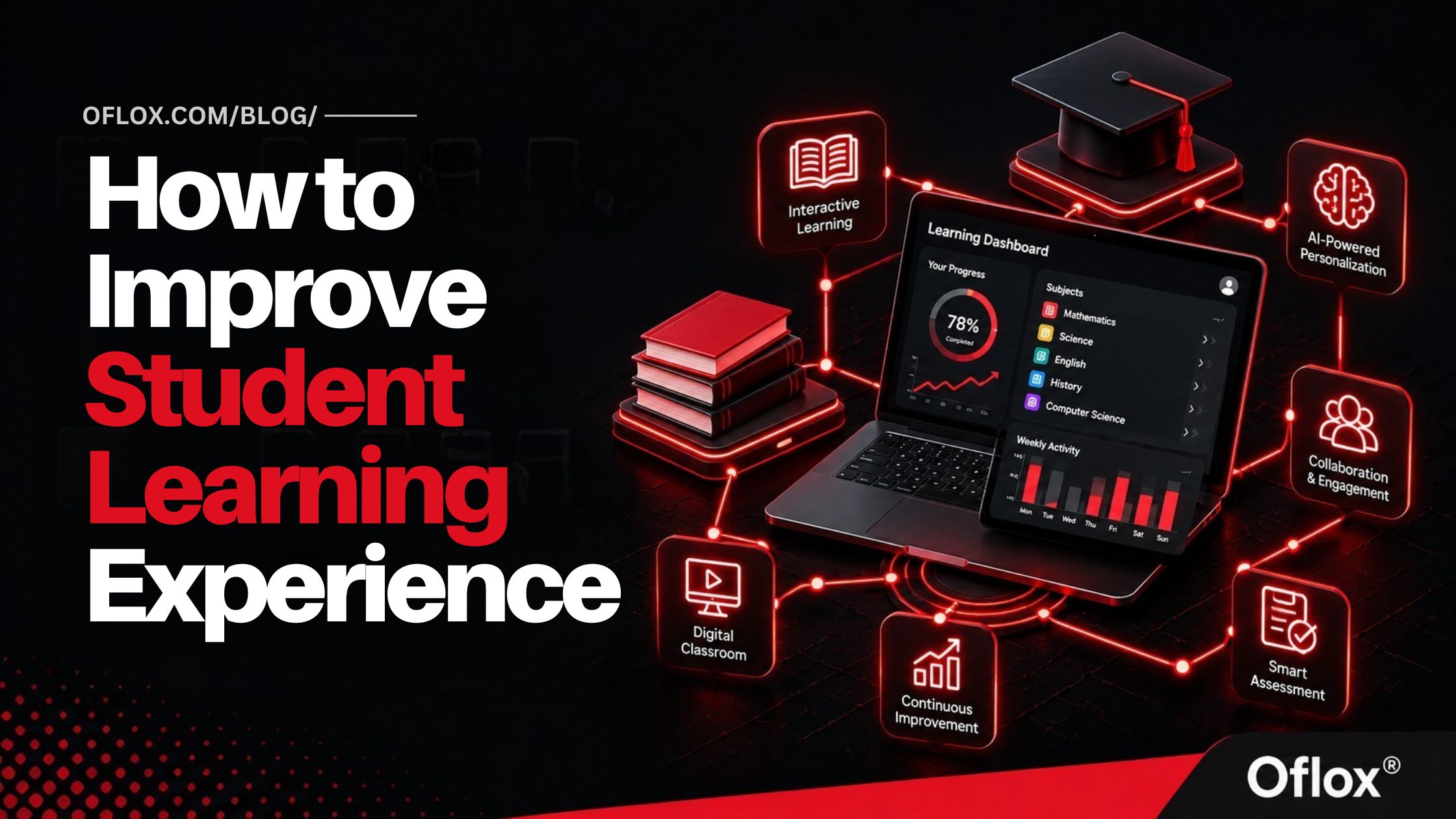
As education continues to evolve, improving the student learning experience has become one of the most important priorities for schools, colleges, universities, corporate training programmes, and online learning platforms. Institutions that focus on student engagement, continuous feedback, digital transformation, and learner-centred education are better equipped to prepare students for future careers and lifelong success.
Let’s explore it together.
Table of Contents
What Is Student Learning Experience?
Student Learning Experience is all that the student encounters during his/her process of learning. This may involve learning from teachers, online learning, teamwork, assignments, teacher support, school facilities, and peer interaction.
Learning that is good makes learners experience a sense of excitement in learning. Through these experiences, the students are able to grasp the concepts being taught easily. This makes the students free to ask any questions and competent in developing various skills such as problem-solving. Bad learning experiences hinder the learners from performing optimally.
Simple study methods, such as using Annotate PDF tools to highlight key points and write notes on digital study materials, can make learning even more effective. On the other hand, poor learning experiences can reduce motivation and make it harder for students to perform at their best.
Why Do Students Need Good Learning Experiences?
There are several reasons why good learning experiences help students:
- To remain motivated.
- To understand the material better.
- To become confident.
- To improve their results.
- To develop problem-solving skills.
- To think outside the box.
- To collaborate with other people.
- To be ready for working in the future.
Students who like studying will remain curious about the world and continue to learn throughout their lives.
1. Create an Engaging Learning Environment
As the students get more comfortable, they start getting more involved. This is why making an enjoyable atmosphere in class and at home is necessary.
This can be done by teachers in the following manner:
- By encouraging discussion.
- By valuing each student’s point of view.
- By organizing lessons.
- By using positive language.
- By praising students’ accomplishments.
2. Create An Interactive Environment For Students
Prolonged lectures will be hard for students to listen to attentively. To maintain their interest in learning and get them engaged in the learning process, the teacher should make the learning process more interactive. To make learning interactive, teachers can do the following:
- Organize group discussions
- Organize classroom games
- Offer hands-on activities
- Organize science experiments
- Encourage role-play
- Offer quizzes
- Organize classroom debates
It will be easier for students to remember facts due to their engagement in the learning process because of various activities.
3. Promoting Active Learning
Active learning is defined as the situation where students become actively involved in their learning process rather than passively reading books or listening to lectures.
Some of these include:
- Solving problems that exist in the real world
- Doing projects
- Exchanging ideas with other students
- Questioning
- Creating presentations
- Completing tasks
4. Apply Technology Efficiently
With the development of technology, learning processes have become easier. There are educational tools that can make lessons more entertaining and make it possible to learn according to one’s schedule.
Such educational tools include:
- Educational videos
- Online quizzes
- Interactive learning platforms
- Digital flashcards
- Virtual classes
- Learning apps
Many students also use educational apps on their mobile devices to study more efficiently. For iPhone and iPad users who install apps outside the App Store, use Scarlet downloads that make it easier to install and manage compatible IPA applications.
5. Foster Collaborative Learning
Collaborative learning is an effective way for students to study. Group activities help students do the following:
- Exchange ideas
- Gain insight from other views
- Improve their communication skills
- Develop teamwork
- Find solutions collaboratively
Collaborative learning fosters students’ confidence and social skills.
6. Provide Constructive Feedback
Constructive feedback is important in helping students know their strengths and areas that need improvement.
Feedback must be:
- Clear
- Positive
- Specific
- Encouraging
- Regular
Rather than focusing on errors alone, teachers must show students how they can do better. Positive feedback acts as a motivation for students.
7. Adapt to Various Learning Styles
Each student is unique in the way they study. Students may learn differently because of their individual:
- Learning through reading
- Learning through listening
- Learning by watching videos
- Learning visually through drawing diagrams
- Learning practically by engaging in different activities
Various learning techniques make learning easier for all students.
8. Establish Learning Objectives
Students benefit from knowing what they aim at achieving. Before teaching the lessons, teachers should state the learning objectives. Goals that a learner can set for himself may include:
- Reading one chapter daily
- Handing in assignments on time
- Improving test marks
- Learning five new words daily
Learners must have specific goals that can motivate them and allow them to measure their progress.
9. Establish Positive Teacher-Student Relationships
Positive teacher-student relationships play a crucial role in the effective learning process. Students feel more relaxed about asking questions of their teachers who are:
- Approachable
- Patient
- Respectful
- Helpful
- Encouraging
10. Encouragement of Critical Thinking Skills
There is no doubt that students can be encouraged not just to memorize information but to analyze it.
Examples of questions to teachers include:
- Why do you think this happened?
- Can you find any other solution for this?
- What if the situation were different? What would happen then?
- How will you handle this situation?
11. Promote Daily Reading
Daily reading increases vocabulary, grammar, knowledge, and creativity. The following resources should be used for daily reading:
- Story books
- Newspaper
- Scientific publications
- Books on history
- Blogs for education
Just 20–30 minutes of daily reading will bring enormous improvement in your skills and knowledge.
12. Support Organizational Skills
Organization decreases stress and promotes productivity. Students can organize themselves by doing the following:
- Maintaining planners
- Scheduling time for studies
- Writing neat notes
- Organizing all educational materials
- Finishing homework in advance
With proper organization, students can use more time for studying rather than looking for notes and finishing their homework.
Besides learning platforms and digital flashcards, document management tools also help students stay organized. For example, https://juntar-pdfs.com.br/ allows users to merge multiple PDF files into a single document, making it easier to organize class notes, assignments, and study materials in one place
13. Make Learning an Enjoyable Process
The learning process should not be boring all the time. Teachers may make their classes interesting by adding:
- Games related to education
- Stories
- Competitions
- Creativity-based projects
- Various art activities
- Music
- Challenging tasks
Students’ interest in the learning process stimulates curiosity and creativity.
14. Foster Independent Learning
Students need to know how to learn on their own.
Independent learners tend to:
- Research the subject matter.
- Read more.
- Practice regularly.
- Ask questions.
- Find solutions to problems without giving up.
This fosters independence and will be useful in their future education and career.
15. Help Students Feel Well
Learning is facilitated by good health and a positive mood in the students. Parents and schools have to motivate students to:
- Sleep properly.
- Have healthy nutrition.
- Do exercises.
- Take breaks while studying.
- Reduce stress.
- Strike a balance between studying and rest.
Good mental and physical condition will improve their attention and learning.
Challenges That May Obstruct Student Learning
Lots of students experience various challenges that hinder their learning. Examples of such challenges are:
- Lack of motivation.
- Poor time management.
- Stress and anxiety.
- Distractions.
- Lack of access to learning materials.
- Fear of failure.
Identifying these challenges will help you deal with them.
Tips for Students to Enhance Their Learning Experience
The following practices will help students enhance their own learning experience:
- Attend all classes.
- Join in the discussion.
- Review the class every day.
- Clarify doubts whenever required.
- Practice active listening.
- Note down things systematically.
- Study in a peaceful environment.
- Make proper use of technology for education.
- Maintain your curiosity to learn.
Even small steps taken regularly may result in big academic achievements.
Conclusion:)
All teachers, parents, schools, and students need to know how to improve the learning experience of the students. The process of learning gains significance when students are encouraged and motivated in an appropriate environment. When such measures are taken to create a good environment for learning, motivate the students to participate actively, make proper use of technology, set up goals, and ensure proper study habits, then students acquire the knowledge and skills required to be successful in life.
To improve the learning experience, there is no need for any big change. All it requires is some little efforts that collectively lead to an enriching experience of learning.
“A great learning experience doesn’t just teach students what to think—it empowers them to discover how to learn, adapt, innovate, and succeed throughout life.” — Mr Rahman, Founder of Oflox®
Read also:)
- What Is Prompt Chaining? A Complete Guide for Beginners!
- What Is Progressive Web App (PWA): A Step-by-Step Guide!
- What Is a Vector Database: A Complete Guide for Beginners!
Have you implemented any strategies to improve student learning experience, or do you have ideas that have worked in your classroom or institution? Share your thoughts in the comments below—we’d love to hear your experiences and continue the conversation.