This article provides a guide to common promotional product design mistakes and how to avoid them. If you want to create branded merchandise that looks professional, feels useful, and represents your business well, this guide will help you make better design decisions.
A promotional product can introduce your business without a sales conversation. A customer might carry your branded bag to work, use your pen during meetings, or drink from your mug every morning. Each interaction creates another opportunity for someone to notice your brand.
However, placing a logo on an item does not automatically make it an effective marketing tool.
An overcrowded layout, unreadable text, unsuitable colors, or poor product quality can weaken the impression you want to create. Even an attractive design can disappoint when it is printed on the wrong surface or reduced to a size where important details disappear.
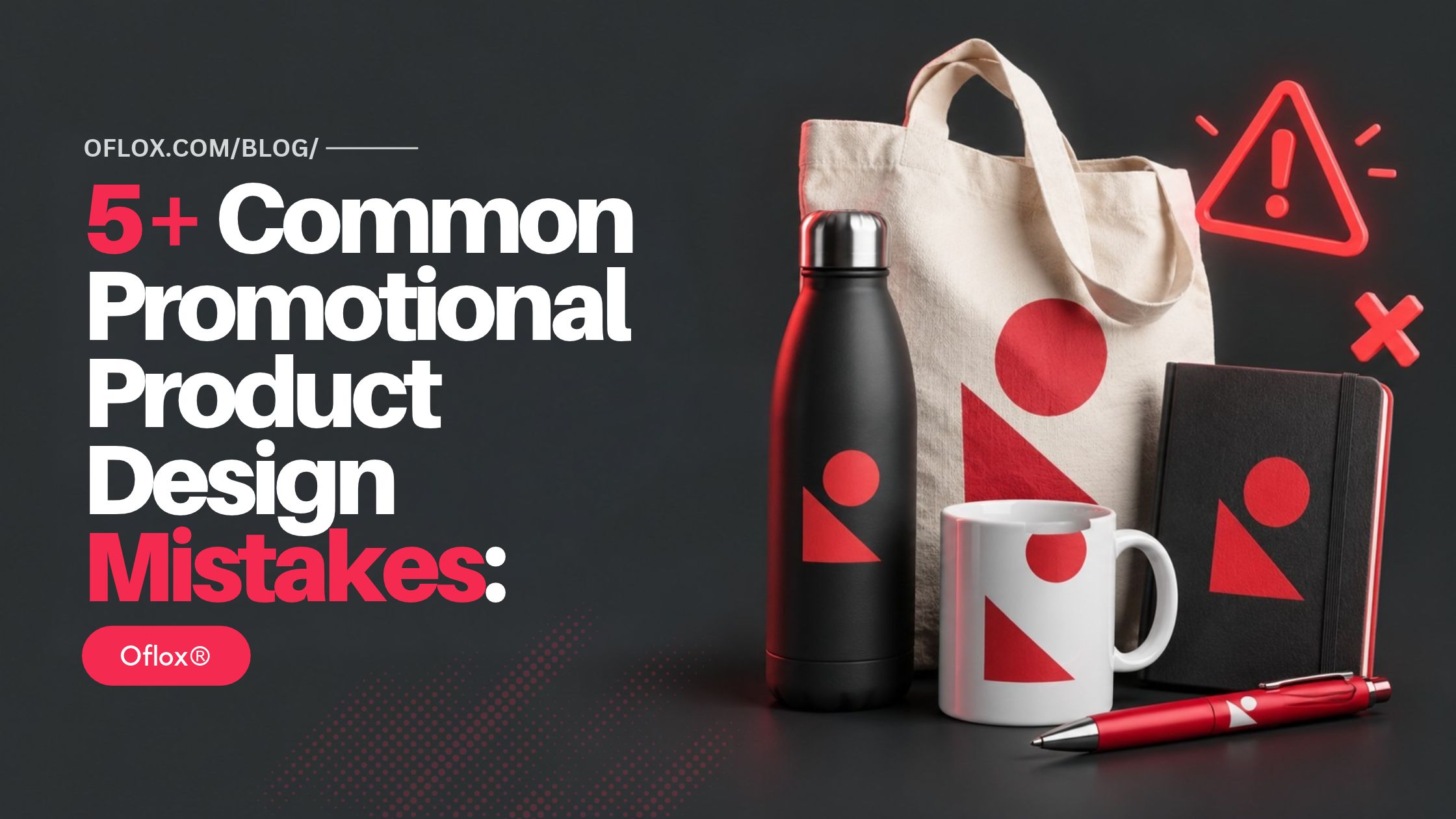
The good news is that many of these problems are preventable. With a clear purpose, a suitable product, and a careful review process, you can create promotional merchandise that people enjoy using.
Let us understand this step by step.
Table of Contents
5+ Common Promotional Product Design Mistakes!
Many people think promotional products are just about putting a logo on an item. But there is more to it. Even though designing these products seems simple, common mistakes can still happen.
Here are some tips to help you avoid them.
1. The design is too complicated
You might want the product to have your:
- Logo
- Slogan
- Website
- Phone number
- Social media information
- Brand colors.
But this is too much information. It might not fit into the product design.
Rather, put the most salient details. Depending on the product, one key detail may be sufficient. It could be the business name or logo.If there is more space, add a website. Or a brief contact detail.
The goal is not to clutter the design. You should also leave empty space around the text and other details.
2. Selecting colors that are difficult to read
The colors you use in your company branding may be fantastic on your site. But not always on your promotional items.
For example:
- Light lettering on a dark background. It can be hard to read.
- Dark lettering on a light background. It can also be difficult to see.
Contrast is a very important aspect in design. It helps make your design more noticeable. Select colors that contrast with the product’s surface. Test the design colors before ordering.
3. Failing to consider the specific product
The design that will fit on a notebook can be awkward on a travel mug or a small promotional pen. Each has different:
- Printing areas
- Curves
- Limitations.
Always verify the minimum recommended details like:
- Print area
- File specifications.
Avoid placing key text on:
- Edges
- Seams
- Hard-to-read spots.
Maybe your logo has small print. Check whether you can read it in a smaller size on the product.
You may need to tweak the design to suit the product.
4. Choosing irrelevant items
A product may be appealing. But it might not be useful to the recipient. Then it is not a good choice. For example:
- A bag with poor handles
- A very small writing area on a notebook
- A poor-quality mug.
These items may not serve the user well.
So, be careful when choosing custom promotional products. Consider:
- The recipient
- Possible uses
- Quality.
For example, a pen could be a good corporate gift.
5. Overlooking the final design review
Some design mistakes might appear small. But they can have a big impact when they appear on hundreds of promotional products. Common errors include:
- A blurry logo
- A misspelled website address
- An outdated contact number.
This is why the final design check matters.
This step allows you to verify the small details like:
- Logo placement
- Contact details
- Colors
- Every piece of text
Confirm and ensure the design suits your specifications. You may consider ordering a small sample first. Then you can commit to a large quantity when you are satisfied with the products.
6. Ignoring Packaging and Presentation
Even a well-designed promotional product can leave a poor impression if its packaging looks untidy or fails to protect it. This is especially important for customer gifts, employee welcome kits, and items delivered by courier.
Common packaging mistakes include:
- Using boxes that are too large or too small.
- Providing insufficient protection for fragile items.
- Adding excessive wrapping that makes unpacking inconvenient.
- Using inconsistent branding on packaging and inserts.
How to Avoid It?
Choose packaging that suits the product and the occasion. Before approving your order, check:
- Fit: Ensure the item sits securely inside its packaging.
- Protection: Use suitable inserts or cushioning where needed.
- Branding: Keep logos, colors, and printed messages consistent.
- Presentation: Make the package neat and easy to open.
Example: A branded mug placed loosely inside an oversized box may break during delivery. A correctly sized box with protective inserts helps it arrive safely and look professionally presented.
Pro Tip: Request a fully packaged sample so you can review the complete experience before placing a bulk order.
Conclusion:)
Preparing for an AI bubble burst starts with understanding how your finances, career, and business depend on the AI industry.
Build accessible emergency savings, strengthen transferable skills, review concentrated investments, and keep backup options for essential AI tools. For businesses, focus on healthy cash flow, customer relationships, and measurable returns from technology.
At Oflox®, we believe the best preparation is to stay informed, make thoughtful decisions, and build value that remains useful as markets change.
“The strongest preparation for an AI downturn is useful skills, financial discipline, and a business built around real customer needs.” — Mr Rahman, Oflox®
Read also:)
- How to Prepare for AI Bubble Burst: A Step-by-Step Guide!
- 10+ Best AI Voice Calling Agents in India: A Complete Guide!
- What Is Internet Lockdown? A Complete Guide for Beginners!
Which step will you take first to make your career or business more resilient in a changing market? Share your thoughts, experiences, and practical tips in the comments below—we’d love to hear from you!