This article serves as a professional guide on Essential Infrastructure Businesses Need Before Solar Installation energy systems. Many rural businesses today are shifting toward solar power because electricity costs continue to rise every year.
Rural businesses pay a lot for electricity. Irrigation pumps, refrigeration, grain handling, processing equipment: the bill at the end of the month reflects all of it, and it rarely surprises anyone in a pleasant direction. Solar makes sense as a response. The roof space is there, the sunshine is there, and the running hours that justify the investment are there too.
What is sometimes less visible is the gap between the property as it currently stands and the property that is actually ready to have a solar system commissioned and connected to the grid. That gap has a specific list of items in it.
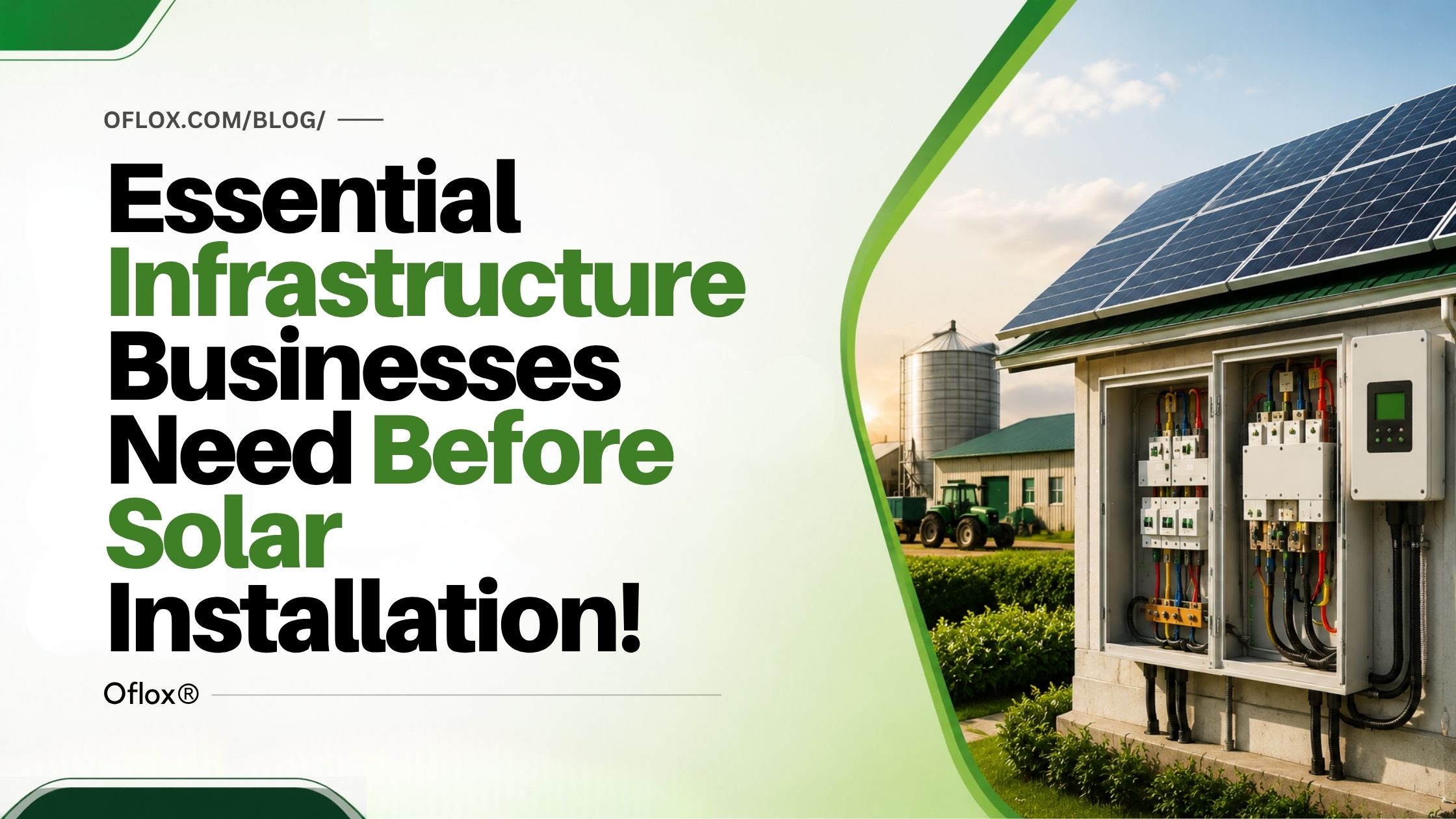
In this detailed guide, we will explore the most important infrastructure upgrades rural businesses should complete before solar installation and why these steps matter for long-term performance and return on investment.
Let’s explore it together!
Table of Contents
Essential Infrastructure Businesses Need Before Solar Installation!
Before installing a commercial solar system, businesses must first prepare the right electrical and operational infrastructure to ensure safety, efficiency, long-term savings, and smooth solar performance.
1. The Switchboard Doing a Commercial Job Needs to Be Commercial Grade
A rural business running multiple high-draw machines simultaneously is asking a lot of its switchboard. Now add a solar system feeding additional current into that same infrastructure and the ask gets larger. Switchboards that were installed when the operation was smaller, or that were designed for a domestic load profile rather than a commercial one, are regularly found to be inadequate for what is now being asked of them.
The assessment that identifies what needs upgrading before anything else happens is part of what solar installers Boddington bring to a site visit. A switchboard that cannot safely handle the solar system feeding into it is a switchboard that needs to be addressed before the installation date, not discovered as a complication on the day.
2. Three-Phase Supply Needs Careful Solar Integration
Most rural businesses with serious machinery run on three-phase power. Solar feeding into a three-phase supply needs to be balanced across all three phases correctly. Get that balance wrong and efficiency drops, equipment stress increases, and the financial case for the installation starts looking worse than the modelling suggested.
The inverter configuration, the connection point, and the interaction between the solar system and the three-phase infrastructure all require specific design decisions.
And the connection work itself requires a level 2 electrician: the accreditation level that covers work between a property’s internal wiring and the network, including meter upgrades and point-of-supply connections. Getting this qualification involved at the planning stage rather than discovering it is needed partway through installation is the version of this conversation nobody regrets having early.
3. Monitoring the System Is Not Optional for a Business
A commercial solar system with no monitoring is a solar system that nobody knows is working correctly. Panel faults, inverter errors, and shading issues reduce output quietly and consistently without announcing themselves. For a business where the financial justification for the installation rests on specific energy cost reductions, knowing the system is delivering what was modelled is not a comfort feature. It is how the investment gets managed.
Data cabling and monitoring infrastructure planned before installation costs a fraction of what retrofitting it afterwards costs. Plan it in, and it is just part of the job. Add it later, and it is a separate project.
4. Battery Storage: Plan for It Now Even If It Is Not Happening Yet
Battery storage economics are improving every year. Many rural businesses that do not include battery storage in the initial installation add it within three to five years as overnight energy value becomes clearer. A solar installation designed with battery integration in mind, with the right inverter, the right switchboard configuration, and the right physical space, costs significantly less to extend than one that was not.
The design decision costs nothing at the planning stage. The retrofit costs considerably more.
Conclusion:)
Rural businesses that complete the infrastructure work before the solar installation get cleaner approvals, fewer delays, and systems that perform as modelled across their full working life. Switchboard capacity, three-phase integration, monitoring infrastructure, and battery readiness are the four items that determine whether the investment delivers what the proposal said it would.
“The best solar investment starts with strong infrastructure planning, not just solar panels.” – Mr Rahman, CEO Oflox®
Read also:)
- How to Pitch a Business Idea in 5 Minutes (Beginner’s Guide)
- How to Raise Funds for Startup Business in India (A-to-Z Guide!)
- What is Subscription Business Model: A-to-Z Guide for Beginners!
Have you checked your business infrastructure before planning solar installation? Share your experience or questions in the comments below — we’d love to hear from you!