This article provides a complete guide on How to Build a FinTech App, covering FinTech app types, market background, planning, development steps, important features, technology stack, security, regulatory compliance, development cost, challenges, recommended tools, successful examples, common mistakes, expert tips, and future trends for 2026 and beyond.
FinTech applications are changing the way individuals and businesses make payments, manage money, obtain loans, invest, purchase insurance, and access banking services. With the rapid adoption of smartphones, UPI, digital banking, artificial intelligence, and cloud technology, the demand for secure and convenient financial applications is continuously increasing.
However, a successful FinTech app requires more than an attractive design and useful features. It must protect sensitive financial data, process transactions accurately, prevent fraud, comply with applicable regulations, and deliver a transparent experience that users can trust.
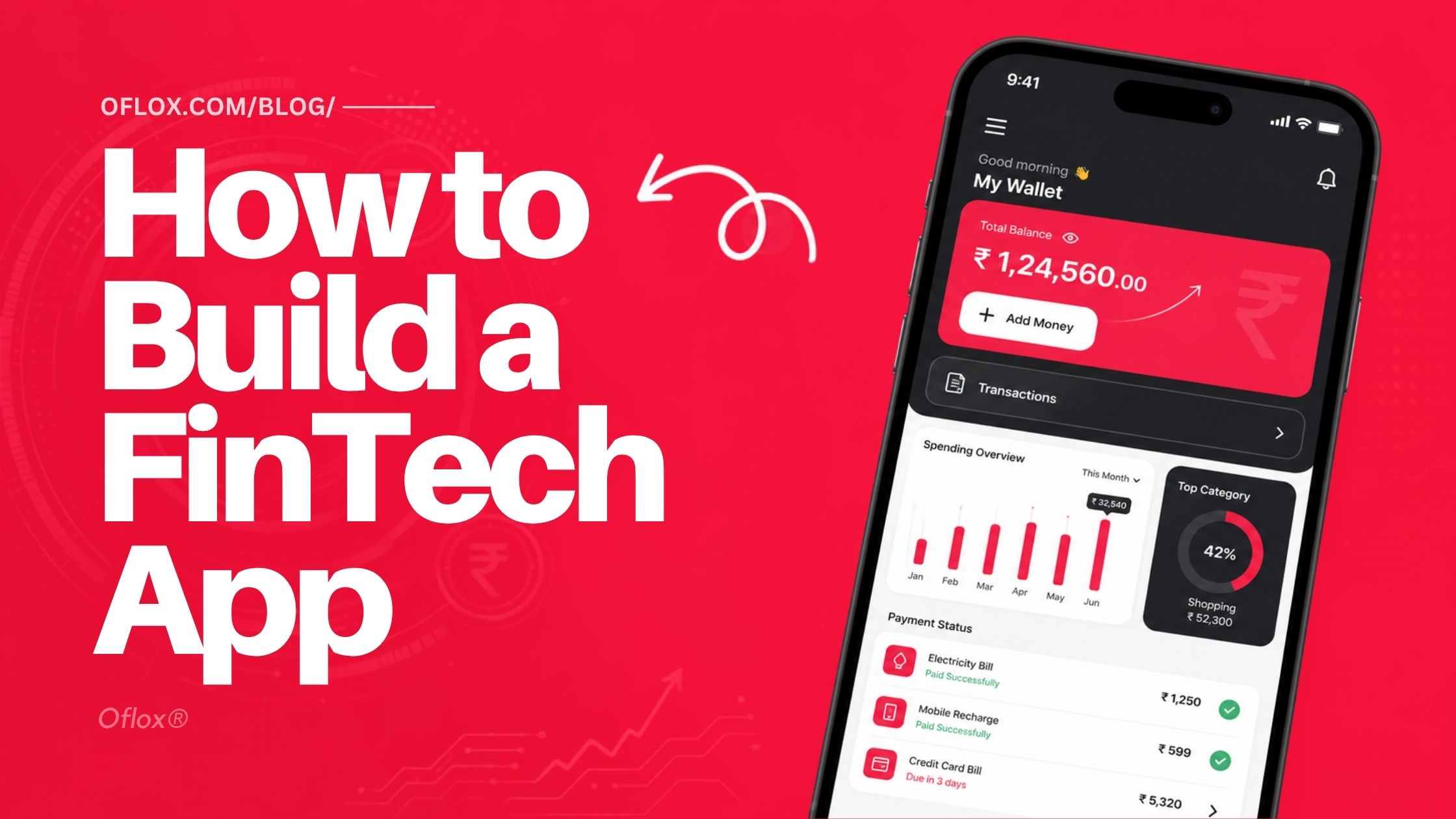
Whether you want to launch a FinTech start-up, digitise an existing financial service, or understand the complete development process, this guide will provide the practical knowledge needed to turn your FinTech app idea into a secure and scalable product.
Let’s explore it together!
Table of Contents
What Is a FinTech App?
A FinTech app is a mobile, web, or software application that uses technology to provide, improve, or automate financial services.
The word “FinTech” is formed by combining “financial” and “technology”. A FinTech application may help users transfer money, manage bank accounts, obtain loans, invest in financial assets, purchase insurance, track expenses, or make digital payments.
Popular examples include mobile banking apps, UPI applications, digital wallets, investment platforms, lending apps, expense management software, and insurance marketplaces.
In simple words:
A FinTech app is a digital platform that enables users or businesses to access and manage financial services through technology.
Unlike ordinary applications, FinTech apps usually handle confidential information such as:
- Bank account details
- Payment credentials
- Identity documents
- Transaction records
- Credit information
- Investment portfolios
- Income and expense data
- Insurance information
- Personal and contact details
Therefore, security, compliance, reliability, and transparency must be considered from the beginning of FinTech app development.
A Brief History of FinTech Applications
Financial technology existed long before smartphones became popular. ATMs, electronic stock trading systems, credit card networks, and internet banking were all early forms of FinTech.
The development of modern FinTech can broadly be understood through the following stages:
| Period | Major development |
|---|---|
| 1950s–1980s | Credit cards, ATMs, electronic payment networks and banking computers |
| 1990s | Internet banking and online stock trading |
| 2000s | Online payment gateways, digital lending and early mobile banking |
| 2010s | Smartphones, digital wallets, neo-banks, robo-advisors and blockchain |
| 2020s | Embedded finance, open banking, AI fraud detection, BNPL and real-time payments |
| 2026 and beyond | Agentic finance, programmable money, tokenised assets and intelligent financial assistants |
In India, digital identity, smartphone adoption, affordable internet access, UPI, account aggregation, and growing financial awareness have accelerated FinTech adoption.
NPCI describes UPI as a system that allows users to send, receive, and manage money in real time. It has enabled businesses to build convenient payment experiences without requiring customers to enter bank details for every transaction.
At the same time, regulators are developing frameworks for digital lending, data protection, customer grievance management, tokenisation, cybersecurity, and controlled product testing.
Why Is FinTech App Development Important?
A well-designed FinTech app can make financial services faster, more accessible, and more convenient. It can also reduce operating costs and help financial companies serve customers who may not have easy access to traditional branches.
1. Growing demand for digital financial services
Customers increasingly prefer using mobile applications for payments, banking, investing, and money management. A FinTech app allows a business to serve users wherever they are.
2. Better financial inclusion
FinTech platforms can make financial products accessible to people in smaller cities, rural areas, and underserved communities.
Users may access payments, savings, insurance, credit, or investment services without regularly visiting a physical office.
3. Faster transactions
Digital systems can automate verification, payments, account updates, underwriting, reconciliation, and reporting.
This reduces manual work and improves processing speed.
4. Lower operational expenses
FinTech businesses can automate many repetitive processes that traditionally require paperwork or human intervention.
However, these savings must be balanced against compliance, infrastructure, security, customer support, and fraud-management costs.
5. Personalised financial experiences
With proper consent and lawful data processing, FinTech apps can analyse user behaviour and provide relevant:
- Spending insights
- Payment reminders
- Budget recommendations
- Investment information
- Credit eligibility indicators
- Fraud alerts
- Savings suggestions
6. Better business scalability
A properly designed cloud-based platform can support a growing number of users, transactions, integrations, and financial products.
Scalability should still be tested carefully because transaction spikes can affect performance and reliability.
Major Types of FinTech Apps
The architecture, compliance requirements, features, and development cost of your application will depend on the category you choose.
1. Digital payment apps
These apps allow users to send, receive, or collect payments through mechanisms such as UPI, cards, bank transfers, QR codes, or digital wallets.
Common features include:
- Peer-to-peer transfers
- Merchant payments
- QR code scanning
- Payment history
- Bill payments
- Refund tracking
- Transaction notifications
2. Mobile banking apps
Mobile banking apps allow customers to access services offered by a licensed bank or financial institution.
They may include balance checking, account statements, fund transfers, cheque services, deposits, cards, and customer support.
3. Digital lending apps
Digital lending platforms help users discover, apply for, receive, and manage loans.
A lending app may provide:
- Digital application forms
- Identity verification
- Eligibility checks
- Credit assessment
- Loan offers
- Digital agreement execution
- Repayment schedules
- Customer grievance channels
In India, lending apps must carefully follow applicable RBI requirements and work through legally permitted structures. A technology company should not represent itself as a lender unless it holds or operates under the required regulatory authorisation.
4. Personal finance management apps
These apps help users track income, expenses, budgets, subscriptions, savings goals, and financial health.
They may automatically categorise transactions or allow users to enter information manually.
5. Investment and wealth-management apps
Investment apps provide access to products such as mutual funds, stocks, bonds, exchange-traded funds, and other eligible instruments.
Depending on the service, relevant SEBI registrations and regulations may apply.
6. InsurTech apps
InsurTech applications help users compare, purchase, renew, or manage insurance policies.
They may also simplify claims, document submission, customer support, and risk analysis.
7. Neo-banking platforms
A neo-bank provides a digital banking-like interface, usually in partnership with regulated banks or financial institutions.
It may offer digital accounts, expense tracking, cards, payments, and business financial management. The app itself should not misleadingly claim to be a licensed bank if it is not one.
8. Cryptocurrency and blockchain apps
These applications support activities such as crypto portfolio tracking, virtual digital asset transactions, custody, or blockchain-based transfers.
The legal and tax treatment of such services varies considerably across jurisdictions. Businesses must carefully evaluate applicable reporting, KYC, AML, tax, custody, and consumer-protection requirements.
9. B2B FinTech platforms
B2B FinTech solutions help companies manage:
- Payroll
- Invoicing
- Vendor payments
- Corporate cards
- Tax workflows
- Expense management
- Cash flow
- Reconciliation
- Financial reporting
10. RegTech applications
RegTech platforms help financial organisations manage compliance, identity verification, fraud monitoring, suspicious activity reviews, audit records, and regulatory reporting.
How to Build a FinTech App
Building a successful FinTech app requires more than writing code. Product strategy, legal structure, security architecture, and customer trust must develop together.
1. Identify a Real Financial Problem
Begin with a clear problem instead of a long list of features.
Ask:
- Who is experiencing the problem?
- How do users currently solve it?
- Why is the existing process inconvenient?
- Does the problem occur frequently?
- Will customers pay for a better solution?
- Is the proposed solution legally possible?
- Which regulated entities may need to participate?
For example, “building a payment app” is too broad.
A more specific problem could be:
Small Indian agencies struggle to collect recurring payments, match them with invoices, and follow up with clients.
This clearly identifies the target audience, financial workflow, and business need.
Interview potential users before development. Speak to customers, accountants, financial professionals, support teams, and compliance experts.
2. Select Your FinTech Business Model
Your business model determines how the application will create and capture value.
Common FinTech revenue models include:
| Model | How it earns revenue |
|---|---|
| Subscription | Users pay monthly or annual fees |
| Transaction fee | A fee is charged on eligible transactions |
| Commission | Revenue is earned from financial product distribution |
| Interest-related income | Applicable to authorised lending structures |
| SaaS licensing | Businesses pay to use financial software |
| Freemium | Basic features are free and advanced tools are paid |
| Interchange-related revenue | Eligible card programmes share qualifying revenue |
| Lead generation | Qualified leads are referred to licensed providers |
| Advisory fee | Fees are collected where legally permitted |
| White-labelling | Technology is licensed to other financial businesses |
Do not finalise the revenue model without checking whether the proposed fee, commission, lending structure, or advisory service requires a licence or disclosure.
3. Conduct Market and Competitor Research
Study both direct and indirect competitors.
Evaluate:
- Target audience
- Core value proposition
- User onboarding
- Pricing
- App reviews
- Security communication
- Customer complaints
- Support experience
- Product integrations
- Regulatory partnerships
- User interface
- Revenue model
App-store reviews are especially useful. They can reveal common problems such as failed transactions, delayed refunds, unclear charges, slow verification, confusing interfaces, or poor customer support.
Your goal should not be to copy a competitor. Identify a narrow problem you can solve more safely, clearly, or efficiently.
4. Define the Legal and Regulatory Structure
This is one of the most important stages.
The regulations applicable to your app depend on what the platform actually does, not merely what you call it.
Depending on your business, you may need to consider:
- Reserve Bank of India requirements
- Securities and Exchange Board of India regulations
- Insurance Regulatory and Development Authority of India requirements
- KYC and anti-money-laundering obligations
- Digital lending guidelines
- Payment aggregator or payment system requirements
- Consumer-protection laws
- Information technology requirements
- Digital Personal Data Protection requirements
- Tax and accounting rules
- Card-network rules
- Data localisation requirements
- Grievance-redressal obligations
The Digital Personal Data Protection Act, 2023, provides a framework for processing digital personal data for lawful purposes while recognising individuals’ right to protect their data. The Digital Personal Data Protection Rules, 2025, have phased commencement provisions, making implementation planning particularly important.
You should involve legal and compliance professionals during product discovery—not only before launch.
Create a regulatory responsibility matrix showing:
- Who holds the customer relationship
- Who processes payments
- Who performs KYC
- Who stores each data category
- Who manages complaints
- Who monitors suspicious activity
- Which partner holds the required authorisation
- Which disclosures must appear inside the app
5. Define the Minimum Viable Product
A FinTech MVP is the smallest secure and compliant product that can solve the main user problem.
It does not mean launching an unsafe or incomplete financial product.
For example, a personal finance MVP may include:
- User registration
- Secure login
- Manual expense entry
- Expense categories
- Monthly summaries
- Budget creation
- Data export
- Privacy controls
- Customer support
Features such as AI recommendations, account aggregation, family accounts, investments, or complex automation can be added later.
Prioritise features using four categories:
- Must have
- Should have
- Could have
- Not required now
Security, consent, transaction records, disclosures, customer support, and regulatory requirements should never be treated as optional enhancements.
6. Create User Flows and Product Architecture
Map every important user journey before designing screens.
Typical flows include:
- Registration and login
- Identity verification
- Bank or payment account linking
- Adding money
- Sending or receiving payments
- Applying for a financial product
- Approving consent
- Viewing transaction status
- Reporting an unauthorised transaction
- Requesting a refund
- Closing an account
- Downloading or deleting eligible data
Also map failure states.
What happens when:
- KYC fails?
- A transaction remains pending?
- A bank API is unavailable?
- The user enters the wrong details?
- A duplicate payment is detected?
- A session appears suspicious?
- A webhook arrives twice?
- A refund is delayed?
- A user loses the registered device?
FinTech products must be designed for failure as carefully as they are designed for success.
7. Design a Secure and Simple User Experience
Financial applications should communicate clarity and trust.
Use:
- Simple navigation
- Clear monetary values
- Familiar financial language
- Visible transaction status
- Confirmation before high-risk actions
- Transparent charges
- Clear consent requests
- Accessible typography
- Helpful error messages
- Easy access to support
Avoid dark patterns such as pre-selected consent, hidden charges, forced permissions, misleading countdowns, or confusing loan terms.
A user should always understand:
- What action is happening
- How much it will cost
- When it will complete
- Which party is providing the service
- What data is being collected
- How to cancel, dispute, or obtain support
8. Select the Technology Stack
The right stack depends on budget, scale, integrations, team experience, and security requirements.
| Layer | Common technology options |
|---|---|
| Android | Kotlin, Java |
| iOS | Swift, SwiftUI |
| Cross-platform | Flutter, React Native |
| Web frontend | React, Angular, Vue.js, Next.js |
| Backend | Java, Kotlin, Node.js, Python, Go, .NET |
| Database | PostgreSQL, MySQL, MongoDB where appropriate |
| Cache | Redis |
| API | REST, GraphQL where suitable |
| Cloud | AWS, Microsoft Azure, Google Cloud |
| Containers | Docker, Kubernetes |
| Messaging | Kafka, RabbitMQ, managed queues |
| Monitoring | Prometheus, Grafana, Datadog, New Relic |
| Analytics | Mixpanel, Amplitude, privacy-conscious alternatives |
Use managed financial infrastructure where it reduces your compliance scope and operational risk. However, third-party services do not remove your responsibility to assess security, contracts, data processing, availability, and exit planning.
9. Build Security into the Architecture
Security should be a design requirement, not a final testing activity.
Important controls include:
1. Encryption
Use strong encryption for data in transit and at rest. Encryption keys should be protected separately and rotated according to a defined policy.
2. Secure authentication
Implement controls such as:
- Multi-factor authentication
- Device binding where appropriate
- Biometric authentication
- Strong password requirements
- Rate limiting
- Secure password hashing
- Risk-based authentication
- Session timeout
- Session revocation after sensitive security events
Changing a password should normally trigger a carefully designed session-management response. Depending on the threat model, other active sessions may need to be revoked or subjected to re-authentication.
3. Tokenisation
Avoid storing raw card information whenever possible. RBI explains card tokenisation as replacing actual card details with an alternate code called a token.
Tokenisation and hosted payment components can reduce exposure, although they do not automatically eliminate all compliance responsibilities.
4. Role-based access control
Employees, support agents, developers, partners, and administrators should only access the information required for their roles.
Privileged actions should be logged and regularly reviewed.
5. Secure APIs
Protect APIs using:
- Strong authentication and authorisation
- Schema validation
- Rate limits
- Replay protection
- Idempotency keys
- Signed webhooks
- Secret rotation
- Input validation
- Audit logs
- Version management
6. Fraud prevention
A fraud-monitoring system may evaluate:
- Device changes
- Login location
- Transaction frequency
- Payment velocity
- New beneficiaries
- Unusual amounts
- Failed authentication attempts
- Impossible travel patterns
- Known compromised devices
Automated decisions should be monitored for accuracy, bias, false positives, and customer impact.
7. PCI DSS
If your application stores, processes, or transmits payment card account data—or can affect the security of that environment—evaluate its PCI DSS scope with qualified professionals.
PCI DSS v4.0.1 is the current active version as of July 2026. It provides baseline technical and operational requirements for protecting payment account data.
10. Integrate Financial APIs and Partners
Most FinTech apps depend on external services.
Possible integrations include:
- Payment gateways
- UPI service providers
- Banking partners
- KYC providers
- Account Aggregator ecosystem participants
- Credit bureaus
- Card networks
- Insurance providers
- Investment infrastructure
- Fraud intelligence platforms
- SMS, email and push-notification services
Before selecting a provider, assess:
- Regulatory status
- API reliability
- Security certifications
- Pricing
- Documentation
- Sandbox availability
- Data-processing terms
- Incident-reporting process
- Support quality
- Settlement timelines
- Rate limits
- Webhook reliability
- Exit and migration options
Build an abstraction layer where practical so that changing providers does not require rebuilding the entire application.
11. Develop the Application
FinTech development is usually divided into short, controlled iterations.
A typical sprint may include:
- User stories and acceptance criteria
- Threat modelling
- Interface design
- Backend development
- API integration
- Automated tests
- Security review
- Compliance validation
- Product demonstration
- Documentation
Use code reviews, protected branches, automated security scanning, controlled secrets, and separate development, testing, and production environments.
Never use real customer financial data in development environments unless there is a specifically authorised and protected requirement.
12. Test the FinTech App Thoroughly
Testing should cover much more than whether a button works.
- Functional testing: Confirm that every feature performs as expected.
- Security testing: Conduct Static application security testing, Dynamic application security testing, API security testing, Mobile security testing, Dependency scanning, Penetration testing, Cloud-configuration review, and Threat modelling.
- Performance testing: Simulate normal traffic, peak transaction periods, repeated requests, partner delays, and sudden workload spikes.
- Transaction integrity testing: Verify that Duplicate requests do not create duplicate payments, failed transactions are correctly recorded, Pending transactions are reconciled, Refunds update the right records, Webhooks can be safely retried, and Ledger balances remain consistent.
- Usability testing: Observe real users completing key tasks without assistance.
- Accessibility testing: Ensure that users with visual, motor, hearing, or cognitive limitations can access essential financial services.
- Disaster recovery testing: Test backup restoration, failover, recovery time, recovery point objectives, and communication procedures.
13. Launch a Controlled Pilot
Instead of opening the app to everyone immediately, begin with a limited user group.
A pilot helps you evaluate:
- Onboarding completion
- KYC failure rates
- Transaction success rates
- Customer-support demand
- Fraud patterns
- API reliability
- User understanding
- Reconciliation accuracy
Where applicable, explore regulatory sandbox opportunities. RBI describes a regulatory sandbox as a controlled environment for live testing innovative products or services. Its interoperable sandbox can support innovations that fall under more than one financial-sector regulator.
A sandbox does not replace regulatory permission, but it can provide a structured testing route for eligible innovations.
14. Monitor, Improve and Scale
FinTech development continues after launch.
Monitor:
- Transaction success rate
- Payment latency
- Application crashes
- Fraud losses
- False fraud alerts
- API failures
- KYC completion
- Customer complaints
- Refund time
- Support response time
- User retention
- Security incidents
- Reconciliation differences
Build dashboards and alerts that help teams detect problems before they affect a large number of customers.
Essential Features of a FinTech App
The final feature list depends on your application category, but common features include:
1. User features
- Secure registration and login
- Multi-factor authentication
- Digital KYC
- Profile and account management
- Transaction dashboard
- Searchable transaction history
- Real-time alerts
- Payment or transfer functionality
- Statements and reports
- Spending insights
- Consent management
- Privacy settings
- Customer support
- Dispute reporting
- Account closure process
2. Administrative features
- User management
- KYC review
- Transaction monitoring
- Fraud alerts
- Case management
- Refund management
- Role-based permissions
- Reconciliation tools
- Compliance reporting
- Audit logs
- Content and notification management
- System-health dashboards
Benefits of Building a FinTech App
Building a reliable FinTech app can offer several advantages to businesses and customers.
- It provides 24/7 access to financial services.
- It reduces dependency on physical branches and paperwork.
- It automates repetitive financial workflows.
- It can improve transaction visibility and record-keeping.
- It helps businesses reach customers across multiple locations.
- It enables faster product experimentation.
- It can provide personalised financial insights.
- It supports scalable digital distribution.
- It can improve customer communication through real-time alerts.
- It creates opportunities for embedded and partner-led services.
These benefits only become sustainable when the app also delivers security, regulatory compliance, responsive support, and reliable operations.
Major Challenges in FinTech App Development
Building a FinTech app involves several challenges, from regulatory compliance and data security to fraud prevention, scalability, and maintaining customer trust.
- Regulatory complexity: FinTech products may fall under multiple regulators and legal frameworks. Requirements can also change as technology and risk patterns evolve.
- Cybersecurity risks: Financial apps are attractive targets for phishing, malware, account takeover, credential stuffing, API abuse, insider threats, and payment fraud.
- Customer trust: A confusing fee, delayed refund, poor support response, or security incident can quickly damage confidence.
- Third-party dependency: A FinTech app may rely on banks, gateways, KYC companies, cloud providers, notification services, and data partners. A failure at any one provider may affect the user experience.
- Data privacy: Collecting more data than required increases risk. Businesses need clear purposes, appropriate notices, valid consent where required, retention controls, and mechanisms for exercising applicable data rights.
- Scalability: Financial systems must handle traffic spikes without creating duplicate transactions, inaccurate balances, or inconsistent records.
- Fraud versus user experience: Excessive verification can frustrate legitimate users, while weak controls may increase fraud. Risk-based controls help create a more balanced experience.
Recommended Tools for Building a FinTech App
| Tool or platform | Suitable purpose |
|---|---|
| Figma | UI design and interactive prototypes |
| Flutter | Cross-platform mobile development |
| React Native | Android and iOS app development |
| Kotlin | Native Android development |
| Swift and SwiftUI | Native Apple app development |
| Postman | API development and testing |
| Swagger/OpenAPI | API documentation |
| GitHub or GitLab | Source control and development workflows |
| Docker | Application containerisation |
| Kubernetes | Container orchestration at scale |
| Sentry | Error and crash monitoring |
| OWASP ZAP | Web security testing |
| Burp Suite | Professional application security testing |
| SonarQube | Code-quality and security analysis |
| Prometheus and Grafana | Infrastructure monitoring and dashboards |
| Firebase | Selected authentication, analytics and messaging use cases |
| Jira | Product and development management |
Tool selection should follow your security, compliance, data-location, integration, and procurement requirements.
Real-World FinTech App Examples
Several successful FinTech apps demonstrate how technology can make payments, banking, investing, and money management simpler and more accessible.
- PhonePe: PhonePe demonstrates how a payment application can combine UPI transactions with bills, recharges, merchant payments, and other financial services.
- Zerodha: Zerodha shows the value of a focused investment experience, transparent pricing, and a technology-led brokerage model.
- Razorpay: Razorpay illustrates how payment infrastructure can serve businesses through APIs, payment pages, subscriptions, and related financial workflows.
- Paytm: Paytm demonstrates the evolution of a consumer payment ecosystem involving merchants, bills, recharges, and financial-product partnerships.
- CRED: CRED provides an example of combining credit card payment management with rewards and a distinct membership-focused experience.
- Groww: Groww demonstrates how simplified interfaces and educational content can make investing more approachable to first-time users.
The most useful lesson is not to duplicate these products. Study how they solve onboarding, trust, transaction visibility, support, and product expansion.
Estimated Cost of Building a FinTech App
FinTech development cost depends on complexity, compliance scope, platforms, integrations, location, and security requirements.
| Application level | Approximate development range |
|---|---|
| Basic prototype | ₹5 lakh–₹12 lakh |
| Secure FinTech MVP | ₹15 lakh–₹40 lakh |
| Mid-level application | ₹40 lakh–₹1 crore |
| Complex enterprise platform | ₹1 crore–₹5 crore or more |
These are broad planning estimates, not fixed quotations.
Remember to budget for costs beyond initial development:
- Legal and compliance advice
- Licensing or regulated partnerships
- Cloud infrastructure
- Security audits
- Penetration testing
- KYC and financial APIs
- Customer support
- Fraud losses and monitoring
- Insurance
- Maintenance
- Incident response
- Compliance reporting
A cheap initial build can become expensive if security and architecture must later be rebuilt.
Common FinTech App Development Mistakes
Avoiding common FinTech app development mistakes is essential for building a secure, compliant, reliable, and user-friendly financial platform.
- Starting development before compliance analysis: A technically impressive product may still be impossible to launch under its proposed structure.
- Building too many features: A large feature list increases cost, delays validation, and creates a bigger security surface.
- Treating security as a final audit: Security weaknesses introduced in architecture are expensive to repair after development.
- Storing unnecessary sensitive data: If your business does not need to store specific financial information, avoid collecting it.
- Ignoring failed transaction journeys: Users need clear information about pending payments, failures, reversals, refunds, and expected resolution times.
- Depending completely on one provider: A single external service can become a major operational risk.
- Hiding charges or important terms: Unexpected charges destroy trust and may create compliance problems.
- Weak customer support: Financial problems feel urgent to users. Provide easy access to trained support and escalation channels.
- Inadequate audit logging: Without reliable logs, investigating disputes, fraud, system errors, and administrative actions becomes difficult.
- Scaling without reconciliation controls: A high transaction volume is not useful if the system cannot maintain accurate financial records.
Expert Tips for Building a Better FinTech App
- Start with compliance discovery: Map every regulated activity before confirming the product scope.
- Design for trust: Use clear language, transparent pricing, recognisable transaction states, and accessible support.
- Create a threat model: Identify assets, attackers, entry points, risks, and controls before writing production code.
- Minimise collected data: Store only what is genuinely required for a defined purpose.
- Use an immutable financial ledger: Important balance-changing events should be traceable and resistant to silent modification.
- Make transactions idempotent: Repeated requests should not accidentally create repeated payments.
- Plan partner failures: Use timeouts, retries, circuit breakers, queues, fallback messages, and reconciliation.
- Separate sensitive infrastructure: Restrict access and isolate systems according to their risk.
- Test human processes: Incident response, complaints, refunds, and manual reviews are as important as software.
- Measure customer outcomes: Do not focus only on installs. Track successful onboarding, transaction completion, resolution time, and retention.
FAQs:)
A. Identify a specific financial problem, select a compliant business model, consult regulatory experts, define a secure MVP, design user flows, choose a suitable technology stack, integrate authorised partners, test thoroughly, and launch through a controlled pilot.
A. A secure FinTech MVP may cost approximately ₹15 lakh to ₹40 lakh, while complex enterprise platforms can cost ₹1 crore or more. The actual cost depends on features, integrations, security, compliance, and scale.
A. A prototype may take four to eight weeks. A secure and production-ready MVP may require four to nine months. Complex products involving multiple regulatory and financial integrations can take considerably longer.
A. It depends on what the app does. A technology provider may not need the same authorisation as a bank, lender, payment system, or regulated financial intermediary. However, conducting a regulated activity without appropriate permission or partnership can create serious legal risk.
A. There is no single best stack. Flutter or React Native can support cross-platform mobile development, while Kotlin and Swift provide native experiences. Java, Go, Node.js, Python, Kotlin, and .NET are commonly used for backend systems.
A. Important features include encryption, multi-factor authentication, secure session management, role-based access, audit logs, fraud monitoring, API protection, tokenisation, secure coding, penetration testing, and incident response.
A. No-code tools can help create an early prototype, but a production financial application normally requires specialised engineering, security, compliance, integration, and operational expertise.
A. A FinTech MVP should include the minimum features required to solve the main customer problem safely. It should also contain essential security, consent, disclosure, record-keeping, support, and compliance functions.
A. It may earn through subscriptions, transaction fees, commissions, SaaS licensing, white-labelling, lead generation, or authorised financial services. The revenue model must comply with applicable regulations.
A. It can be profitable when the product solves a valuable problem, maintains regulatory compliance, controls fraud, builds customer trust, and achieves sustainable acquisition and retention economics. Profitability is never guaranteed.
Conclusion:)
Building a FinTech app is an opportunity to improve how people and businesses access financial services. However, success requires much more than an attractive interface or a payment API.
You need a clear customer problem, legally workable business model, reliable financial partners, secure architecture, transparent user experience, strong operational processes, and continuous compliance monitoring.
Start with a focused and secure MVP. Test it with a controlled user group, study transaction failures and customer complaints, strengthen security, and scale only when the underlying systems are reliable.
The most successful FinTech companies are not simply the ones that launch the maximum number of features. They are the ones that make complicated financial tasks safer, clearer, and more convenient.
“A successful FinTech app is not built on technology alone—it is built on security, simplicity, compliance, and customer trust.” — Mr Rahman, Founder of Oflox®
Read also:)
- How to start a Fintech Startup in India: A-to-Z Guide for Beginners!
- How to Build an MVP: A Step-by-Step Guide for Startups!
- Finance With Sharan Net Worth: The 1% Club Founder’s Wealth!
Have you planned or developed a FinTech application? Share your thoughts or questions in the comments below—we’d love to hear from you!