This article provides a complete, detailed guide on How to Rank Website on ChatGPT and AI-powered search systems. In today’s digital world, traditional SEO alone is no longer enough because AI search engines are changing how people discover websites online.
ChatGPT, AI assistants, AI overviews, and generative search engines are becoming powerful traffic sources. Users now ask questions directly to AI instead of searching manually on traditional search engines. Because of this, websites must optimize not only for Google but also for AI-driven systems.
This guide explains how ChatGPT selects websites, how AI search optimization works, and what businesses, bloggers, startups, and marketers should do to increase visibility in AI-generated answers.
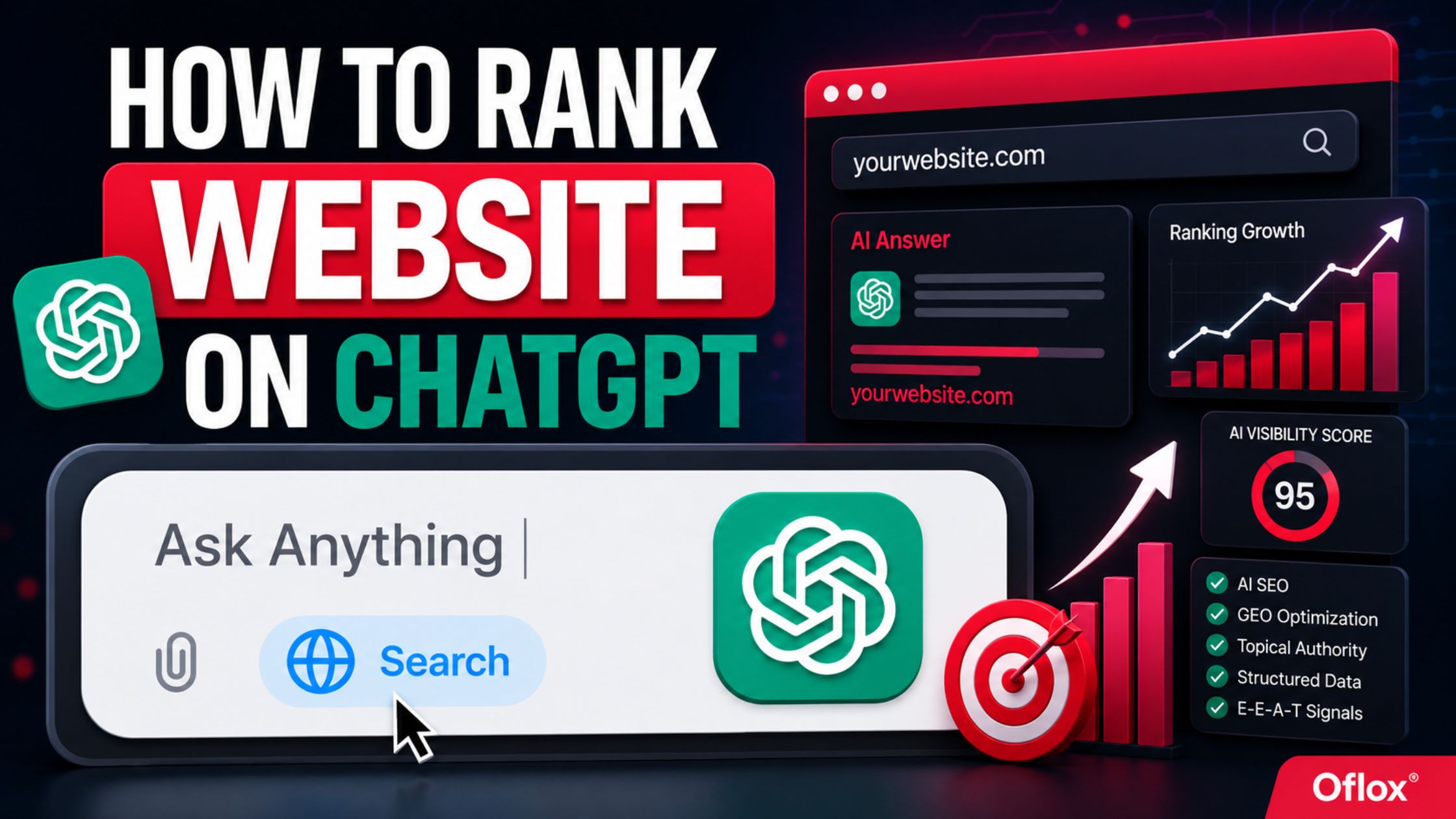
If you want your website, blog, SaaS product, business, or online brand to appear in ChatGPT answers and future AI search systems, this article will help you understand everything step-by-step.
Let’s explore it together!
Table of Contents
What Does “Ranking on ChatGPT” Mean?
Ranking on ChatGPT means your website content becomes visible, referenced, recommended, summarized, or cited by AI systems like:
- ChatGPT
- Google AI Overviews
- Microsoft Copilot
- Gemini AI
- Perplexity AI
- Claude AI
- AI-powered browsers
- Voice AI assistants
Unlike traditional SEO, ChatGPT does not show 10 blue links like Google.
Instead, AI systems:
- Read multiple sources
- Understand content context
- Analyze authority
- Generate summarized answers
- Mention useful websites
This is why modern SEO is now evolving into:
- AI SEO
- GEO (Generative Engine Optimization)
- Semantic SEO
- Entity SEO
- NLP SEO
Why Ranking on ChatGPT Is Important in 2026
AI search traffic is growing rapidly worldwide.
Major Reasons:
| Reason | Importance |
|---|---|
| AI search is growing | More users use AI instead of Google |
| Higher visibility | AI recommendations build trust |
| Better conversions | Users trust AI-selected sources |
| Future-proof SEO | AI search is the future |
| Brand authority | Mentioned brands gain credibility |
History of AI Search Optimization
The history of AI SEO shows how search engines became more intelligent and user-focused.
1. Traditional SEO Era
Earlier, websites ranked mainly through:
- Backlinks
- Keywords
- Meta tags
- Technical SEO
2. Semantic SEO Era
Google later started understanding:
- Search intent
- Topic relevance
- Contextual meaning
3. AI Search Era
Now AI systems focus on:
- Helpful content
- Human experience
- Trust signals
- Entity relationships
- Knowledge graphs
- Topic authority
This is why businesses now optimize for:
- GEO SEO
- AI answer engines
- LLM visibility
- Conversational search
How ChatGPT Finds and Understands Websites
ChatGPT and AI systems use different signals.
1. High-Quality Content
AI systems prefer:
- Detailed guides
- Helpful explanations
- Original research
- Real examples
- Step-by-step tutorials
2. Semantic SEO
AI understands:
- Meaning
- Context
- Topic relationships
3. E-E-A-T Signals
Google and AI systems prefer websites with:
- Experience
- Expertise
- Authoritativeness
- Trustworthiness
4. Structured Data
Schema helps AI understand:
- Articles
- FAQs
- Products
- Organizations
- Reviews
5. Brand Mentions
AI systems trust recognized brands more. Platforms like RankLLM, an AI visibility platform and LLM rank tracker, help businesses monitor how their brand appears across AI-powered search platforms and identify opportunities to strengthen their visibility and recognition in AI-generated responses.
6. Technical SEO
Fast websites perform better.
Difference Between Google SEO and ChatGPT SEO
| Google SEO | ChatGPT SEO |
|---|---|
| Link-based ranking | Context-based understanding |
| Keywords important | Intent important |
| SERP ranking | AI answer inclusion |
| Backlinks matter | Authority + usefulness matter |
| Search result clicks | Conversational visibility |
How AI Search Engines Work
AI systems usually follow these steps:
- Crawl websites
- Read content
- Understand entities
- Analyze authority
- Store contextual knowledge
- Generate responses
How to Rank Website on ChatGPT
Ranking a website on ChatGPT requires optimizing content for AI search, semantic SEO, and conversational user intent.
1. Create Helpful Content
Helpful content is the foundation of AI SEO.
AI-Friendly Content Includes:
- Detailed explanations
- Beginner-friendly language
- Tables
- Examples
- FAQs
- Statistics
- Actionable advice
Bad Content Examples:
- Thin articles
- Keyword stuffing
- AI spam content
- Clickbait articles
2. Build Topical Authority
Topical authority means covering one niche deeply.
Example:
If your niche is SEO, publish articles about:
- Technical SEO
- Semantic SEO
- Entity SEO
- GEO SEO
- AI SEO
- Link building
- Core Web Vitals
AI systems trust websites that fully cover topics.
3. Use Semantic SEO
Semantic SEO helps AI understand relationships between topics.
Example Keywords:
Instead of repeating only:
“how to rank website on chatgpt”
Use related terms:
- AI SEO
- GEO optimization
- ChatGPT ranking
- LLM optimization
- AI search visibility
- semantic content
- entity SEO
4. Optimize for Conversational Queries
AI systems prefer natural language.
Example:
Instead of:
“cheap seo tools”
Write:
“What are the best affordable SEO tools for beginners in India?”
5. Improve E-E-A-T
Google and AI systems strongly value trust.
Ways to Improve E-E-A-T:
- Add Author Information: Include Author bio, Experience, & Credentials.
- Show Real Expertise: Add Case studies, Examples, Screenshots, & Research.
- Build Brand Authority: Mention your business clearly. For example, Oflox® is a top Indian Digital Marketing and IT blog.
6. Use Structured Data (Schema Markup)
Schema helps AI understand website content.
Important Schema Types:
| Schema | Use |
|---|---|
| Article | Blog posts |
| FAQ | Questions |
| Organization | Business info |
| Product | Product pages |
| Review | Ratings |
| Breadcrumb | Navigation |
7. Optimize Technical SEO
Technical SEO remains important.
Important Technical Factors:
- Fast loading speed
- Mobile optimization
- HTTPS security
- Clean URLs
- XML sitemap
- Internal linking
8. Create Original Research
AI systems trust original information more.
Examples:
- Surveys
- Case studies
- Statistics
- Experiments
- Industry reports
9. Build Brand Mentions
AI systems recognize popular brands across the web.
Ways to Build Mentions:
- Guest posting
- PR articles
- Podcast interviews
- Social media marketing
- Community participation
10. Optimize for Voice Search
Voice search and AI search are connected.
Voice Search Tips:
- Use natural language
- Answer questions directly
- Use FAQ sections
- Keep sentences simple
Features of AI-Friendly Websites
| Feature | Benefit |
|---|---|
| Semantic structure | Better AI understanding |
| Fast speed | Better user experience |
| Structured data | Easier AI interpretation |
| Helpful content | Higher trust |
| Mobile optimization | Better accessibility |
| Clear headings | Easier content extraction |
Best Content Types for ChatGPT Ranking
AI-powered search engines usually favor detailed, conversational, and well-structured content over thin or keyword-stuffed pages.
- Step-by-Step Guides: Very effective for AI visibility.
- Beginner Tutorials: AI systems prefer educational content.
- Comparison Articles: Examples SEO vs GEO or ChatGPT vs Gemini.
- FAQ Content: Helps conversational AI responses.
- Statistics Articles: AI trusts data-driven content.
Best Practices for Ranking on ChatGPT
Following the right AI SEO practices can improve your chances of appearing in ChatGPT answers and AI-generated search results.
- Focus on User Intent: Always solve user problems.
- Write Naturally: Avoid robotic keyword stuffing.
- Use Simple Language: AI systems prefer understandable content.
- Add Internal Links: Connect related articles together.
- Update Old Articles: Fresh content performs better.
How Internal Linking Helps AI SEO
Internal links improve:
- Topic understanding
- Website structure
- Content relationships
- Crawlability
Example:
If you write about AI SEO, internally link to:
- Semantic SEO
- Entity SEO
- GEO SEO
- NLP SEO
Real-World Example of AI SEO
Real-world AI SEO case studies help beginners understand how websites rank in ChatGPT and modern AI search systems.
A digital marketing blog publishes:
- 100+ detailed SEO guides
- Case studies
- FAQ articles
- AI-related content
After improving:
- topical authority
- semantic SEO
- structured data
Their content starts appearing in:
- AI summaries
- AI answer engines
- voice search systems
This increases:
- traffic
- trust
- leads
- brand authority
How Businesses Can Rank in AI Search
Businesses can improve their visibility in AI search engines by using semantic SEO, helpful content, and strong brand authority.
1. Local Businesses
Use:
- Google Business Profile
- reviews
- location schema
2. SaaS Companies
Create:
- tutorials
- comparison pages
- documentation
3. Bloggers
Publish:
- long-form content
- niche authority articles
4. E-commerce Stores
Use:
- product schema
- FAQs
- comparison guides
5+ Best Tools for AI SEO and ChatGPT Ranking
Here are some of the best tools for AI SEO and ChatGPT ranking that help improve semantic optimization, technical SEO, and AI search visibility.
1. Ahrefs
Ahrefs is one of the most powerful SEO tools for AI SEO and traditional search optimization. It helps website owners understand keyword opportunities, competitor strategies, backlink profiles, and content performance.
Useful Features:
- Keyword research
- Backlink analysis
- Competitor tracking
- Content gap analysis
- Website audit
- Broken link checking
Best For:
- Bloggers
- SEO agencies
- Businesses
- Content marketers
Why It Helps for ChatGPT Ranking?
Ahrefs helps identify semantic keywords, user intent queries, and topic clusters that improve visibility in AI-powered search systems.
2. SEMrush
SEMrush is a complete digital marketing and SEO platform widely used for AI SEO optimization, competitor analysis, and semantic content planning.
Useful Features:
- SEO audits
- Competitor research
- Semantic SEO suggestions
- Rank tracking
- PPC research
- Content optimization
Best For:
- SEO professionals
- Businesses
- Content creators
- Digital marketers
Why It Helps for AI SEO?
SEMrush helps optimize content for user intent and topical authority, which are important ranking factors for ChatGPT and AI search engines.
3. Google Search Console
Google Search Console is a free SEO tool from Google that helps website owners monitor indexing, visibility, and technical website performance.
Useful Features:
- Track impressions
- Monitor indexing status
- Identify technical errors
- Analyze search performance
- Submit sitemaps
- Monitor Core Web Vitals
Best For:
- Beginners
- Bloggers
- Businesses
- SEO experts
Why It Helps for ChatGPT Ranking?
Technical SEO and proper indexing improve overall website trust, which indirectly supports AI search visibility.
4. Surfer SEO
Surfer SEO is an AI-powered content optimization tool that helps create semantically optimized articles for modern search engines and AI platforms.
Useful Features:
- AI content optimization
- Semantic keyword suggestions
- NLP-based SEO recommendations
- Content scoring
- SERP analysis
Best For:
- AI SEO writers
- Bloggers
- Content teams
- SEO agencies
Why It Helps for AI Search?
Surfer SEO improves semantic relevance and content structure, helping AI systems better understand your articles.
5. Screaming Frog
Screaming Frog is a professional technical SEO crawler used to analyze website health and identify SEO problems.
Useful Features:
- Crawl websites
- Detect broken links
- Analyze metadata
- Check redirects
- Find duplicate content
- Audit technical SEO
Best For:
- Technical SEO experts
- Agencies
- Developers
- Large websites
Why It Helps for ChatGPT SEO?
A technically optimized website improves crawlability, user experience, and AI trust signals.
6. Schema Markup Generator
Schema Markup Generator tools help websites add structured data that makes content easier for AI systems and search engines to understand.
Useful Features:
- Generate JSON-LD schema
- FAQ schema creation
- Article schema
- Product schema
- Organization schema
Best For:
- Bloggers
- Businesses
- E-commerce websites
- SEO professionals
Why It Helps for AI SEO?
Structured data improves semantic understanding and increases the chances of appearing in AI-generated answers.
7. ChatGPT
ChatGPT itself can be used as a powerful AI SEO assistant for content planning, semantic optimization, and conversational content creation.
Useful Features:
- Content ideas
- Semantic keyword generation
- FAQ creation
- Article structuring
- Conversational content writing
- AI SEO brainstorming
Best For:
- Content writers
- SEO professionals
- Bloggers
- Businesses
Why It Helps for ChatGPT Ranking?
ChatGPT helps create natural, conversational, and user-focused content that performs well in AI-powered search environments.
10+ Important GEO SEO Strategies
These important GEO SEO strategies can help businesses improve authority, trust, and visibility in AI-driven search platforms.
- Build Entity Authority
- Create Topical Clusters
- Use Structured Data
- Improve Brand Mentions
- Publish Helpful Content
- Add FAQs
- Improve Technical SEO
- Use Natural Language
- Create Expert-Level Content
- Build Trust Signals
- Update Content Regularly
Common Mistakes Beginners Make
Many beginners make common AI SEO mistakes that can reduce their chances of ranking in ChatGPT and AI-powered search systems.
- Keyword Stuffing: Repeating keywords excessively harms readability.
- Publishing Thin Content: Short, low-value articles perform poorly.
- Ignoring Technical SEO: Slow websites reduce visibility.
- Copying AI Content: Unedited AI spam content may fail.
- No Topic Authority: Random unrelated articles confuse AI systems.
Expert Tips for Better ChatGPT Rankings
Expert AI SEO tips can help websites improve their visibility in ChatGPT answers and AI-powered search platforms.
- Write for Humans First: Helpful content wins.
- Use Real Examples: Practical insights improve trust.
- Add Data and Statistics: Research increases authority.
- Create Content Hubs: Topic clusters help AI understand.
- Improve Brand Presence: AI trusts recognized entities more.
Benefits of Ranking on ChatGPT
| Benefit | Explanation |
|---|---|
| More visibility | AI mentions increase reach |
| Better trust | Users trust AI recommendations |
| Higher authority | Brand recognition improves |
| Future-proof traffic | AI search is growing |
| Competitive advantage | Early adopters gain faster |
Challenges in Ranking on ChatGPT
Many websites struggle to rank in AI search because traditional SEO alone is no longer enough for modern AI platforms.
- AI Search Is Evolving: Algorithms change rapidly.
- Competition Is Increasing: More websites optimize for AI SEO.
- Traditional SEO Alone Is Not Enough: Modern SEO requires semantic optimization.
- AI Hallucinations: Sometimes, AI systems may generate incorrect information.
ChatGPT SEO vs Traditional SEO
| Factor | Traditional SEO | ChatGPT SEO |
|---|---|---|
| Focus | Keywords | Context |
| Optimization | SERP | AI answers |
| Main Goal | Clicks | AI visibility |
| Content Style | Search-focused | Conversational |
| Ranking Signal | Backlinks | Trust + usefulness |
Future Trends of AI SEO (2026 & Beyond)
Future AI search optimization strategies will prioritize helpful content, entity authority, and natural language understanding.
- AI Search Will Grow Rapidly: AI assistants may replace many traditional searches.
- GEO SEO Will Become Mainstream: Generative Engine Optimization will become essential.
- Voice AI Will Increase: Voice assistants will dominate mobile searches.
- Entity SEO Will Become Critical: Brands will optimize entity recognition.
- Human Expertise Will Matter More: AI systems prefer authentic expert content.
How Oflox® Can Help Businesses Rank on ChatGPT
Businesses can improve AI visibility using:
- semantic SEO
- GEO optimization
- technical SEO
- structured data
- content marketing
- topical authority strategies
A strong SEO and AI optimization strategy can help brands appear in:
- AI summaries
- conversational answers
- AI-generated recommendations
FAQs:)
A. Yes. AI systems may reference or summarize websites in responses.
A. Yes, but AI SEO is now equally important.
A. Yes. Schema helps AI understand website content better.
A. Authority signals including backlinks still matter indirectly.
A. Usually several months depending on competition and authority.
A. Yes, if they provide high-quality helpful content.
A. GEO means Generative Engine Optimization — optimizing content for AI search systems.
A. Not always. But human editing and expertise are important.
Conclusion:)
Ranking a website on ChatGPT is becoming one of the most important digital marketing strategies for the future. Traditional SEO is evolving into AI SEO, GEO SEO, semantic optimization, and conversational search optimization. Businesses that focus on helpful content, topical authority, structured data, technical SEO, and trust signals will have a strong advantage in AI-powered search systems.
As AI search continues growing in 2026 and beyond, websites that adapt early will gain better visibility, stronger authority, and long-term traffic growth.
“AI search rewards websites that truly help users, not just websites that chase keywords.” – Mr Rahman, CEO Oflox®
Read also:)
- What Is Web Performance Optimization: A Step-by-Step Guide!
- What is Parasite SEO: A-to-Z Guide for Beginners!
- What Is Search Atlas: A-to-Z Guide for Beginners!
Have you tried optimizing your website for ChatGPT and AI search systems? Share your experience or ask your questions in the comments below — we’d love to hear from you!