This article provides a complete guide on What is Answer Engine Optimization (AEO), including its meaning, history, importance, working process, types, AEO vs SEO vs GEO comparison, optimization strategies, benefits, challenges, best tools, real-world examples, expert tips, common mistakes, future trends, and how businesses can prepare for the future of AI-powered search.
Answer Engine Optimization (AEO) is a next-generation digital marketing strategy that helps websites, brands, and businesses optimize their content so AI-powered answer engines like ChatGPT, Google AI Overviews, Gemini, Perplexity AI, and voice assistants can easily understand, trust, and present their information as direct answers.
From traditional keyword-based SEO to modern AI-driven search experiences, AEO represents the evolution of how users discover information online. Today, success is not only about ranking higher on search engines but also about becoming the trusted answer that AI platforms recommend.
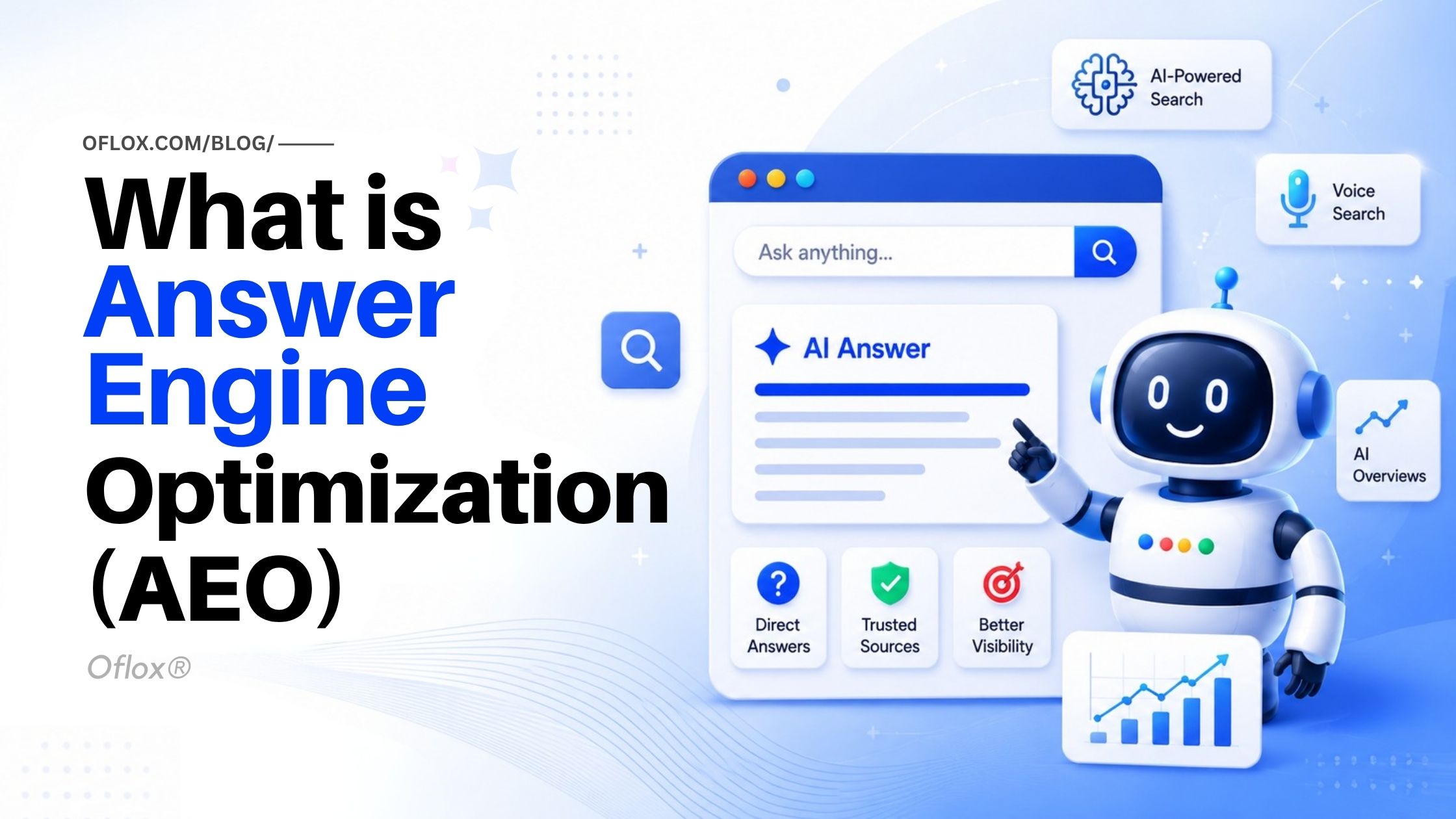
In this detailed article, we’ll explore everything about Answer Engine Optimization (AEO), how it works, why it matters, and how you can optimize your website and content to build stronger visibility in the future of AI search.
Let’s explore it together!
Table of Contents
What is Answer Engine Optimization (AEO)?
Answer Engine Optimization (AEO) is the process of optimizing your website content, brand information, and digital presence so that AI-powered answer engines can easily understand, trust, and present your information as the best possible answer for user questions.
In simple words:
AEO means optimizing your content to become the answer, not just another search result.
Traditional Search Engine Optimization (SEO) mainly focuses on improving website rankings on search engine result pages (SERPs).
However, Answer Engine Optimization focuses on helping AI systems discover your content, understand its meaning, and use it while generating answers.
AEO targets modern answer platforms such as:
- Google AI Overviews
- Featured Snippets
- People Also Ask sections
- ChatGPT
- Gemini
- Microsoft Copilot
- Perplexity AI
- Siri
- Alexa
- Google Assistant
For example:
Suppose a user searches:
“Which is the best email marketing tool for small businesses?”
With traditional SEO, your goal is to rank your article on Google’s first page.
But with AEO, your goal is that AI assistants understand your information and include your website, product, or brand as part of their answer.
This makes AEO a powerful strategy for the future of digital visibility.
History and Evolution of Answer Engine Optimization
The development of AEO happened because search technology continuously evolved. To understand AEO properly, we need to understand the journey of online search.
1. Keyword-Based Search Era
In the early days of search engines, results mainly depended on keywords.
Search engines matched the words entered by users with the words available on webpages.
For example:
A user searched:
“Best mobile phones”Search engines looked for pages containing similar keywords.
During this period, SEO mainly focused on:
- Keyword optimization
- Meta titles
- Meta descriptions
- Backlinks
- Keyword density
Ranking was the main goal.
2. Semantic Search Era
Over time, search engines became more intelligent.
Instead of only reading keywords, they started understanding the meaning behind searches.
Technologies like:
- Knowledge Graph
- Artificial Intelligence
- Machine Learning
- Natural Language Processing (NLP)
changed the way search engines worked.
Now Google could understand user intent.
Example:
“Best budget smartphone”and
“Affordable phone with good performance”may have different words but similar meanings.
This was the beginning of intent-based optimization.
3. AI Answer Engine Era
Today, search has entered the AI generation.
Users do not only search; they have conversations with AI.
Example:
Instead of searching:
“Digital marketing tips”Users ask:
“Create a complete digital marketing strategy for a small business with a limited budget.”AI platforms analyze information from multiple sources and generate complete answers.
This changed the journey from:
Search → Click → Website → Answerto:
Question → AI → Instant AnswerBecause of this transformation, Answer Engine Optimization became important.
Why is Answer Engine Optimization Important?
Here are some major reasons why AEO matters:
1. Growth of AI-Powered Search
AI search platforms are growing rapidly.
Millions of users now depend on AI tools for:
- Learning new topics
- Product research
- Business decisions
- Recommendations
- Comparisons
- Problem solving
Instead of browsing multiple websites, users expect AI to summarize the best information.
AEO helps your content become part of these AI-generated answers.
2. Improves Brand Visibility
In the AI search era, visibility is not only about ranking number one.
The bigger question is:
“Does AI recognize and recommend your brand?”AEO helps improve:
- Brand recognition
- Online authority
- Content visibility
- Trust signals
When answer engines repeatedly identify your content as valuable, your brand presence becomes stronger.
3. Supports Voice Search Optimization
Voice search is based on direct answers.
When someone asks:
“Which is the best digital marketing strategy for beginners?”Voice assistants usually provide one selected answer.
They do not show hundreds of search results. AEO helps optimize your content for these conversational searches.
4. Better User Experience
AEO follows a user-first approach.
It encourages content creators to provide:
- Clear explanations
- Simple answers
- Organized information
- Helpful solutions
This matches modern search quality standards and improves overall user satisfaction.
5. Helps Businesses Prepare for Future Search
Search is moving toward:
- AI assistants
- Personalized answers
- Voice interactions
- Conversational discovery
- Generative AI recommendations
Businesses that start implementing AEO early can build a strong advantage for the future.
SEO vs AEO vs GEO: What is the Difference?
SEO, AEO, and GEO are three important parts of modern digital marketing.
| Factor | SEO | AEO | GEO |
|---|---|---|---|
| Full Form | Search Engine Optimization | Answer Engine Optimization | Generative Engine Optimization |
| Goal | Improve ranking | Become direct answer | Become AI recommendation |
| Target | Search engines | Answer engines | Generative AI platforms |
| Focus | Keywords & pages | Questions & answers | Brand authority |
| Content Approach | Ranking-focused | Answer-focused | Context-focused |
| Example Platform | Google Search | AI Overviews & Voice Search | ChatGPT, Gemini, Perplexity |
- SEO helps people discover your website.
- AEO helps AI choose your content as an answer.
- GEO helps AI recommend your brand during conversations.
- For the future of digital marketing, all three strategies need to work together. Many B2B brands bring in an AEO consultant, such as AEO expert Austin Heaton, to run this alongside existing SEO.
How Does Answer Engine Optimization Work?
Answer Engine Optimization works by helping search engines and AI systems understand, organize, and deliver your information as a reliable answer.
Traditional search engines mainly provide a list of webpages, but modern answer engines use artificial intelligence, machine learning, and Natural Language Processing (NLP) to understand questions and generate meaningful responses.
AEO works through three important stages:
Discovery → Understanding → Answer SelectionLet’s understand each stage.
1. Content Discovery
The first step is helping answer engines discover your content.
AI systems collect information from different online sources such as:
- Websites
- Articles
- Research papers
- Business profiles
- Reviews
- Trusted databases
- Online communities
To improve discovery, websites need:
- Proper indexing
- XML sitemap
- Internal linking
- Technical SEO
- Clear website structure
If AI systems cannot discover your information, they cannot use it as an answer.
2. Content Understanding
After discovering content, answer engines try to understand the meaning behind it.
Modern AI does not only read keywords.
It understands:
- Topic relevance
- Search intent
- Context
- Entity relationships
- Content quality
For example:
A page mentioning:
“Oflox® provides SEO, web development, and digital marketing services.”helps AI understand:
- Brand: Oflox®
- Industry: Digital Marketing
- Services: SEO, Website Development, Marketing
This process is known as entity understanding.
3. Trust Evaluation
Answer engines prefer trustworthy information.
Before selecting an answer, AI systems analyze different trust signals.
These include:
- Content accuracy
- Author expertise
- Website authority
- External references
- Brand reputation
- User satisfaction signals
This is why E-E-A-T is important.
E-E-A-T stands for:
- Experience
- Expertise
- Authoritativeness
- Trustworthiness
The stronger your trust signals, the better your chances of appearing in AI answers.
4. Answer Generation
Finally, answer engines generate responses for users.
They choose information that is:
- Relevant
- Clear
- Accurate
- Helpful
- Easy to understand
AEO optimization increases the possibility that your content becomes part of these generated answers.
Types of Answer Engine Optimization (AEO)
Answer Engine Optimization is not limited to one technique. There are multiple types of AEO strategies that help improve AI search visibility.
1. Content AEO
Content AEO focuses on creating information that answer engines can easily understand and use.
The goal is straightforward: to create the best possible answer.
Content AEO includes:
- Question-based articles
- FAQs
- Step-by-step guides
- Comparison posts
- Definitions
- Educational content
Example:
Instead of writing:
“SEO Guide”Create:
“What is SEO and How Does SEO Work?”Question-based content matches AI search behavior better.
2. Technical AEO
Technical AEO focuses on improving your website structure so machines can understand your information.
It includes:
- Schema markup
- Structured data
- Website speed
- Mobile optimization
- Crawlability
- Indexing
Important schema types:
- FAQ Schema
- Article Schema
- Organization Schema
- Product Schema
- Local Business Schema
- Review Schema
Schema works like a language between your website and search engines.
3. Voice Search AEO
Voice search optimization focuses on conversational queries.
Users speak differently compared to typing.
Typed search:
“best laptop 2026”Voice search:
“Which laptop should I buy in 2026 for video editing?”Voice AEO focuses on:
- Natural language
- Long-tail keywords
- Short answers
- Conversational content
4. Featured Snippet AEO
Featured snippets are direct answer boxes shown in search results.
To optimize:
- Give answers quickly
- Use bullet points
- Add tables
- Create lists
- Use clear headings
Example:
Question:
“What is email marketing?”Answer:
“Email marketing is a digital marketing strategy where businesses use emails to communicate with customers, promote products, and build relationships.”Short answers improve snippet chances.
5. AI Search AEO
AI Search AEO focuses on platforms like:
- ChatGPT
- Gemini
- Perplexity
- Copilot
- Google AI Overviews
Optimization includes:
- Detailed topic coverage
- Strong brand signals
- Expert content
- Updated information
- Reliable sources
The goal is AI visibility.
6. Entity-Based AEO
Entity optimization helps AI understand your identity.
An entity can be:
- Person
- Company
- Product
- Location
- Service
Example:
- Company: Oflox®
- Category: Digital Marketing Company
- Founder: Mr Rahman
- Services: SEO, Web Development, Digital Marketing
Clear information creates stronger AI understanding.
7. Local AEO
Local AEO helps businesses appear in location-based AI searches.
Example:
User asks:
“Best website development company near me.”AI may recommend businesses based on:
- Location relevance
- Reviews
- Business information
- Online reputation
Optimize:
- Google Business Profile
- Local citations
- Reviews
- NAP consistency
(NAP = Name, Address, Phone Number)
8. Multimedia AEO
AI search is not only text-based.
Modern answer engines also understand:
- Images
- Videos
- Podcasts
- Infographics
Optimize multimedia with:
- Alt text
- Captions
- Transcripts
- File names
- Metadata
How to Optimize for Answer Engine Optimization (AEO)?
Now, let’s understand practical AEO strategies.
1. Research Real User Questions
AEO starts with understanding what people actually ask.
Find questions from:
- Google People Also Ask
- Forums
- Customer queries
- Search data
- AI suggestions
Create content around real problems.
2. Write Answer-First Content
Do not hide the answer deep inside your article.
Follow this structure:
Question → Direct Answer → Detailed ExplanationExample:
Question:
“What is AEO?”Answer first:
“Answer Engine Optimization is the process of optimizing content so AI systems can use it as a direct answer.”Then explain everything.
3. Add FAQ Sections
FAQs are very powerful for AEO.
Benefits:
- Match conversational searches
- Improve snippet opportunities
- Help AI extraction
Example FAQs:
- What is AEO?
- How does AEO work?
- Is AEO better than SEO?
- How to optimize for AI search?
4. Use Structured Data
Structured data gives additional meaning to your content.
Benefits:
- Better understanding
- Rich results
- Improved machine readability
Use JSON-LD format whenever possible.
5. Create Complete Topic Authority
AI prefers complete resources.
Instead of writing only:
“What is AEO?”Cover:
- Definition
- History
- Benefits
- Examples
- Tools
- Strategy
- FAQs
- Future
Complete content builds topical authority.
6. Optimize for Natural Language Processing (NLP)
AI understands language through NLP.
Improve NLP optimization with:
- Related terms
- Semantic keywords
- Clear sentences
- Natural writing style
Avoid keyword stuffing.
Write for humans first.
7. Build Brand Authority
AEO is not only about content.
Improve:
- Online mentions
- Backlinks
- Reviews
- Social presence
- Author profiles
- Expert reputation
Strong brands have better AI visibility. To maintain this competitive edge, companies are increasingly turning to answer engine optimization services to ensure AI models like ChatGPT, Gemini, and Perplexity recognize, trust, and consistently recommend their products over rivals.
Important Features of AEO
Some major features of Answer Engine Optimization include:
- User Intent Focus: AEO understands what users actually need.
- AI-Friendly Content: Content is structured for humans and machines.
- Conversational Optimization: AEO matches natural questions.
- Trust-Based Ranking: Authority and credibility become more important.
- Multi-Platform Visibility: AEO improves presence across: Search engines, AI tools, Voice assistants, and Smart devices.
Example of AEO in Real Life
Suppose you run a software company.
User asks AI:
“What is the best project management tool for remote teams?”AEO optimized brand:
- Has detailed guides
- Strong reviews
- Clear product information
- Comparison pages
- Expert content
AI understands the brand better and may include it in recommendations.
That is the power of Answer Engine Optimization.
Benefits of Answer Engine Optimization (AEO)
Here are the major benefits of AEO:
1. Higher Visibility in AI Search Results
The biggest advantage of AEO is improved visibility across AI-powered search platforms.
Today, users are discovering information through:
- ChatGPT
- Google AI Overviews
- Gemini
- Microsoft Copilot
- Perplexity AI
- Voice assistants
AEO helps your content become understandable and useful for these platforms.
Traditional SEO helps you appear on search result pages.
AEO helps you appear inside AI-generated answers.
Example:
A user asks:
“Which is the best software for managing social media?”AEO-optimized brands have better chances of being mentioned inside the AI answer.
2. Builds Strong Brand Authority
AI-powered answer engines usually prefer trusted sources.
When your content provides accurate, helpful, and expert information, it builds stronger authority.
AEO improves:
- Brand recognition
- Online reputation
- Industry expertise
- User trust
A strong authority signal helps AI understand that your brand is a reliable information source.
3. Better User Experience
AEO encourages websites to create content that directly solves user problems.
Instead of writing only for algorithms, AEO focuses on:
- Clear explanations
- Simple language
- Helpful answers
- Organized information
This improves both:
- Human experience
- AI understanding
4. Improves Voice Search Performance
Voice assistants are becoming a major part of online search.
Platforms like:
- Google Assistant
- Siri
- Alexa
usually provide direct answers.
Example:
User asks:
“Hey Google, how does email marketing work?”The assistant selects one suitable answer.
AEO optimization improves your chances of becoming that answer.
5. Attracts High-Intent Users
AEO focuses on solving specific questions.
Question-based users usually have stronger intent.
Example:
Low intent:
“SEO”High intent:
“How much does SEO service cost for a small business?”AEO helps attract users who already know what they need.
6. Supports Zero-Click Search Visibility
Modern searches often end without a website visit.
Users receive answers directly from:
- AI summaries
- Featured snippets
- Knowledge panels
- Voice assistants
AEO helps brands stay visible even in zero-click environments.
7. Improves Content Quality
AEO pushes businesses to create better content.
AEO-friendly content usually includes:
- Detailed explanations
- Expert opinions
- Research
- FAQs
- Examples
- Updated information
This improves overall content performance.
8. Competitive Advantage
AI search adoption is still growing.
Businesses implementing AEO early can build authority before competition becomes stronger.
Early optimization can create long-term advantages.
Pros and Cons of Answer Engine Optimization (AEO)
Like every digital marketing strategy, AEO has advantages and challenges.
Pros of AEO:
| Pros | Explanation |
|---|---|
| AI Visibility | Helps appear in AI-generated answers |
| Brand Authority | Builds trust and recognition |
| Better Experience | Provides helpful answers |
| Voice Search Growth | Supports conversational searches |
| Future Ready | Prepares brands for AI search |
| Quality Traffic | Attracts specific user intent |
Cons of Answer Engine Optimization
1. Reduced Website Clicks
One challenge of AEO is zero-click searches.
Sometimes users get complete answers directly from AI without visiting websites.
Example:
- Before: Google Search → Website → Answer
- Now: AI → Direct Answer
This can reduce organic traffic opportunities.
2. Difficult Performance Measurement
Traditional SEO has clear metrics:
- Ranking
- Clicks
- Traffic
- CTR
AEO tracking is more complex.
You may need to monitor:
- AI mentions
- Brand visibility
- Citations
- AI recommendations
3. No Guaranteed Placement
AI systems decide answers based on many factors.
Even optimized content may not always appear.
Factors include:
- Authority
- Relevance
- Freshness
- Accuracy
4. Requires Continuous Updates
AI search changes quickly.
Businesses need to regularly update:
- Content
- Statistics
- Product information
- Research
- FAQs
5. Strong Competition for Trust
AI prefers highly authoritative sources.
New websites may require time to build:
- Expertise
- Brand reputation
- External mentions
Challenges of Answer Engine Optimization
AEO is powerful, but marketers should understand its challenges.
1. Changing AI Algorithms
AI platforms continuously improve their models.
A strategy working today may require changes tomorrow.
Regular learning and testing are important.
2. Limited Control Over AI Answers
Website owners cannot completely control:
- How AI summarizes information
- Which sources AI selects
- When AI displays content
AEO improves chances but does not guarantee inclusion.
3. Need for High-Quality Content
Average content may struggle.
AI prefers:
- Expert insights
- Original information
- Complete answers
- Reliable sources
Content quality becomes more important.
5+ Best Tools for Answer Engine Optimization
AEO requires research, optimization, monitoring, and technical improvements.
Here are some useful tools:
1. Google Search Console
Best For: Website performance monitoring
Uses:
- Search visibility
- Indexing issues
- User queries
- Content improvement
2. Google Trends
Best For: Finding trending questions
Uses:
- Topic research
- Search behavior analysis
- Content planning
3. Semrush
Best For: SEO and content optimization
Uses:
- Keyword research
- Competitor analysis
- Content gaps
- Authority tracking
4. Ahrefs
Best For: Website authority building
Uses:
- Backlink analysis
- Content research
- Competitor study
5. AlsoAsked
Best For: Question research
Uses:
- People Also Ask questions
- User intent discovery
- FAQ planning
6. AnswerThePublic
Best For: Finding conversational queries
Uses:
- Question keywords
- Long-tail searches
- Content ideas
7. Schema Markup Validator
Best For: Structured data testing
Uses:
- Checking schema errors
- Improving machine understanding
Common AEO Mistakes to Avoid
Many businesses fail because they follow outdated optimization methods.
Avoid these mistakes:
1. Only Focusing on Keywords
Old approach:
“Add more keywords.”Modern approach:
“Answer user questions better.”AEO needs intent optimization.
2. Ignoring User Questions
AI search is question-based.
Not including FAQs and conversational queries reduces AEO opportunities.
3. Creating Thin Content
Short and incomplete content provides less value.
Create:
- Complete guides
- Examples
- Data-driven content
- Practical solutions
4. Ignoring E-E-A-T
Without trust signals, AI may prefer competitors.
Improve:
- Author information
- Experience
- Reviews
- Brand credibility
5. Not Using Schema Markup
Without structured data, machines may struggle to understand your pages.
Schema improves content clarity.
Expert Tips for Better AEO Results
Follow these professional practices:
- Write answers before explanations
- Create FAQ sections
- Build topical authority
- Update old articles
- Add real examples
- Improve author credibility
- Use structured data
- Optimize brand mentions
- Create original insights
- Focus on solving problems
Real Example of AEO Strategy
Imagine two websites:
| Website A: | Website B: |
| Keyword-stuffed articles | Expert content |
| No author details | Clear answers |
| No FAQs | Schema markup |
| Poor structure | FAQs |
| Updated information | |
| Strong reputation |
AI answer engines are more likely to trust Website B. This is why AEO focuses on quality, not shortcuts.
Future Trends of Answer Engine Optimization (AEO)
Here are the major AEO trends expected in 2026 and beyond.
1. AI Search Will Become More Popular
AI-powered search engines will continue changing the way people discover information online.
Instead of searching multiple websites, users will increasingly depend on AI assistants for:
- Product suggestions
- Learning
- Research
- Comparisons
- Shopping decisions
- Business solutions
This means brands will need to optimize not only for rankings but also for AI visibility.
Future search success will depend on one question:
“Does AI understand and trust your brand?”2. SEO, AEO, and GEO Will Work Together
Traditional SEO will not disappear.
Instead, future digital marketing strategies will combine:
- SEO (Search Engine Optimization): Helping search engines discover your website.
- AEO (Answer Engine Optimization): Helping AI select your information as an answer.
- GEO (Generative Engine Optimization): Helping AI recommend your brand inside generated responses.
The strongest brands will use all three together.
3. Entity Optimization Will Become More Important
AI systems understand the internet through entities.
Entities include:
- People
- Brands
- Companies
- Products
- Locations
- Topics
Future optimization will focus on making your identity clear.
Businesses should improve:
- Brand profiles
- Author information
- Knowledge panels
- Online mentions
- Digital reputation
Strong entities will have higher AI visibility.
4. Voice Search Will Continue Growing
Voice-based searches are becoming more natural.
People use:
- Smartphones
- Smart speakers
- Cars
- Wearable devices
Examples:
Instead of typing:
“SEO tips”People ask:
“How can I improve my website SEO step by step?”AEO-friendly conversational content will become more valuable.
5. Zero-Click Searches Will Increase
More users will receive answers without opening websites.
AI summaries will answer many questions directly.
This means businesses must focus on:
- Brand awareness
- AI citations
- Authority building
- Content trust
Visibility will become bigger than just traffic.
6. Original Experience Will Matter More
AI systems will have access to large amounts of information.
Generic content will struggle.
Successful content will require:
- Real experiences
- Expert opinions
- Original research
- Case studies
- Unique insights
Human expertise will become a major advantage.
Best Practices for AEO Success
To succeed with Answer Engine Optimization, follow these important practices:
- Understand user intent
- Create helpful content
- Answer questions directly
- Add FAQ sections
- Use structured data
- Improve E-E-A-T
- Build brand authority
- Keep information updated
- Optimize for AI conversations
- Create original insights
AEO is not about manipulating algorithms.
It is about becoming the most helpful and trustworthy source.
FAQs:)
A. Answer Engine Optimization (AEO) is the process of optimizing website content and online information so AI-powered answer engines can understand and provide it as a direct answer to users.
A. AEO is important because users are increasingly using AI platforms and voice assistants to get instant answers instead of only browsing traditional search results.
A. No, AEO is not replacing SEO. SEO and AEO work together. SEO helps search engines discover your website, while AEO helps AI systems understand and select your information.
A. SEO focuses on improving search rankings. AEO focuses on making your content the direct answer for AI-powered platforms.
A. AEO focuses on becoming the answer. GEO focuses on becoming part of AI-generated recommendations and conversations. For example, the AEO Goal is to use my content as the answer. And the GEO Goal is to recommend my brand through AI.
A. AEO helps improve visibility across Google AI Overviews, ChatGPT, Gemini, Copilot, Perplexity AI, and Voice assistants.
A. Beginners can start by creating question-based content, writing clear answers, adding FAQs, using schema markup, and improving expertise signals.
A. Yes. Schema markup helps search engines and AI systems better understand your content structure and meaning.
A. Yes. Small businesses can use AEO by creating helpful content, improving online reputation, collecting reviews, and clearly explaining their services.
A. The future of AEO will include: AI-powered search, Voice assistants, Personalized answers, Generative AI recommendations, and Entity-based optimization.
Conclusion:)
Answer Engine Optimization (AEO) represents the next evolution of digital marketing and online search. The internet is moving from a world where users search through hundreds of links to a future where AI systems provide instant, personalized, and trusted answers.
For businesses, bloggers, creators, and marketers, this creates a new opportunity. Success will no longer depend only on ranking higher. It will depend on becoming the most reliable source that AI systems understand, trust, and recommend.
Traditional SEO will continue to remain important, but combining SEO with AEO and GEO will help brands build stronger visibility in the AI-powered future.
Businesses that focus on helpful content, expertise, authority, structured information, and user-first experiences will have a better chance of winning the future of search.
As AI technology continues growing in 2026 and beyond, Answer Engine Optimization will become a necessary strategy for every brand that wants to stay visible online.
“SEO helps your website get discovered, but Answer Engine Optimization helps your knowledge become the trusted answer in the age of AI search.” — Mr Rahman, Founder Oflox®
Read also:)
- How to Submit Sitemap to Google Search Console: A-to-Z Guide!
- How to Rank Website on ChatGPT: A-to-Z Guide for Beginners!
- What Is Web Performance Optimization: A Step-by-Step Guide!
Have you started optimizing your website for AI-powered search and Answer Engine Optimization? Share your thoughts or questions in the comments below—we’d love to hear from you!