This article provides a complete guide on What Is Data Lakehouse, including its meaning, importance, history, architecture, working process, key features, benefits, challenges, popular tools, real-world applications, expert tips, common mistakes, and future trends.
A data lakehouse is a modern data architecture that combines the flexibility and scalability of a data lake with the reliability, structure, governance, and analytical capabilities of a data warehouse. It allows organisations to manage different types of data within a unified environment and use the same trusted data for business intelligence, real-time analytics, machine learning, and artificial intelligence.
For example, an e-commerce company may collect customer profiles, product details, transactions, website clicks, reviews, support conversations, and inventory updates. A data lakehouse can bring all this information together, helping analysts create business reports while allowing data scientists to build recommendation, demand-forecasting, and fraud-detection models using the same governed data.
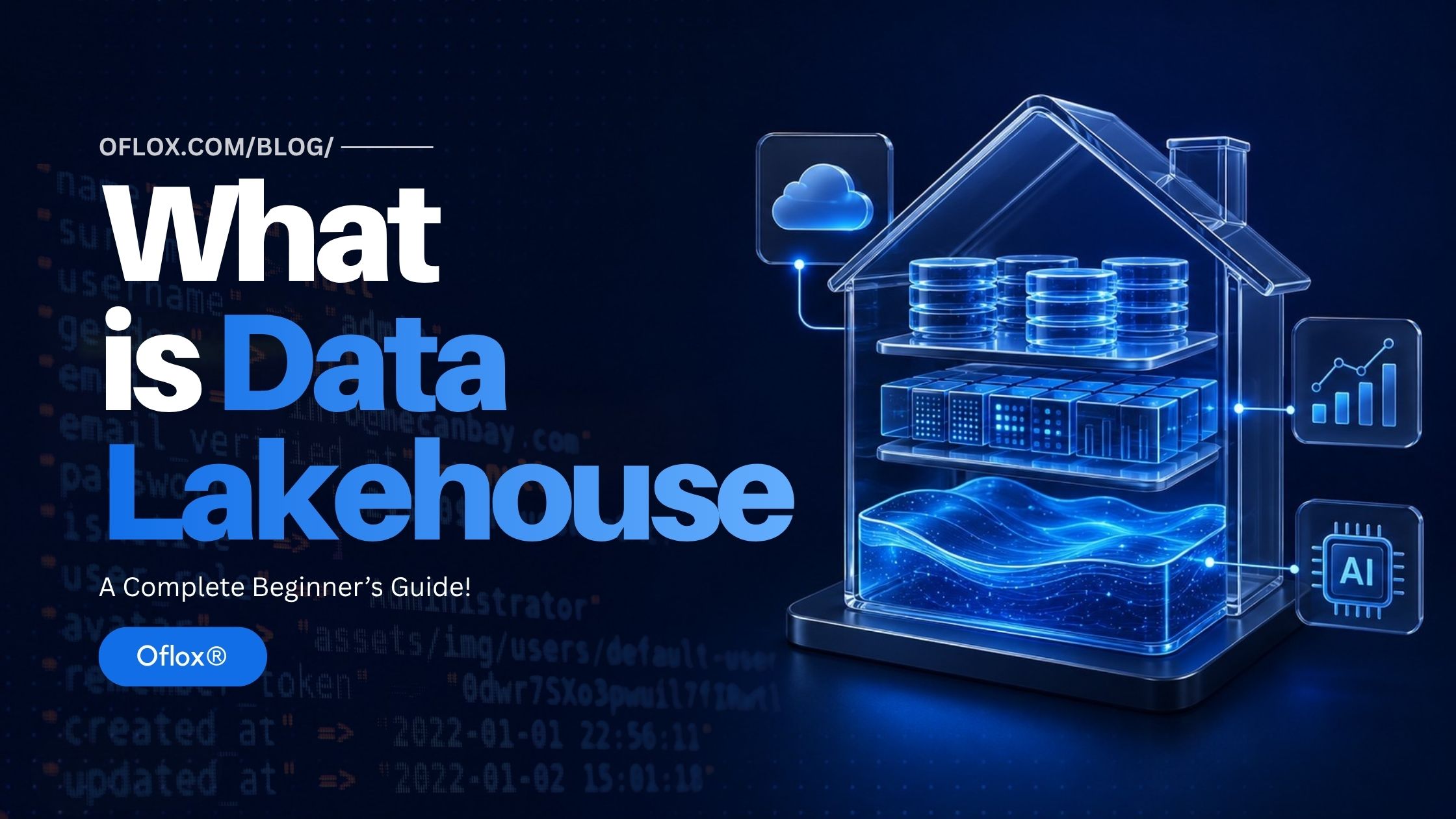
Whether you are a beginner, business owner, data analyst, developer, or technology professional, this guide will help you understand how data lakehouse architecture is changing the way modern organisations manage and use their data.
Let’s explore it together.
Table of Contents
What Is Data Lakehouse?
A data lakehouse is a modern data architecture that combines the main capabilities of a data lake and a data warehouse within one unified platform.
It can store structured, semi-structured, and unstructured data in economical object storage while providing warehouse-like capabilities such as ACID transactions, schema enforcement, data governance, SQL analytics, data quality controls, and business intelligence support.
In simple words, a data lakehouse allows an organisation to keep different types of data in one central environment and use the same data for reporting, analytics, data science, machine learning, and AI.
According to Google Cloud’s definition, a data lakehouse combines the raw-data storage capabilities of a data lake with the organised structure and management functions of a data warehouse.
Instead of maintaining one platform for raw data and another for business reporting, a lakehouse attempts to create a single, reliable foundation for multiple data workloads.
Data Lakehouse Definition:
A data lakehouse is a unified data management architecture that provides low-cost and flexible data-lake storage along with the transactions, governance, reliability, and analytical performance traditionally associated with a data warehouse.
A lakehouse is not simply a renamed data lake. It generally requires an additional management layer, commonly based on an open table format, that makes files behave like reliable database tables.
Why Is a Data Lakehouse Important?
Modern businesses no longer work with only rows and columns. They also handle text, audio, video, images, application events, sensor records, documents, embeddings, and streaming information.
A conventional data warehouse may not be the most economical or flexible place for every data type. A basic data lake can store them, but it may lack the consistency and governance required for critical business reporting.
The data lakehouse is important because it attempts to close this gap.
1. It Reduces Data Silos
When an organisation uses independent systems for engineering, analytics, reporting, and machine learning, the same data is frequently copied between different platforms.
This creates separate versions of the truth.
A lakehouse enables multiple teams and processing engines to work with the same underlying data, reducing unnecessary movement and duplication.
2. It Supports Analytics and AI Together
Business intelligence tools generally require clean and structured data. Machine learning teams may need raw, historical, semi-structured, or unstructured information.
A lakehouse can support both requirements on one architecture.
This has become particularly important for generative AI systems, AI agents, recommendation engines, natural language processing, fraud detection, and predictive analytics.
3. It Improves Data Reliability
Modern table formats introduce transactions, table versions, schema management, and recovery capabilities to data stored in ordinary files.
These features help prevent incomplete updates, inconsistent reads, accidental schema changes, and corrupted analytical results.
4. It Offers Flexible and Scalable Storage
Lakehouse data is commonly stored in cloud object storage such as Amazon S3, Azure Data Lake Storage, or Google Cloud Storage.
Object storage can handle very large datasets and usually separates storage expenses from computing expenses.
5. It Strengthens Governance
A well-designed lakehouse can provide:
- Centralised data catalogues
- Access policies
- Data lineage
- Row-level security
- Column-level security
- Audit records
- Data classification
- Retention policies
- Sensitive-data protection
This allows an organisation to give users access to useful data without exposing every underlying file.
6. It Supports Real-Time Decisions
A lakehouse can combine batch and streaming data pipelines.
For example, a bank could analyse historical transactions alongside current payment events to identify potentially fraudulent activity more quickly.
History and Background of Data Lakehouse
The data lakehouse emerged from the gradual evolution of enterprise data management.
1. The Era of Data Warehouses
Data warehouses became popular because organisations needed a central and structured platform for management reports, dashboards, and business intelligence.
Data was extracted from operational applications, cleaned, transformed, and loaded into warehouse tables through ETL processes.
Warehouses provided consistent reporting but were usually designed mainly for structured information. Storage and computing could also become expensive as data volume increased.
2. The Rise of Big Data
As websites, smartphones, social platforms, sensors, and cloud applications grew, organisations started producing data that did not fit comfortably into conventional warehouse tables.
Technologies such as Hadoop made it possible to store and process much larger datasets across clusters of computers.
3. The Development of Data Lakes
Cloud object storage encouraged the adoption of data lakes. Organisations could retain raw and processed data in formats such as CSV, JSON, Avro, ORC, and Parquet.
Data lakes offered flexibility and low-cost scalability, but early implementations often faced problems such as:
- Poor data quality
- Missing governance
- Inconsistent schemas
- Duplicate files
- Slow SQL queries
- Complicated access control
- Unclear data ownership
- Difficulty updating records reliably
Without proper management, a data lake could become a data swamp—a large collection of files that users could neither trust nor understand.
4. Arrival of Transactional Table Formats
Open table formats and storage layers such as Apache Hudi, Delta Lake, and Apache Iceberg introduced database-like management features to data stored in object storage.
These technologies enabled capabilities such as:
- ACID transactions
- Record updates and deletions
- Schema evolution
- Table snapshots
- Time travel
- Metadata management
- Partition evolution
- Concurrent reads and writes
5. Emergence of the Lakehouse Concept
The term “lakehouse” became widely recognised around 2020 as a way of describing an architecture that adds warehouse-grade management and performance to open, economical lake storage.
Today, lakehouse capabilities are offered by platforms and ecosystems including Databricks, Microsoft Fabric, Google Cloud, AWS, Snowflake, Dremio, Starburst, and IBM watsonx.data.
Data Lake vs Data Warehouse vs Data Lakehouse
Although these systems may overlap, their original design goals are different.
| Factor | Data Lake | Data Warehouse | Data Lakehouse |
|---|---|---|---|
| Main purpose | Store raw and diverse data | Structured reporting and BI | Unified analytics, BI, data science and AI |
| Data types | Structured, semi-structured and unstructured | Primarily structured | Structured, semi-structured and unstructured |
| Typical storage | Object or distributed storage | Proprietary or managed database storage | Object storage with a table-management layer |
| Schema approach | Commonly schema-on-read | Commonly schema-on-write | Supports controlled schema enforcement and evolution |
| Transactions | Usually limited in a basic lake | Strong transaction support | ACID capabilities through table formats |
| SQL performance | Can vary significantly | Generally optimised for SQL | Improved through metadata, caching and query optimisation |
| Data science | Strong raw-data flexibility | May require data extraction | Integrated with shared governed data |
| Governance | Must be added carefully | Usually mature | Centralised governance is a core design goal |
| Cost structure | Economical storage | Can become expensive at scale | Separate, scalable storage and compute |
| Data duplication | Often copied into a warehouse | Receives copied and transformed data | Designed to reduce unnecessary copies |
| Best suited for | Raw storage and exploration | Stable BI and reporting | Mixed modern data and AI workloads |
A lakehouse does not automatically replace every warehouse. Organisations should evaluate their workloads, security requirements, performance expectations, existing investments, and team capabilities before migrating.
How Does a Data Lakehouse Work?
A data lakehouse normally works through several connected architectural layers.
1. Data Source Layer
Data first arrives from various internal and external systems, including:
- ERP platforms
- CRM applications
- Websites
- Mobile apps
- SaaS tools
- Relational databases
- IoT devices
- Payment gateways
- Social media
- Log files
- Third-party APIs
- Documents and media files
These sources may produce batch data, streaming events, or change-data-capture records.
2. Data Ingestion Layer
The ingestion layer moves data from its original sources into the lakehouse.
Common ingestion methods include:
- Batch uploads
- ETL and ELT pipelines
- API integrations
- Database replication
- Change data capture
- Event streaming
- Message queues
- File transfers
Tools such as Apache Kafka, Apache Flink, Debezium, Fivetran, Airbyte, Azure Data Factory, AWS Glue, and Google Cloud Dataflow may be used for ingestion.
3. Object Storage Layer
The incoming data is stored in scalable object storage.
Typical platforms include:
- Amazon S3
- Azure Data Lake Storage
- Google Cloud Storage
- S3-compatible private-cloud storage
Data may be stored in columnar formats such as Apache Parquet or ORC, which are designed for analytical processing.
4. Table Format and Transaction Layer
This is one of the most important parts of a lakehouse.
An open table format or transactional storage layer maintains metadata about the underlying files and manages them as logical tables.
Common options include:
- Delta Lake
- Apache Iceberg
- Apache Hudi
- Apache Paimon
This layer may support concurrent transactions, schema changes, updates, deletes, table snapshots, version history, and recovery.
5. Catalogue and Governance Layer
A catalogue records important information about datasets, including:
- Table names
- Columns
- Schemas
- Storage locations
- Data owners
- Classifications
- Access permissions
- Lineage
- Business definitions
The governance layer determines who can view, update, share, or delete data. It may also apply masking and row- or column-level restrictions to sensitive information.
6. Processing and Compute Layer
Storage and compute are generally separated in a lakehouse. Different engines can process the same underlying tables according to workload requirements.
These engines may support:
- SQL queries
- Distributed transformations
- Streaming analytics
- Data engineering
- Data science
- Machine learning
- Generative AI
- Interactive exploration
Apache Spark, Trino, Presto, Flink, BigQuery, Athena, Redshift, and other engines may participate in a lakehouse ecosystem.
7. Data Consumption Layer
Finally, authorised users and applications consume the data through:
- BI dashboards
- SQL editors
- Reports
- Notebooks
- Machine learning models
- AI agents
- APIs
- Customer-facing applications
- Operational analytics tools
Data Lakehouse Working Process: Step by Step
Consider an e-commerce company that wants to analyse sales, customer behaviour, inventory, and product reviews.
1. Collect the Data
The business collects orders, customer records, product information, application logs, clickstream events, reviews, and support conversations.
2. Ingest It into the Lakehouse
Batch pipelines import historical records while streaming services continuously capture new orders and website events.
3. Store Raw Data
The original information is retained in object storage. This raw layer helps with auditing, reprocessing, and future analytical requirements.
4. Validate and Clean the Data
Pipelines identify duplicate orders, invalid dates, missing product IDs, incorrect data types, and incomplete customer information.
5. Convert It into Managed Tables
The cleaned information is written to lakehouse tables using a format such as Delta Lake, Iceberg, or Hudi.
Transactions help ensure that an update either completes correctly or does not become visible as a partial operation.
6. Organise Data into Logical Layers
Many teams use a multi-layer design:
| Layer | Purpose | Example |
|---|---|---|
| Bronze | Raw data retained with minimal changes | Original website events |
| Silver | Cleaned, validated and standardised data | Deduplicated customer orders |
| Gold | Business-ready aggregated data | Daily revenue by product category |
These names are conventions, not compulsory technical requirements.
7. Apply Governance
The company registers tables in a catalogue, assigns data owners, documents fields, tracks lineage, and restricts sensitive customer information.
8. Query and Analyse
Analysts create revenue dashboards, while data scientists build product recommendation and demand forecasting models.
9. Monitor and Optimise
Engineers monitor query latency, pipeline failures, data freshness, storage growth, small-file problems, access events, and compute expenses.
Core Features of a Data Lakehouse
A data lakehouse provides several important capabilities that distinguish it from a basic file-based data lake.
1. ACID Transactions
ACID represents atomicity, consistency, isolation, and durability.
These guarantees help ensure that data changes are reliable even when multiple users or pipelines work on a table simultaneously. For example, atomicity means that an operation succeeds completely or fails completely rather than leaving a partially updated table.
2. Schema Enforcement
Schema enforcement checks incoming data against defined expectations.
If a field expected to contain a date suddenly contains unrelated text, the pipeline can reject or quarantine the record instead of silently damaging downstream reports.
3. Schema Evolution
Business datasets change over time. New columns may be added, field names may change, or data types may require controlled updates.
Schema evolution allows authorised modifications without rebuilding the entire dataset unnecessarily.
4. Time Travel
Time travel allows users to query a table as it existed at an earlier version or point in time.
It can help with:
- Auditing
- Reproducing reports
- Recovering from mistakes
- Comparing table versions
- Debugging model behaviour
- Investigating data drift
Apache Iceberg, for example, stores table state in metadata snapshots that can be used for point-in-time queries.
5. Unified Batch and Streaming
A modern lakehouse can process large scheduled batches and continuously arriving events within the same broader architecture.
This reduces the need to build completely separate systems for historical and real-time analytics.
6. Open Data Formats
Open file and table formats reduce dependence on one proprietary engine. Multiple compatible tools may be able to access the same tables without copying all the data.
However, actual interoperability still depends on feature compatibility, catalogue integration, security policies, and the table-format versions supported by each engine.
7. Separation of Storage and Compute
Data remains in shared storage while compute resources can be started, scaled, or stopped according to workload needs.
A dashboard, an ETL pipeline, and an ML training job can use different compute configurations without requiring three completely separate storage copies.
8. Data Governance and Lineage
Governance capabilities help organisations understand:
- Where data originated
- How it was transformed
- Who owns it
- Which reports use it
- Who can access it
- Whether it contains sensitive information
9. Query Optimisation
Lakehouse platforms may improve performance through:
- Columnar storage
- Data skipping
- Partition pruning
- File compaction
- Statistics
- Clustering
- Caching
- Materialised views
- Query optimisation engines
Benefits of a Data Lakehouse
When implemented correctly, a data lakehouse can deliver significant technical and business benefits.
1. A More Consistent Source of Data
Different teams can access a common governed data foundation instead of maintaining disconnected copies.
This improves consistency between dashboards, models, and operational applications.
2. Reduced Data Movement
A traditional architecture may repeatedly move data from an operational database to a lake, from the lake to a warehouse, and from the warehouse to an ML environment.
A lakehouse can reduce these copies by enabling different workloads to access the same managed tables.
3. Lower Storage Costs
Object storage is generally economical for retaining large data volumes. Separating storage and compute also allows organisations to scale each resource independently.
Nevertheless, total cost depends on query patterns, data transfers, compute usage, maintenance, software licensing, and operational complexity—not storage price alone.
4. Faster Access to Fresh Data
Removing unnecessary transfers can shorten the time between data generation and business use.
Streaming and incremental processing may help dashboards and ML models work with more recent information.
5. Better Support for Machine Learning and AI
Data scientists can work with raw and refined datasets, while governance policies continue to apply.
The same architecture can support:
- Feature engineering
- Model training
- Vector generation
- Retrieval-augmented generation
- Model monitoring
- AI-agent context
- Unstructured document analysis
6. Greater Flexibility
Teams can retain different data types and decide later how those datasets should be analysed.
This is valuable when business requirements change frequently.
7. Improved Data Recovery
Snapshots and version history can help teams restore a table after accidental updates or deletions, subject to retention and cleanup policies.
8. Scalable Performance
A lakehouse can scale storage and computing for very large analytical workloads. Compute clusters can be chosen according to SQL, streaming, engineering, or machine learning requirements.
9. Stronger Collaboration
Analysts, engineers, data scientists, AI developers, and business teams can work through a shared platform and governance model.
10. Reduced Vendor Lock-In Potential
Open storage and table formats can improve portability and interoperability.
This benefit is not automatic. Proprietary catalogues, governance tools, optimisation features, and SQL extensions can still create platform dependencies.
Challenges and Limitations of a Data Lakehouse
A data lakehouse can be powerful, but it is not a zero-maintenance solution.
1. Complex Initial Design
Teams must choose storage, table formats, catalogues, processing engines, governance models, ingestion tools, orchestration, monitoring, and security controls.
Poor architectural decisions can be difficult to reverse later.
2. Need for Skilled Professionals
Successful implementation may require expertise in:
- Cloud architecture
- Data engineering
- Distributed processing
- SQL
- Security
- Data governance
- FinOps
- Machine learning operations
- Table optimisation
3. Performance Management
Queries can become slow when tables have too many small files, ineffective partitions, poor clustering, outdated statistics, or inefficient SQL.
Regular compaction, optimisation, metadata cleanup, and workload monitoring may be necessary.
4. Governance Does Not Happen Automatically
Installing a lakehouse platform does not create trusted data by itself.
Organisations must still define ownership, quality expectations, access policies, classifications, retention rules, and incident procedures.
5. Tool Compatibility Differences
Two engines may claim support for the same open table format but implement different features or versions.
Teams should test operations such as reads, writes, deletes, schema evolution, time travel, and permission enforcement before selecting a multi-engine architecture.
6. Migration Difficulty
Existing warehouses may contain years of business logic, stored procedures, dashboards, transformations, security roles, and operational knowledge.
Migration should normally be phased rather than treated as a simple data-copying exercise.
7. Cost Can Become Unpredictable
Uncontrolled queries, always-running clusters, excessive scans, duplicate pipelines, unnecessary snapshots, and cross-region transfers can increase expenses.
8. Security Risks
Centralising large volumes of information increases the importance of strong identity management, encryption, isolation, masking, auditing, and least-privilege access.
10+ Popular Data Lakehouse Tools and Platforms
The right platform depends on cloud strategy, existing skills, open-format requirements, governance expectations, workload types, and budget.
| Tool or platform | Main strength | Common format or foundation |
|---|---|---|
| Databricks | Unified engineering, analytics, ML and AI | Delta Lake |
| Microsoft Fabric | Integrated data platform with Power BI and OneLake | Delta Lake |
| Google Cloud Lakehouse | BigQuery-based analytics and open lakehouse capabilities | Apache Iceberg |
| Amazon SageMaker Lakehouse | Unifies S3, Redshift and analytics/AI services | Apache Iceberg |
| Snowflake | Managed analytics, data sharing and Iceberg support | Proprietary tables and Iceberg |
| Dremio | SQL analytics directly on lake storage | Apache Iceberg |
| Starburst | Distributed SQL and multi-source analytics | Trino and open formats |
| IBM watsonx.data | Open lakehouse for analytics and AI | Apache Iceberg |
| Apache Spark | Distributed data processing | Supports multiple table formats |
| Apache Flink | Stateful streaming and real-time processing | Supports Iceberg, Hudi and others |
| Apache Iceberg | Open table format with snapshots and hidden partitioning | Parquet, ORC and Avro data files |
| Delta Lake | Transactional storage layer for data lakes | Parquet plus transaction log |
| Apache Hudi | Incremental processing and record-level change workloads | Open table format |
Microsoft Fabric uses Delta Lake as a core storage format across multiple workloads, while Google Cloud has expanded its lakehouse direction around Apache Iceberg. AWS also supports Iceberg-compatible access across services such as Athena, Redshift, EMR, and Glue. These product capabilities evolve quickly, so organisations should verify current compatibility before final selection.
Real-World Data Lakehouse Use Cases
Data lakehouse architecture can be applied across many industries where large, diverse, and fast-changing datasets must be analysed reliably.
- E-Commerce Personalisation: An e-commerce company can combine orders, searches, clicks, cart activity, reviews, and product information. The marketing team uses the data for dashboards, while machine learning models generate personalised product recommendations.
- Banking Fraud Detection: A bank can compare live transaction events with account history, device details, behavioural patterns, and known fraud indicators. Streaming analysis can flag unusual transactions while governed historical data supports investigation and model training.
- Healthcare Analytics: Healthcare organisations may combine structured clinical records, laboratory results, medical images, sensor data, and administrative information. Strong privacy, access control, auditing, residency, and regulatory safeguards are essential in this use case.
- Manufacturing and Predictive Maintenance: Factories generate sensor readings from industrial equipment. A lakehouse can combine current machine telemetry with maintenance records and historical failures to predict when equipment may require servicing.
- Telecommunications: Telecom companies can analyse network events, call records, service usage, customer complaints, location data, and billing information to improve network performance and reduce customer churn.
- Digital Marketing: A business can unify website analytics, advertising data, CRM leads, email campaigns, search performance, conversions, and customer transactions. This makes it easier to analyse the entire customer journey rather than evaluating each channel independently.
- Generative AI and RAG: A company can govern documents, support tickets, product information, and structured records in a common data environment. Approved data can then be prepared for retrieval-augmented generation systems, enterprise search, or AI agents.
How to Build a Data Lakehouse
Building a lakehouse should begin with business requirements—not a tool purchase.
- Define Business Outcomes: Decide whether the main goal is faster reporting, AI enablement, platform consolidation, real-time analytics, lower costs, or stronger governance. Use measurable outcomes such as reducing report latency from 12 hours to one hour, Remove three duplicate datasets, improving trusted-data coverage to 90%, reducing failed pipelines, and enabling governed ML access.
- Assess Existing Data: Create an inventory of sources, formats, volumes, owners, sensitivity levels, update frequency, consumers, and current quality problems.
- Select an Architecture: Choose the cloud or hybrid model, object storage, table format, catalogue, processing engines, orchestration, and governance services.
- Design Security Early: Define identities, roles, network boundaries, encryption, secrets management, audit logging, row-level restrictions, and data masking before onboarding sensitive data.
- Develop a Small Pilot: Select one valuable but manageable workload. A pilot can demonstrate performance, governance, operational effort, and cost before a wider migration.
- Create Data Quality Rules: Define expectations for completeness, uniqueness, accuracy, validity, consistency, and freshness.
- Establish Layering and Naming Standards: Create clear rules for raw, validated, and business-ready data. Standardise names, ownership fields, tags, partitioning approaches, and retention policies.
- Automate Operations: Automate ingestion, testing, deployment, monitoring, compaction, cleanup, and cost alerts wherever practical.
- Validate Performance and Interoperability: Test realistic data volumes and queries. Confirm that every chosen engine performs required reads, writes, updates, security checks, and schema changes correctly.
- Scale Gradually: Move additional workloads only after the pilot meets reliability, security, performance, and cost targets.
Expert Tips for a Successful Data Lakehouse
A successful lakehouse requires more than scalable storage; it needs clear ownership, dependable data contracts, disciplined governance, and continuous operational optimisation.
- Begin with a real business problem instead of migrating every dataset at once.
- Prefer open formats when practical, but verify actual engine compatibility.
- Assign an owner and quality expectations to every important data product.
- Separate development, testing, and production environments.
- Apply least-privilege access from the beginning.
- Maintain a searchable data catalogue with useful business descriptions.
- Monitor data freshness, quality, lineage, query performance, and costs together.
- Establish a strategy for compaction and small-file management.
- Test backup and recovery procedures rather than relying only on time travel.
- Retain raw data selectively; “store everything forever” can create cost and compliance problems.
- Document which engine is authorised to write to each table.
- Use automated tests for schemas, transformations, and business rules.
- Review snapshot retention and orphan-file cleanup carefully.
- Train business users to understand certified and non-certified datasets.
- Measure success through business impact, not only the amount of data stored.
Common Data Lakehouse Mistakes
A data lakehouse delivers value only when it is designed and governed carefully; otherwise, it can inherit the weaknesses of both data lakes and data warehouses.
- Treating the Lakehouse as a Storage Bucket: Uploading files to object storage does not create a lakehouse. Table management, governance, quality, metadata, security, and operations are necessary.
- Migrating Everything at Once: A large migration increases risk and makes it difficult to prove value. Start with prioritised use cases and expand gradually.
- Ignoring Data Governance: Without ownership, classification, lineage, and access control, the new architecture may become another data swamp.
- Choosing Technology Before Requirements: A popular platform is not automatically the correct platform for every organisation. Workload needs, skills, compliance, existing systems, and total cost should guide the decision.
- Poor Partitioning: Over-partitioning can create many small files, while under-partitioning can cause unnecessary data scans. Partitioning should follow data volume and query patterns.
- Allowing Uncontrolled Table Writes: Multiple engines writing incompatible operations to the same table can create reliability problems. Define supported writer engines and test concurrency carefully.
- Keeping Unlimited Table History: Snapshots and old files are useful, but indefinite retention can increase costs and create privacy or regulatory concerns.
- Assuming Open Format Means No Lock-In: Storage openness does not guarantee that every catalogue, policy, optimisation, or application is portable.
- Neglecting Cost Monitoring: Storage may be inexpensive while compute and data scanning remain costly. Track cost per workload, team, data product, and business result.
- Replacing a Working Warehouse Without Evidence: Some stable, high-performance BI workloads may continue to work well in an existing warehouse. A hybrid or gradual approach can be more suitable than complete replacement.
Data Lakehouse Best Practices Checklist
| Area | Recommended practice |
|---|---|
| Business | Connect every workload to a measurable outcome |
| Architecture | Separate storage and compute where appropriate |
| Formats | Use suitable open file and table formats |
| Governance | Assign ownership, classification and lineage |
| Security | Apply least privilege, encryption and auditing |
| Quality | Validate schemas and important business rules |
| Performance | Monitor files, partitions, clustering and statistics |
| Reliability | Test transactions, recovery and concurrent workloads |
| Operations | Automate deployment, monitoring and maintenance |
| Cost | Track storage, compute, scans and data transfer |
| Migration | Start with a pilot and scale gradually |
| Interoperability | Test actual operations across intended engines |
Future of Data Lakehouse: 2026 and Beyond
Data lakehouse architecture is evolving from a storage-and-analytics pattern into a broader foundation for enterprise data and AI.
- Growth of Open Table Formats: Apache Iceberg, Delta Lake, and other transactional formats will continue to improve interoperability and table management. Competition will increasingly focus on catalogues, governance, performance optimisation, and cross-engine compatibility.
- Greater Catalogue Interoperability: Standardised catalogue interfaces can make it easier for multiple engines and clouds to discover and access the same table metadata. However, identity mapping and policy consistency will remain important challenges.
- AI-Ready Data Platforms: Lakehouses will increasingly organise structured and unstructured information for generative AI, multimodal analytics, RAG, and autonomous AI agents. For example, current cloud lakehouse roadmaps already emphasise governed access to structured and unstructured data for analytics and AI workflows.
- Automated Table Optimisation: Platforms will automate compaction, clustering, statistics, snapshot expiration, and orphan-file management. This will reduce some operational work, although teams will still need to define performance and retention policies.
- Real-Time Intelligence: The boundary between batch analytics and operational decision-making will continue to narrow. More lakehouse platforms will combine streaming ingestion, continuous transformations, low-latency queries, and immediate actions.
- Unified Governance for Data and AI: Organisations will want one policy model covering datasets, dashboards, ML features, models, prompts, vector indexes, and AI-agent access.
- Metadata as a Critical Asset: Technical metadata, business definitions, quality results, lineage, and usage information will help both people and AI systems locate reliable data.
- Natural-Language Analytics: Business users will increasingly ask questions in natural language instead of writing SQL manually. The accuracy of these systems will depend heavily on governed metadata, semantic models, and clearly defined business metrics.
- FinOps-Based Lakehouse Management: Businesses will monitor the cost of individual queries, pipelines, AI models, teams, and data products. Cost efficiency will become part of data-product quality rather than a separate infrastructure concern.
- Hybrid and Multi-Cloud Architectures: Open formats will encourage organisations to access datasets from different clouds and platforms. Multi-cloud designs can provide flexibility, but network charges, latency, security, and operational complexity must be evaluated carefully.
FAQs:)
A. A data lakehouse is a data platform that combines the flexible and economical storage of a data lake with the structure, transactions, governance, and analytical capabilities of a data warehouse.
A. The word combines “data lake” and “data warehouse.” It represents an architecture intended to deliver the major advantages of both systems.
A. A data lakehouse is broader than a traditional database. It usually includes object storage, table formats, metadata catalogues, governance, processing engines, pipelines, and analytical tools.
A. A basic data lake primarily stores large volumes of diverse data. A lakehouse adds table management, transactions, schema controls, governance, versioning, and improved analytical capabilities.
A. A data warehouse is traditionally optimised for structured BI and SQL reporting. A lakehouse stores broader data types in scalable object storage and supports reporting, engineering, ML, and AI through a shared platform.
A. Not always. Some organisations replace selected warehouse workloads, while others use a lakehouse and warehouse together. The right approach depends on performance, governance, cost, and existing systems.
A. Lakehouse table formats organise groups of data files as reliable tables. Common examples include Apache Iceberg, Delta Lake, Apache Hudi, and Apache Paimon.
A. ACID stands for atomicity, consistency, isolation, and durability. These properties help ensure that table operations remain reliable during failures or concurrent updates.
A. It can be, particularly when a managed or serverless platform reduces operational work. However, a small company should adopt it only if its data volume and analytical requirements justify the additional complexity.
A. Yes. It can retain documents, images, audio, video, and other unstructured files alongside structured tables, although each data type may require specialised processing and metadata.
A. Yes. It can provide governed access to historical, real-time, structured, and unstructured data needed for machine learning, generative AI, and AI-agent applications.
A. It is a commonly used data-layering approach. Bronze contains raw data, silver contains cleaned and validated data, and gold contains business-ready datasets or aggregations.
A. No. Delta Lake is a transactional storage layer or table technology commonly used to build lakehouse architectures. A complete lakehouse also includes storage, compute, governance, cataloguing, pipelines, and consumption tools.
A. Neither is universally better. The decision depends on platform compatibility, engine support, write patterns, governance tools, required features, and the organisation’s existing ecosystem.
A. The biggest challenge is often organisational rather than technical: establishing ownership, governance, quality standards, trusted definitions, security, and sustainable operating processes.
Conclusion:)
A data lakehouse is a modern data architecture that combines the scalability and flexibility of a data lake with the reliability, governance, and analytical capabilities of a data warehouse.
It enables organisations to store structured, semi-structured, and unstructured data in a common environment and use it for business intelligence, data engineering, machine learning, real-time analytics, and generative AI.
Features such as ACID transactions, schema enforcement, schema evolution, time travel, open table formats, centralised governance, and separation of storage and compute make the lakehouse suitable for many modern data workloads.
However, adopting a data lakehouse does not automatically solve every data problem. A successful implementation requires clear business outcomes, strong governance, reliable data pipelines, skilled professionals, security controls, cost monitoring, and continuous optimisation.
Organisations should therefore begin with a focused use case, test the architecture with realistic workloads, measure its business value, and expand gradually.
As AI systems, real-time analytics, open table formats, and cross-platform data sharing continue to evolve, the data lakehouse is likely to become an increasingly important foundation for trusted and scalable data-driven operations.
If your organisation currently maintains separate data lakes, warehouses, analytics platforms, and machine learning environments, a carefully designed data lakehouse may provide a simpler and more unified path forward.
“A data lakehouse brings the flexibility of a data lake and the reliability of a data warehouse together on one unified platform.” — Mr Rahman, Founder of Oflox®
Read also:)
- What Is Prompt Chaining? A Complete Guide for Beginners!
- What Is Progressive Web App (PWA): A Step-by-Step Guide!
- What Is a Vector Database: A Complete Guide for Beginners!
Have you worked with a data lake, data warehouse, or data lakehouse? Share your experience or questions in the comments below—we’d love to hear from you!