This article provides a detailed guide on What is Founder Burnout, one of the most serious yet ignored challenges in the startup world. Many people think entrepreneurship is all about freedom, success, and money—but the reality is very different. Behind every startup, a founder is dealing with stress, pressure, and uncertainty every single day.
Founder burnout is a condition where entrepreneurs feel mentally, emotionally, and physically exhausted due to continuous work pressure. It happens when founders push themselves too hard without taking proper rest or maintaining balance in life.
In simple words, when a founder feels tired all the time, loses motivation, and starts struggling to focus or make decisions—that is called burnout.
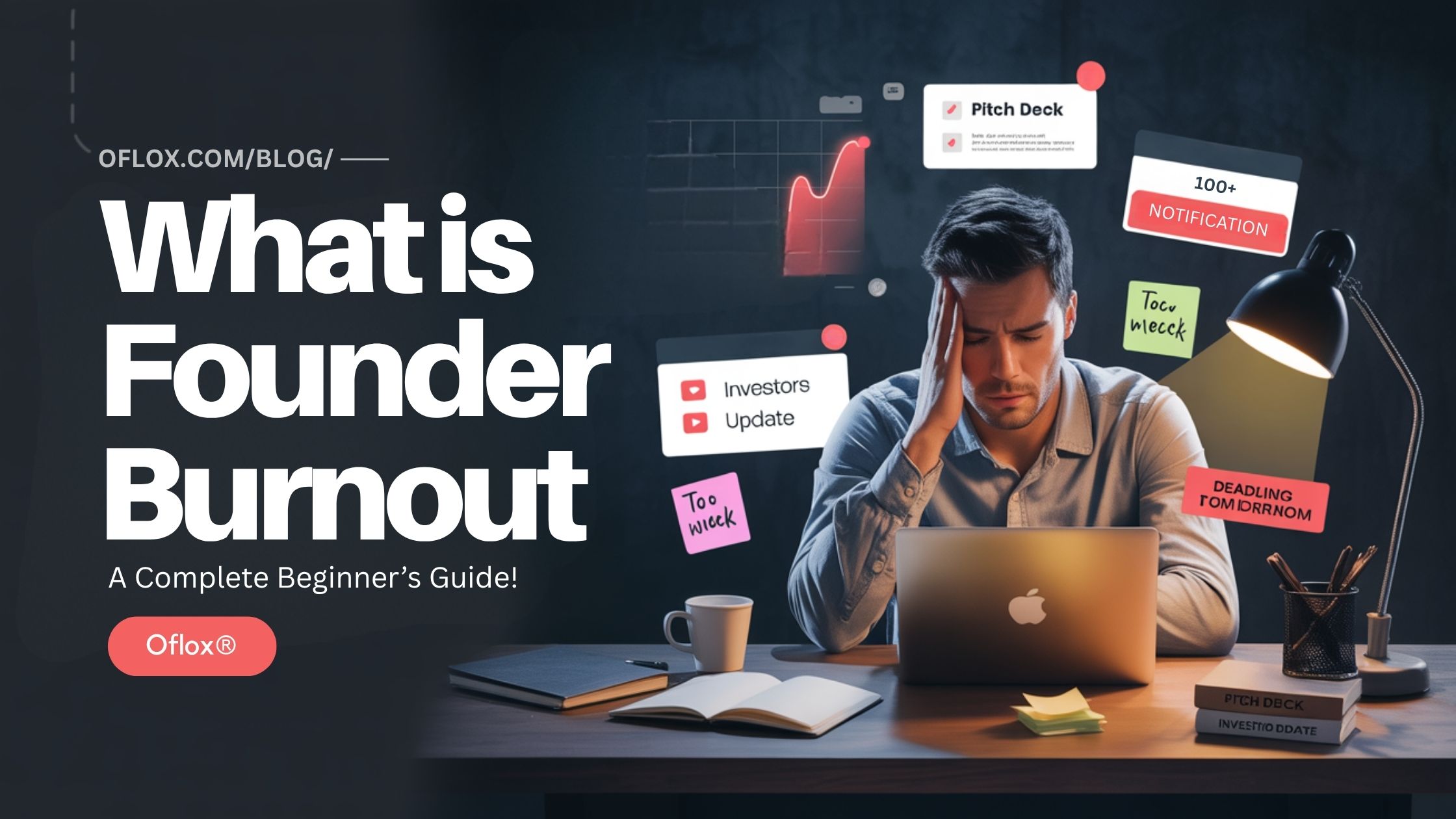
In this article, we will explore what founder burnout is, why it happens, its symptoms, real-life examples, and how you can prevent and recover from it step-by-step.
Let’s explore it together!
Table of Contents
What is Founder Burnout?
Founder burnout is a state of extreme exhaustion experienced by startup founders due to long working hours, constant stress, and overwhelming responsibilities.
Unlike normal tiredness, burnout is deeper. It affects your:
- Mental health
- Emotional stability
- Physical energy
- Decision-making ability
Simple Definition:
Founder burnout is when an entrepreneur becomes completely exhausted and loses the ability to perform effectively.
Easy Example:
A startup founder working 14–16 hours daily without rest starts feeling tired, stressed, and unmotivated. Over time, they stop enjoying their work and feel stuck—that is burnout.
Why Founder Burnout is So Common
Startup life is very different from a regular job. Founders face multiple challenges at the same time, which makes burnout very common.
Main Reasons:
- No fixed working hours
- Financial pressure
- Responsibility of entire business
- Managing team, clients, and growth
- Fear of failure
- Lack of stability
Reality: Most founders don’t take breaks because they believe “I must work harder to succeed.”
But this mindset often leads to burnout.
Key Causes of Founder Burnout (Detailed)
Let’s understand the root causes in detail:
1. Overworking Without Breaks
Many founders believe working more hours = more success.
But continuous work without rest leads to:
- Mental fatigue
- Low productivity
- Poor focus
Working smart is more important than working long.
2. Constant Stress & Pressure
Startups involve:
- Deadlines
- Investor pressure
- Competition
- Growth expectations
This creates continuous mental stress, which slowly leads to burnout.
3. Financial Uncertainty
Unlike jobs, startups don’t guarantee income.
- No fixed salary
- Business losses
- Funding issues
This creates anxiety and fear, especially in early stages.
4. Isolation (Working Alone)
Many founders work alone or don’t share problems.
This leads to:
- Loneliness
- Lack of emotional support
- Increased stress
5. Unrealistic Expectations
Many founders expect:
- Fast growth
- Instant success
- Quick profits
When reality doesn’t match expectations, it creates frustration and burnout.
6. Lack of Work-Life Balance
Ignoring personal life leads to:
- Relationship problems
- Emotional exhaustion
- Loss of happiness
Signs & Symptoms of Founder Burnout
Recognizing early signs is very important.
Common Symptoms:
- Constant tiredness
- Lack of motivation
- Feeling overwhelmed
- Anxiety and stress
- Sleep problems
- Irritability
- Loss of focus
- Poor decision-making
Warning Sign: If you start feeling disconnected from your own business, burnout has already started.
How Founder Burnout Works (Step-by-Step Cycle)
Burnout doesn’t happen suddenly—it develops over time.
Burnout Cycle:
- High Motivation
- Overworking
- Stress Build-up
- Mental Exhaustion
- Reduced Productivity
- Burnout Stage
Key Insight:
Burnout is not caused by one bad day—it is caused by continuous imbalance.
Real-Life Example of Founder Burnout
For example, a startup founder launches a new business and works 15 hours a day.
- Initially, they are highly motivated
- Slowly, stress increases
- They stop taking breaks
- Sleep becomes irregular
- Decision-making becomes poor
After a few months:
- They feel exhausted
- Lose interest in work
- Start making wrong decisions
Result: Business performance drops.
Why Founder Burnout is Dangerous
Burnout doesn’t just affect the founder—it affects the entire business.
Risks:
- Poor business decisions
- Team demotivation
- Loss of productivity
- Startup failure
- Mental health issues
Important: A burned-out founder cannot lead a successful company.
How to Prevent Founder Burnout
Prevention is always better than recovery.
1. Set Clear Work Limits
Don’t work unlimited hours.
Many founders believe that working 14–16 hours daily is necessary for success. But in reality, overworking reduces productivity and increases mistakes.
What you should do:
- Fix your working hours (e.g., 9 AM to 7 PM)
- Avoid working late nights daily
- Set a clear “work end time”
- Use tools like timers or calendars to manage time
Why it matters:
When you define limits, your brain gets proper rest. This improves focus, creativity, and decision-making.
Pro Tip:
Follow the “deep work” method—focus fully for a few hours instead of working all day without clarity.
2. Take Regular Breaks
Breaks improve productivity.
Continuous work without breaks leads to mental fatigue. Your brain needs short pauses to refresh and perform better.
Types of breaks:
- Short breaks (5–10 minutes after every 1–2 hours)
- Lunch break (at least 30–60 minutes)
- Weekly rest day (1 full day without work)
Why it matters:
Breaks help in:
- Reducing stress
- Improving concentration
- Avoiding mental overload
Example:
If you work 8 hours with proper breaks, you can achieve more than working 12 hours continuously.
3. Build a Strong Team
Don’t do everything alone.
One of the biggest mistakes founders make is trying to handle everything themselves—marketing, sales, operations, and support.
What you should do:
- Hire skilled people
- Delegate tasks based on expertise
- Trust your team members
- Avoid micromanagement
Why it matters:
Delegation reduces your workload and allows you to focus on important decisions.
Reality Check:
A founder’s job is not to do everything—it is to build systems and lead the business.
4. Maintain Work-Life Balance
Your personal life is important.
Many founders sacrifice their personal life for business, which leads to emotional exhaustion over time.
What you should do:
- Spend time with family and friends
- Take time off for hobbies (music, sports, travel)
- Avoid checking emails or messages after work hours
Why it matters:
A balanced life helps you stay:
- Mentally fresh
- Emotionally stable
- More productive
Example:
A founder who enjoys life outside work performs better than someone who is always stressed.
5. Focus on Mental Health
Mental health = Business success
Your business performance depends on your mental state. If your mind is not healthy, your decisions will suffer.
What you should do:
- Practice meditation (10–15 minutes daily)
- Exercise regularly (walking, gym, yoga)
- Follow a healthy routine (sleep on time, eat properly)
Why it matters:
Good mental health helps in:
- Better decision-making
- Reduced stress
- Higher energy levels
Pro Tip:
Even 20 minutes of daily exercise can significantly reduce stress.
6. Set Realistic Goals
Avoid unrealistic expectations.
Many founders fail because they expect too much too quickly. When results don’t match expectations, stress increases.
What you should do:
- Set achievable short-term goals
- Focus on long-term growth
- Break big goals into smaller steps
- Track progress regularly
Why it matters:
Realistic goals keep you motivated and reduce pressure.
How to Recover from Founder Burnout
If you are already facing burnout, don’t panic. Many founders go through this phase, and with the right approach, you can recover and become even stronger.
Follow these practical steps:
1. Take a Break
Even a short break can help your mind reset.
What you should do:
- Take 1–2 days off from work
- Relax and sleep properly
- Travel or change your environment
- Avoid work calls, emails, and notifications
Why it matters:
Breaks reduce stress and improve clarity, helping you think better when you return.
2. Reduce Workload
Focus only on what truly matters.
What you should do:
- Identify your top 3–5 important tasks
- Pause or remove low-priority work
- Avoid multitasking
- Delegate tasks if possible
Why it matters:
A lighter workload reduces pressure and helps you regain control.
3. Talk to Someone
Don’t handle everything alone.
You can talk to:
- Mentors
- Friends or family
- Business community
Why it matters:
Sharing your thoughts reduces stress and gives you new ideas and solutions.
4. Seek Professional Help
If burnout feels serious, get expert support.
Options:
- Therapy (mental health support)
- Business coaching
Why it matters:
Professionals help you manage stress and rebuild a healthy routine faster.
5. Re-Evaluate Your Goals
Ask yourself:
- Why did I start this journey?
- What really matters to me?
What you should do:
- Focus on realistic goals
- Align work with your values
- Avoid unnecessary pressure
Why it matters:
Clarity of goals brings back motivation and reduces burnout.
5+ Best Tools to Manage Founder Stress
Here are some powerful tools that every founder can use to reduce stress and improve productivity:
1. Notion
Best for: Task management, planning, and organization
Notion is an all-in-one productivity tool that helps founders manage their work in a structured way.
Key Features:
- Create task lists and to-do boards
- Plan projects and workflows
- Store notes, ideas, and documents
- Track daily goals and progress
Why it helps:
When your work is organized, your mind feels less cluttered. Notion helps reduce confusion and keeps everything in one place.
Example: You can create a “Daily Founder Dashboard” to track tasks, meetings, and goals.
2. Headspace
Best for: Meditation and mindfulness
Headspace is a popular app that helps founders manage stress through guided meditation.
Key Features:
- Guided meditation sessions
- Sleep improvement programs
- Stress relief exercises
- Focus and breathing techniques
Why it helps:
Meditation calms your mind, reduces anxiety, and improves focus—essential for making better business decisions.
Pro Tip: Use Headspace for 10 minutes daily to see noticeable improvement.
3. Google Calendar
Best for: Time management and scheduling
Google Calendar helps you plan your day and avoid last-minute stress.
Key Features:
- Schedule meetings and reminders
- Block time for deep work
- Set deadlines and alerts
- Sync across devices
Why it helps:
Proper scheduling reduces chaos and gives you control over your day.
Example: Block “focus time” daily to avoid distractions and reduce stress.
4. RescueTime
Best for: Tracking productivity
RescueTime tracks how you spend your time on your device.
Key Features:
- Automatic time tracking
- Detailed productivity reports
- Identify time-wasting activities
- Set productivity goals
Why it helps:
You can identify where your time is going and eliminate distractions that increase stress.
Insight: Most founders waste time unknowingly—this tool helps fix that.
5. Calm
Best for: Stress relief and relaxation
Calm is another powerful app focused on relaxation and mental wellness.
Key Features:
- Sleep stories
- Relaxing music and sounds
- Breathing exercises
- Guided meditation
Why it helps:
It helps reduce anxiety, improve sleep, and relax your mind after a stressful day.
Example: Use Calm before sleep to improve rest and recovery.
6. Trello
Best for: Project and team management
Trello is a visual project management tool that helps founders organize tasks and workflows.
Key Features:
- Drag-and-drop task boards
- Team collaboration
- Task tracking and deadlines
- Workflow visualization
Why it helps:
When your projects are clearly organized, you feel less overwhelmed and more in control.
Example:
Create boards like “To Do”, “In Progress”, and “Completed” to track work easily.
Pros & Cons of Founder Burnout Awareness
Understanding burnout helps founders stay strong, but awareness alone is not enough without action.
Pros
- Early detection
- Better mental health
- Improved productivity
- Strong decision-making
- Long-term success
Cons
- Requires discipline
- Hard to maintain balance
- Needs continuous effort
Common Mistakes to Avoid
Avoid these mistakes:
- Ignoring health
- Working without breaks
- Not delegating work
- Avoiding help
- Overcommitting
- Comparing with others
- Ignoring mental stress
Real-World Strategies Used by Successful Founders
Successful founders manage burnout smartly:
- Elon Musk uses structured schedules
- Many founders follow strict routines
- CEOs take mental health breaks
Lesson:
Success is not about working more—it’s about working smart.
Future of Founder Mental Health
The startup ecosystem is evolving.
Trends:
- AI-based stress tracking
- Mental health apps
- Founder communities
- Remote work balance tools
- Wellness-focused startup culture
Future Insight:
Mental health will become a top priority for founders.
FAQs:)
A. Founder burnout is extreme stress and exhaustion experienced by entrepreneurs.
A. Due to overwork, stress, financial pressure, and lack of balance.
A. Yes, it can lead to poor decisions and business failure.
A. It depends, but proper rest and support help recovery faster.
A. Yes, it is very common in startup culture.
Conclusion:)
Founder burnout is a real and serious problem that many entrepreneurs face but often ignore. Running a startup requires energy, focus, and mental strength—but without proper balance, it can quickly lead to exhaustion.
The key to long-term success is not just working hard, but also taking care of your mental and physical health. A healthy founder builds a strong business.
“Success is not about pushing yourself to the limit every day, but about sustaining your energy for the long journey.” – Mr Rahman, CEO Oflox®
Read also:)
- What is Founder-Market Fit: A Complete Beginner’s Guide!
- What is Product-Market Fit: A Complete Beginner’s Guide!
- What Is Zero Click Marketing: A-to-Z Guide for Beginners!
Have you ever experienced burnout while working on your goals? Share your experience or ask your questions in the comments below — we’d love to hear from you!