This guide explains everything you need to know about What is OOH in Marketing, from its meaning to how it works in real life. If you’re curious about out-of-home advertising, keep reading for helpful information and examples.
When you walk down the street and notice a brightly lit billboard, a wrapped metro train, or a poster on a bus shelter, you’re witnessing OOH marketing in action. While digital ads dominate screens, OOH captures attention in the real world—where people live, work, travel, and socialize.
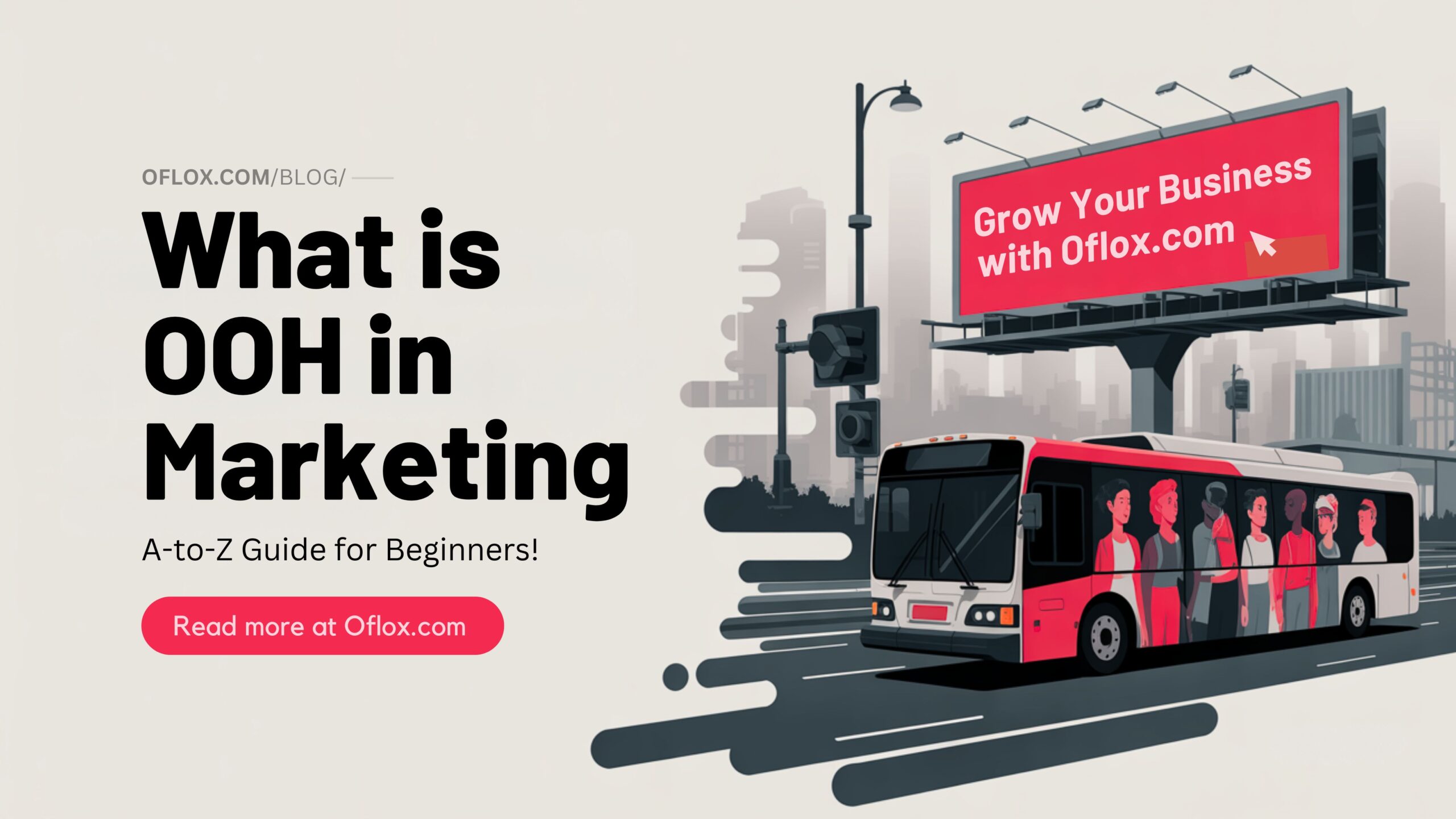
This article explains what is OOH in marketing, its purpose, types, and effectiveness in reaching diverse audiences across various locations. We’ll also explore how modern technology like DOOH (Digital Out-of-Home) is transforming this space.
Let’s open a new chapter!
Table of Contents
What is OOH in Marketing?
OOH stands for Out-of-Home advertising. It refers to all forms of advertising that reach consumers when they are outside their homes. This includes billboards, transit ads, bus stop posters, mall displays, airport ads, and more.
In simple terms, what is OOH in marketing? It’s any physical advertising displayed in public places that is not on digital devices like mobile phones, laptops, or TVs. However, with the rise of DOOH (Digital OOH), some ads use screens in public places.
Definition:
“Out-of-home (OOH) advertising is a traditional form of marketing that targets people in public areas using visual displays.”
Types of OOH Advertising
To better understand what is OOH in marketing, let’s explore its various forms:
1. Billboards
- Found on highways, city roads, rooftops.
- Can be static or digital.
- Large visibility and high impact.
- Example: Amul’s witty hoardings across India.
2. Transit Advertising
- Buses, trains, taxis, auto-rickshaws.
- Metro train station panels.
- Great for urban branding.
- Example: Zomato’s cheeky taglines on cabs.
3. Street Furniture
- Ads on benches, kiosks, public toilets, and lamp posts.
- Often seen in high footfall areas.
- Example: Paytm at bus stops across Tier-1 cities.
4. Retail & Mall Displays
- Inside shopping malls and stores.
- Promotes offers or product launches.
- Example: Samsung Galaxy launch with mall standees.
5. Airport & Railway Station Ads
- Premium advertising at airports and stations.
- Targets business travelers and tourists.
- Example: MakeMyTrip at Delhi Airport.
6. Event Sponsorship & BTL (Below The Line)
- Banners, arch gates, and branding at events.
- Combines offline interaction with branding.
- Example: Coca-Cola at cricket tournaments.
Benefits of OOH Marketing
Now that you know what is OOH in marketing, let’s understand why brands still invest in it, especially in India:
- Mass Reach: OOH targets commuters, pedestrians, and local residents, reaching thousands daily.
- High Visibility: OOH ads are hard to ignore and cannot be skipped like online ads.
- Brand Recall: Studies show that OOH ads improve brand recall by over 55% when paired with digital ads.
- Location-Based Targeting: You can target specific geographies with pinpoint accuracy.
- Cost-Effective: Compared to digital CPCs, a well-placed OOH ad can generate thousands of impressions at a fixed cost.
- Enhances Trust: Seeing a brand in public creates a sense of legitimacy and credibility.
According to the Indian Outdoor Advertising Association (IOAA), India’s OOH market was valued at ₹4,500 crore in 2024 and is growing at 12% YoY.
How to Create an Effective OOH Strategy
Let’s break it down into simple steps to help you plan a powerful OOH marketing strategy:
Step 1: Set a Clear Objective
Do you want to:
- Increase awareness?
- Drive store visits?
- Launch a new product?
Step 2: Know Your Audience
Use geolocation, traffic data, and local habits to choose the right places for display.
Step 3: Select the Right Format
Choose billboards for large awareness or mall ads for targeted impact.
Step 4: Design Creatively
Your design must be:
- Bold and readable from a distance.
- Visually engaging with minimal text.
- On-brand and memorable.
Step 5: Add a Call to Action (CTA)
Encourage users to:
- Visit your website.
- Use a promo code.
- Follow on social media.
Step 6: Combine with Digital Campaigns
OOH works best when integrated with social media, influencer, and Google campaigns.
Step 7: Track Results
Use:
- QR codes
- Vanity URLs
- Coupon codes
To measure ROI effectively.
OOH Marketing vs Digital Marketing
Here’s a comparison to clarify where each method shines:
| Feature | OOH Marketing | Digital Marketing |
|---|---|---|
| Reach | Mass (offline) | Targeted (online) |
| Skippable | No | Yes (can be blocked/skipped) |
| Cost | Fixed per display | Variable (CPC/CPM) |
| Engagement | Passive, but impactful | Interactive, clickable |
| Ideal For | Awareness & trust | Conversion & retargeting |
| Examples | Billboards, Bus Stops, Airports | Google Ads, Facebook, Instagram |
A hybrid strategy combining both channels often yields the best results.
Future Trends in OOH Advertising (2025 & Beyond)
Understanding what is OOH in marketing today is incomplete without peeking into the future of this space.
- Digital OOH (DOOH): Digital screens at malls, roads, or stations allow for real-time updates, animations, and even geofencing.
- Programmatic OOH: Marketers can now buy ad space automatically, much like Google Ads, based on traffic and timing.
- AI-Powered OOH: AI tools can predict the best places and times for display based on crowd behavior, weather, or local events.
- Hyperlocal Targeting: Advertisers are now using GPS and mobile signals to choose pinpoint locations for high conversion.
- Sustainable OOH: Eco-friendly billboards using solar, recyclable materials, and digital screens are gaining popularity.
FAQs:)
A. OOH in marketing stands for Out-of-Home advertising, which includes all forms of non-digital public ads like billboards, bus ads, and street furniture.
A. It offers massive reach, high visibility, brand credibility, and cost-effectiveness, especially in high-traffic urban areas.
A. Both have unique strengths. OOH is great for awareness and trust, while digital excels at targeting and conversions. A mix of both works best.
A. Use QR codes, promo codes, dedicated landing pages, and before-and-after traffic studies to track effectiveness.
Conclusion:)
To sum up, what is OOH in marketing is more than just placing a billboard. It’s a powerful tool that, when done right, brings brand awareness, trust, and large-scale visibility in a way digital ads sometimes can’t. In the ever-competitive Indian market, OOH stands tall—literally and figuratively.
Whether you’re a startup in Delhi, a restaurant in Mumbai, or a service provider in Dehradun, OOH advertising can put your brand in the spotlight, where people can see it.
Read also:)
- What is Omnichannel Marketing: A-to-Z Guide for Beginners!
- What is Vernacular Marketing: A-to-Z Guide for Beginners!
- What is UGC in Digital Marketing: A Step-by-Step Guide!
Have questions or thoughts about OOH marketing? We’d love to hear from you! Share your feedback, experiences, or queries in the comments below.