This article provides a complete guide on How AI Is Reshaping the Future of Work, including its meaning, importance, history, working process, key features, benefits, challenges, popular AI tools, real-world applications, expert tips, common mistakes, and future trends.
Artificial intelligence (AI) is revolutionizing the world of work in today’s world. Ideas that would have been considered fictional just a few years ago are already a reality. AI is helping people to type their emails, analyze data, respond to customers’ queries, create graphics, and help doctors make medical decisions. With advancements in technology, AI is set to transform jobs, the workplace environment, and whole industries.
According to PwC’s 2025 Global AI Jobs Barometer, industries with the highest exposure to AI increased their productivity growth from 7% to 27% between 2018 and 2024, showing how quickly AI is improving the way people work.
While there are concerns that AI is likely to displace human workers, it is also bringing about changes that are likely to generate opportunities for workers. The future of work is not humans competing with AI, but learning to work with it to enhance productivity and efficiency.
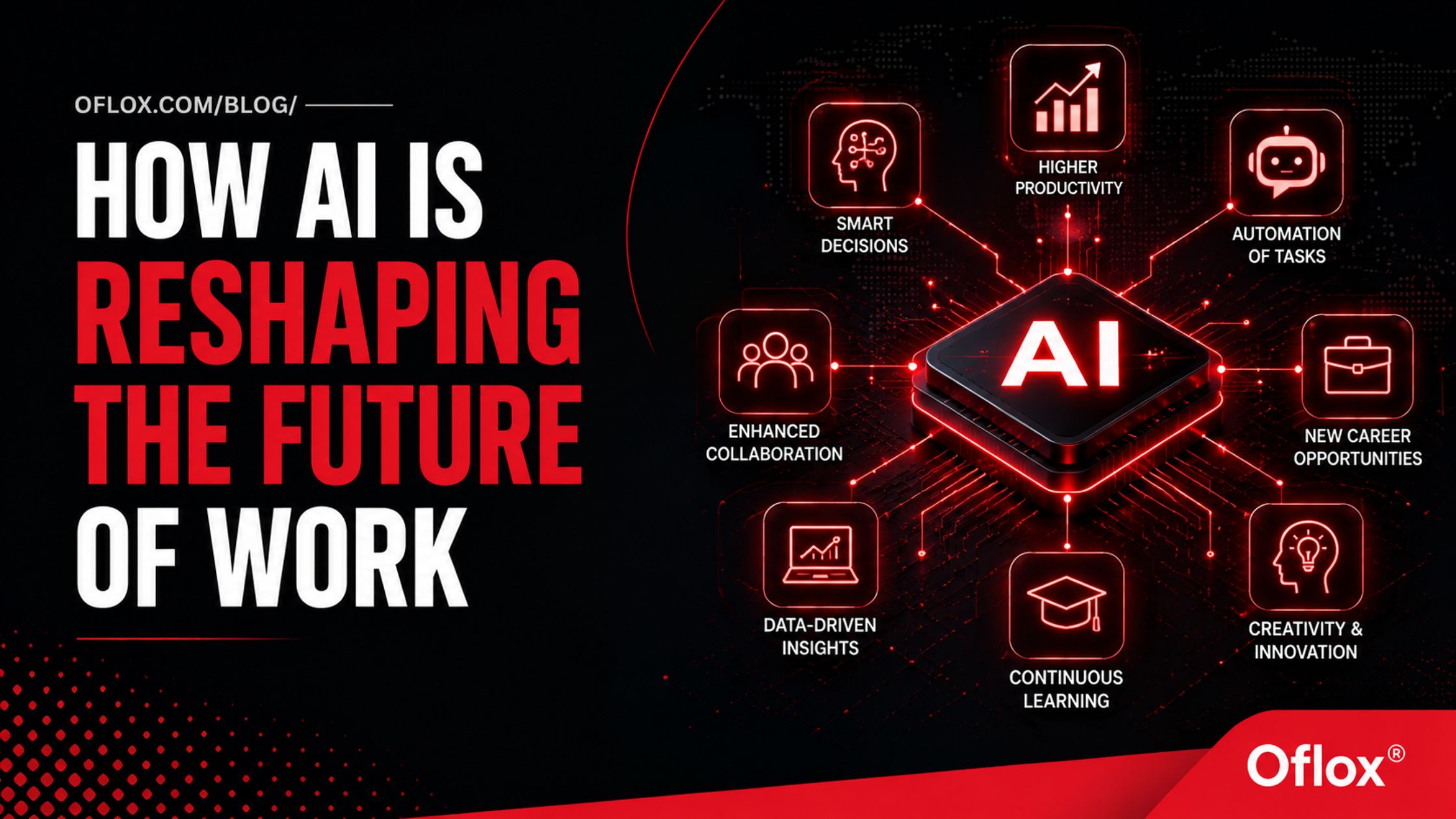
Whether you’re a beginner or an experienced professional, this comprehensive guide will help you understand how Artificial Intelligence is transforming workplaces and how you can prepare for the future with confidence.
Let’s explore it together.
Table of Contents
What Is Artificial Intelligence?
It is technology that enables machines to accomplish what generally requires human intelligence to complete. These are such activities as learning from information, comprehending language, image recognition, problem-solving, and forecasting.
Today, AI powers many everyday tools, from writing assistants and virtual chatbots to AI detectors for students, tools that help promote academic honesty by identifying content that may have been generated using artificial intelligence.
AI, unlike usual software, is able to acquire knowledge from patterns and enhance itself over time. AI can, for instance, sum up long papers, make product recommendations based on customers’ behavior, interpret languages, identify fraudulent transactions, and give answers within seconds.
Currently, artificial intelligence is starting to serve as an intelligent assistant rather than a simple program. As AI-powered mobile applications become more common, users are increasingly looking for reliable ways to install apps on their devices outside traditional app stores. For iPhone and iPad users, https://iosscarlet.com/ provides Scarlet downloads that make it easier to install and manage IPA files.
How AI Is Changing the Workplace
Artificial intelligence technology has transformed workplaces by automating all activities that are time-consuming and repetitive.
For instance, in place of spending many hours sorting out data from spreadsheets or looking for documents, artificial intelligence can do these tasks within minutes, thus giving room to employees to focus on problem-solving and decision-making as well as customer interaction.
AI has improved teamwork as well; this is because employees can look up information, draft reports, brainstorm, and execute projects much faster than before. Instead of substituting for most jobs, artificial intelligence technology has changed the way these jobs are done.
As digital tools continue to evolve, users also rely on trusted platforms to access and manage software across different devices. For example, https://deltaexecutor-hub.com/ provides the latest Delta Executor downloads for Android, iOS, Windows, and macOS, making it easier for users to access supported versions from a single source.
Tasks AI Can Handle
AI is effective when undertaking routine tasks that involve data. Here are some examples of such activities:
- Organization of lots of data
- Answers to commonly asked customer questions
- First draft of emails or reports
- Organizing meetings
- Checking for mistakes in texts
- Preparation of summaries of long texts
- Translation of languages
- Identification of trends from data
These activities usually consume a lot of time for employees every week. AI helps perform them faster and allows people to do other important activities.
What Humans Still Do Better
While AI is effective, there are certain areas where it fails to perform better than humans. Human beings are still superior in:
- Critical thinking skills
- Creative problem solving
- Leadership skills
- Relationship building
- Emotional intelligence
- Negotiation skills
- Ethical decision making
- Complex situational understanding
- Motivating the team
For instance, while AI will provide some marketing suggestions, human beings will choose which suggestion fits within the goals of the organization. While AI can help analyze the patient’s medical history, the doctor will still make the decision based on the uniqueness of the situation.
The most successful approach involves the collaboration of human beings and AI technology.
Industries Being Transformed by AI
Every single sector is witnessing some sort of change owing to the advent of AI.
- Healthcare: AI aids doctors in disease detection, reviewing medical images, documenting patient histories, and even suggesting treatment. It enables doctors to invest their time in serving patients.
- Education: The use of AI by teachers includes planning lessons, creating quizzes,s and giving personalized attention to students. AI could also be used by students as a tutor for clearing difficult concepts.
- Finance: Financial institutions make use of AI to detect fraud and risks involved in financial transactions. It also analyzes market trends and enhances the customer experience.
- Manufacturing: Factories make use of smart machines that help in keeping track of machines, improving product quality, and predicting maintenance needs.
- Retail: AI is being employed in retail stores for suggesting products, managing inventories, and predicting demand.
- Customer Service: Today, most of the companies have incorporated chatbots that are able to respond to simple customer queries around the clock. Human assistants take up handling more complicated issues.
New Jobs Are Being Created
Although AI alters already existing careers, it is also giving rise to new careers.
These emerging career fields are:
- AI specialists
- Machine Learning Engineers
- AI trainers
- Prompt Engineers
- AI consultants
- Data Analysts
- AI ethics specialists
- Automation experts
- Cybersecurity experts
In addition, many of the traditionally practiced careers will become AI-enabled rather than rendered redundant. This means that marketers will leverage AI for analysis of their campaigns, designers will leverage AI for ideation, and programmers will leverage AI for faster coding.
The Skills That Matter Most
As the use of AI technologies increases, there will be a need for individuals capable of possessing not only hard skills but also certain soft qualities of human beings. Among those qualities that will be highly valued in the future are:
- AI Literacy: Individuals do not need to specialize in AI technologies; however, they should know what these technologies can do and how to utilize them.
- Critical Thinking: It will be important for individuals to evaluate the information presented by artificial intelligence instead of taking things at face value.
- Creativity: While AI technologies come up with creative ideas, creativity is something that belongs to humans.
- Communication: Communication allows working together and helping one’s clients and co-workers to get an explanation of a complex situation.
- Adaptability: The pace of development of technology is extremely high; hence, acquiring new skills will allow handling difficulties in the future.
- Emotional Intelligence: Emotional intelligence will be necessary for employees to understand how other people feel and handle conflicts.
Challenges of AI in the Workplace
Even though there are numerous advantages of AI, there are several difficulties as well.
- Job Displacement: There could be a decline in some repetitive jobs due to increased automation. Employees might require more training in order to do different types of work.
- Privacy Issue: AI uses a lot of personal and organizational data. This information needs to be protected against any abuse.
- Bias: AI makes use of previously gathered data. If that data is biased in some way, AI will create results that are also going to be biased. It is important to test it regularly.
- Dependence on AI: Individuals should not rely on AI in all matters. Sometimes AI can give wrong results.
What About Entry-Level Jobs?
Many entry-level positions consist of repetitive functions such as data input, scheduling, report writing, or simple research work. As these activities can be performed by AI, entry-level positions are being transformed.
Nevertheless, this does not signify that opportunities are vanishing. Rather, new employees need to acquire knowledge on working with AI in addition to acquiring communication, collaboration, and analytical skills.
The company can help its employees develop these competencies through learning and mentoring programs as well as gaining practical experience.
How Students Can Prepare for the Future
The students joining the workforce today must concentrate on gaining technical skills as well as personal skills.
Some of the tips to do that include:
- Understanding the fundamentals of AI and digital technology.
- Relying on critical thinking and not rote learning.
- Enhancing writing skills.
- Developing team and leadership skills.
- Being inquisitive and learning continuously.
- Using AI as an educational tool and not as a crutch.
The students who can leverage both technologies and people skills will have a definite edge in the future workplace.
The Future of Human and AI Collaboration
The future of work isn’t about humans vs AI, but rather about humans partnering with AI to do things more efficiently.
Whereas AI can handle data processing faster than humans, we have judgment, empathy, creativity, and ethics, so together we will find ways to tackle the issues that none of us would be able to resolve on our own.
With further advancements in AI technology, there will be a lot of changes in employment, including job shifts, the emergence of new careers, and increased workplace efficiency.
Conclusion:)
AI is revolutionizing the future of work in a very positive and significant manner. Not only is it revolutionizing industries, but also changing the roles that jobs play and providing opportunities to both businesses and individuals alike. Even though automation of tasks has increased, there are certain traits in humans,s like creativity, management, communication, and emotional intelligence,ce that are still vital.
The future lies with those who are prepared to learn and evolve along with AI rather than being afraid of it. Through the integration of the capabilities of AI and humans, one can make an intelligent future of work.
“Artificial Intelligence may transform the way we work, but human creativity, ethics, and innovation will always define the future of work.” — Mr Rahman, Founder of Oflox®
Read also:)
- How to Improve Student Learning Experience: A Complete Guide!
- What is Proxy Server and how it works? A Complete Guide!
- What is Data Lakehouse? A Complete Beginner’s Guide!
How do you think AI will change your career or business? Share your thoughts or questions in the comments below—we’d love to hear from you!