This detailed guide explains everything you need to know about How to Get Toll Free Number in India. You’ll learn what a toll-free number is, how it works, its benefits, available number series, eligibility requirements, setup process, pricing factors, popular providers, best practices, common mistakes, and future trends.
Customer communication plays a major role in building trust and growing any business. Whether you run a startup, an online store, a hospital, an educational institute, or a large enterprise, making it easy for customers to contact you can significantly improve customer satisfaction and sales.
One of the most effective ways to achieve this is by using a toll-free number. Unlike a regular mobile or landline number, a toll-free number allows customers to call your business without paying any call charges. Instead, the business bears the cost of incoming calls. This simple feature removes a common communication barrier and encourages more customers to reach out for inquiries, support, bookings, or purchases.
Today, thousands of Indian businesses use toll-free numbers to provide professional customer service, build brand credibility, and increase customer engagement. Modern cloud telephony platforms have also made it much easier and more affordable to get a toll-free number than ever before. Even small businesses and startups can now access enterprise-level communication features without investing in expensive hardware.
Whether you’re a beginner starting your first business or an experienced entrepreneur looking to improve customer communication, this guide will help you make the right decision.
Let’s explore it together.
Table of Contents
What Is a Toll-Free Number?
A toll-free number is a special business telephone number that allows customers to call a company without paying any call charges. Instead of the caller, the business receiving the call pays the communication cost.
These numbers are primarily designed for customer support, sales inquiries, technical assistance, order management, appointment booking, and other business communications.
Unlike personal mobile numbers, toll-free numbers project a more professional image and make it easier for customers to remember your business contact information.
Examples include:
- 1800-123-4567
- 1800-889-9000
- 1860-500-1000 (shared-cost service)
Many businesses also combine toll-free numbers with advanced cloud telephony features such as:
- Interactive Voice Response (IVR)
- Automatic Call Distribution (ACD)
- Call Recording
- Missed Call Alerts
- CRM Integration
- WhatsApp Business Integration
- AI Voice Assistants
- Call Analytics
As a result, toll-free numbers have evolved from being simple telephone lines into complete business communication systems.
History of Toll-Free Numbers
The concept of toll-free calling was introduced to encourage businesses to provide better customer support without making customers pay for long-distance calls.
1. Early Years
Initially, businesses relied mainly on standard landline numbers. Customers had to pay long-distance charges whenever they contacted a company, which often discouraged communication.
To solve this problem, telecom companies introduced toll-free services where businesses agreed to bear the call costs instead of customers.
2. Growth in India
India adopted toll-free services as business communication expanded rapidly.
Initially, only:
- Banks
- Airlines
- Government organizations
- Telecom operators
used toll-free numbers because they were relatively expensive and required dedicated infrastructure.
As cloud telephony became more accessible, the cost of obtaining and managing toll-free numbers decreased significantly.
Today, even:
- Startups
- Freelancers
- Clinics
- Coaching institutes
- E-commerce sellers
- SaaS companies
- NGOs
- Digital agencies
can easily get a toll-free number within a short time.
Evolution of Toll-Free Services
| Period | Development |
|---|---|
| 1980s | Basic toll-free services introduced |
| 1990s | Large enterprises adopted customer support numbers |
| 2000s | Call centers became common |
| 2010s | Cloud telephony simplified setup |
| 2020s | AI, CRM integration, analytics, and omnichannel communication |
| 2026 & Beyond | AI-powered customer communication with intelligent routing |
Why Are Toll-Free Numbers Important?
A toll-free number is much more than just another phone number.
It acts as a professional communication channel that helps businesses improve customer experience and increase trust.
1. Builds Customer Trust
Customers are generally more comfortable contacting businesses that have a dedicated toll-free support number.
It signals that the company is established, accessible, and committed to customer service.
2. Encourages More Customer Calls
Since callers do not pay for the call, they are more likely to:
- Ask product questions
- Request support
- Make inquiries
- Report issues
- Complete purchases
This often leads to higher customer engagement and better conversion rates.
3. Creates a Professional Brand Image
Instead of displaying multiple personal mobile numbers, businesses can use a single toll-free number across:
- Website
- Business cards
- Advertisements
- Social media
- TV commercials
- Radio campaigns
- Email signatures
This creates a consistent and professional brand identity.
4. Improves Customer Support
Modern toll-free solutions include intelligent routing systems that direct customers to the right department.
Examples:
- Sales
- Billing
- Technical Support
- Human Resources
- Accounts
This reduces waiting time and improves customer satisfaction.
5. Supports Business Growth
As your business grows, you don’t need to change your customer support number.
You can simply add:
- More agents
- Additional departments
- New branches
- Remote employees
while keeping the same toll-free number.
How Does a Toll-Free Number Work?
Understanding the working process is easier than many people think.
Below is the typical communication flow.
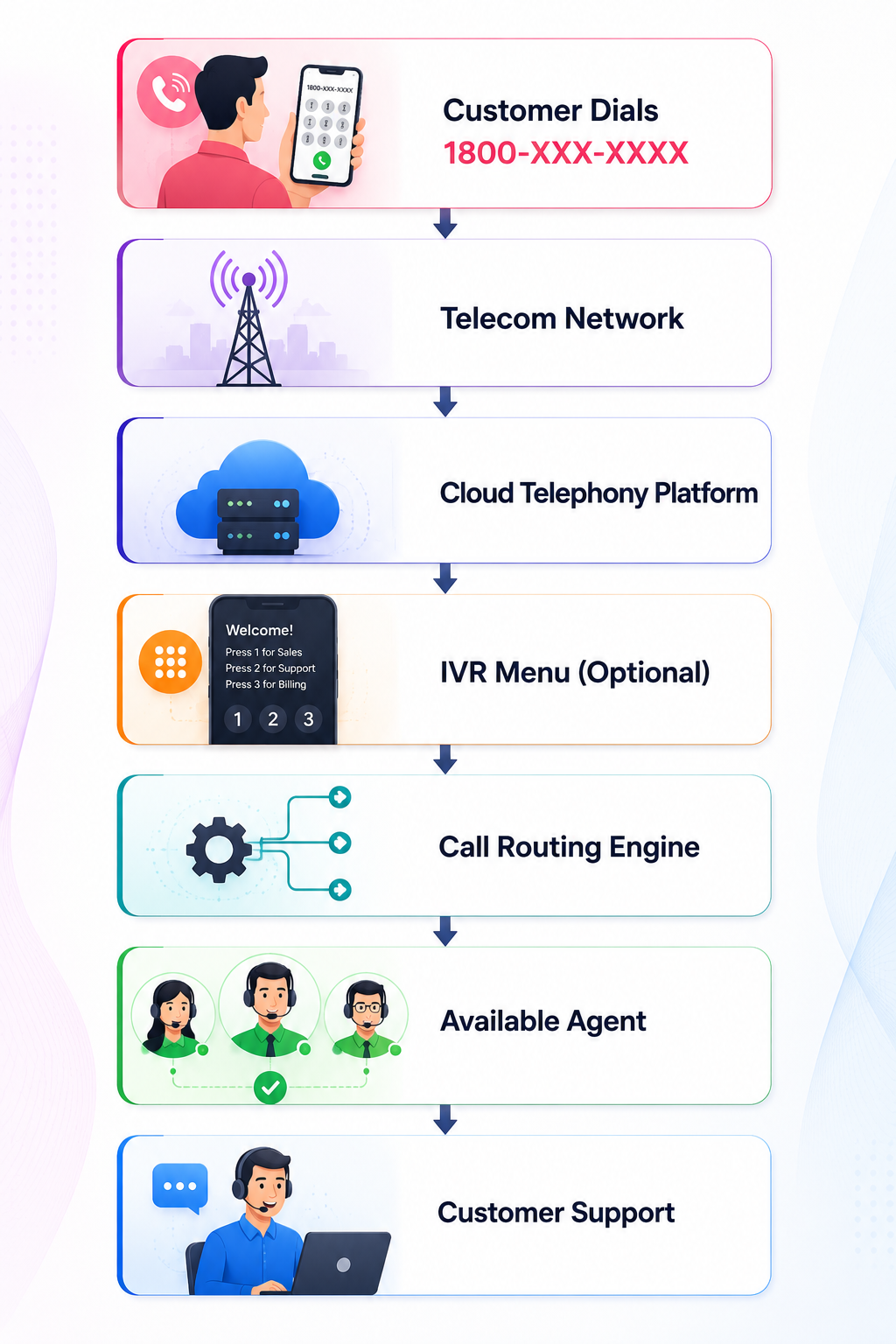
Step-by-Step Working Process:
1. Customer Calls the Toll-Free Number
The customer dials your business’s toll-free number from a mobile or landline.
2. Telecom Network Receives the Call
The telecom operator recognizes that the number belongs to a toll-free service.
3. Call Is Sent to the Cloud Platform
Instead of directly reaching one phone, the call enters the provider’s cloud communication platform.
4. IVR Greets the Customer
If configured, customers hear an automated greeting such as:
Welcome to Oflox®. Press 1 for Sales, Press 2 for Support, Press 3 for Billing.
5. Intelligent Routing
The platform identifies the appropriate destination based on rules such as:
- Department selected
- Agent availability
- Working hours
- Caller location
- Language preference
- Business priority
6. Agent Answers the Call
The selected employee receives the call on:
- Mobile
- Landline
- Softphone
- Desktop App
- CRM Dashboard
7. Call Analytics Are Recorded
Most cloud providers automatically save valuable information, including:
- Call duration
- Recording
- Missed calls
- Agent performance
- Customer wait time
- Peak calling hours
These insights help businesses improve service quality over time.
Types of Toll-Free Numbers in India
Not every business requires the same type of toll-free service.
Different numbering formats and service models are available depending on your business needs.
1. 1800 Toll-Free Numbers
These are the most recognized toll-free numbers in India.
Example:
1800-123-4567Best For:
- Customer support
- National brands
- E-commerce
- Enterprises
- Government services
Advantages:
- Free for callers
- High brand recognition
- Easy to remember
- Widely trusted
2. Vanity Toll-Free Numbers
Vanity numbers are customized to make them easier to remember.
Example:
- 1800-FLOWERS (international concept)
- 1800-OFLOX (subject to availability and numbering rules)
These numbers help improve brand recall in advertising campaigns.
3. Shared-Cost Numbers (1860 Series)
An 1860 number is not a true toll-free number. In many cases, the caller pays local or standard call charges while the business may bear part of the cost, depending on the telecom plan.
These numbers are suitable for organizations that need a nationwide contact number but do not necessarily require free calling for customers.
Best For:
- Medium-sized businesses
- Service providers
- Organizations balancing communication costs
4. Virtual Toll-Free Numbers
These are cloud-based toll-free numbers that are not tied to a specific physical office or telephone line.
Calls can be forwarded to:
- Mobile phones
- Office landlines
- Remote employees
- Call center software
- CRM platforms
Virtual toll-free numbers are especially useful for remote teams, startups, and businesses operating across multiple cities.
Toll-Free vs Regular Business Numbers
| Feature | Toll-Free Number | Regular Mobile Number |
|---|---|---|
| Caller Pays | No | Yes |
| Business Image | Highly Professional | Basic |
| Customer Trust | High | Moderate |
| IVR Support | Yes | Usually No |
| Call Analytics | Yes | Limited |
| CRM Integration | Available | Rare |
| Call Routing | Advanced | Basic |
| Suitable for Growth | Excellent | Limited |
Who Should Use a Toll-Free Number?
A toll-free number is beneficial for organizations of all sizes that receive frequent customer calls or want to present a professional brand image. Common users include:
- E-commerce businesses
- SaaS companies
- IT firms
- Digital marketing agencies
- Hospitals and clinics
- Schools and universities
- Coaching institutes
- Hotels and travel agencies
- Banks and financial services
- Insurance companies
- Real estate firms
- Logistics and courier services
- Government departments
- NGOs
- Manufacturing companies
- Customer support centers
Even a growing startup can benefit from a toll-free number by making it easier for customers to connect and by building trust from day one.
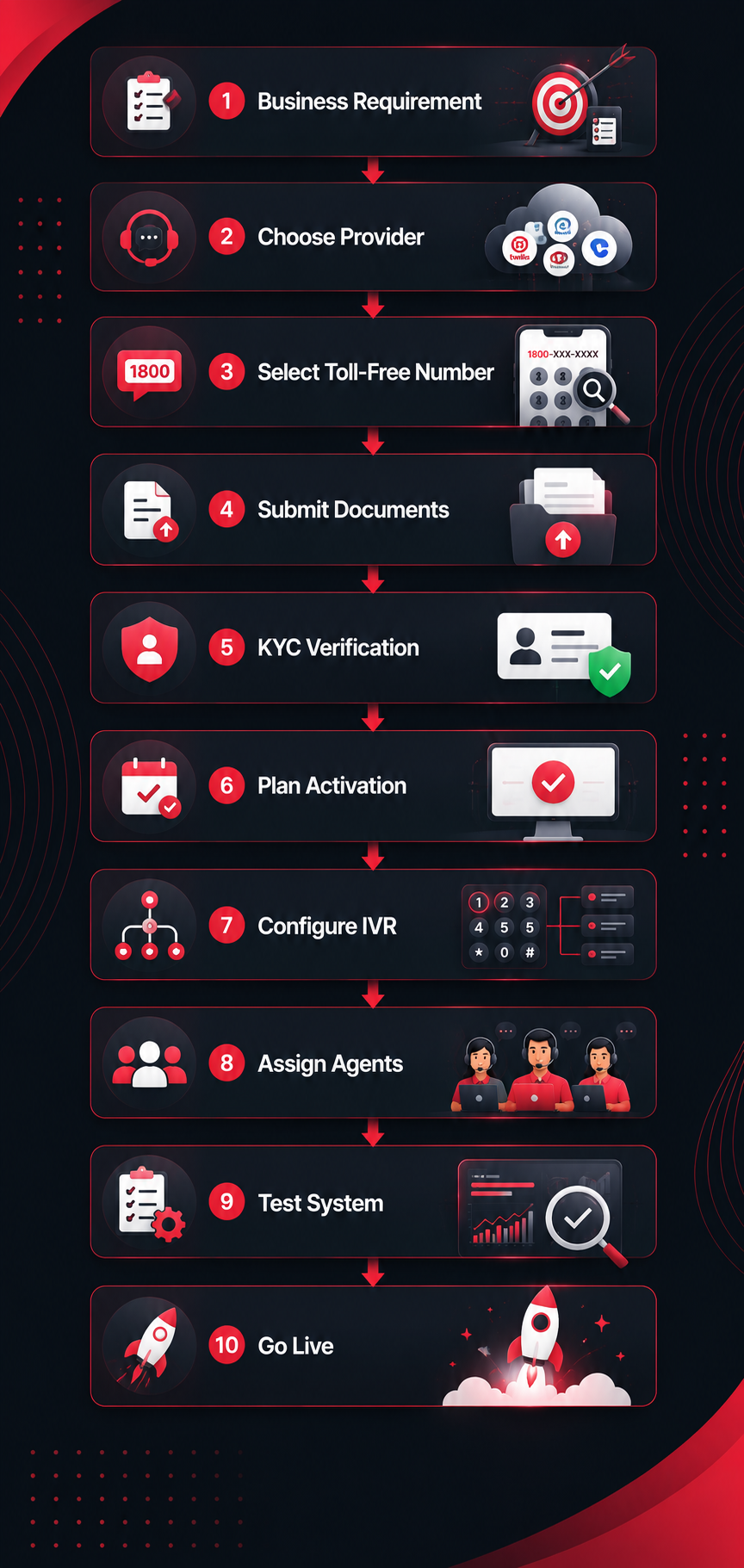
How to Get Toll Free Number in India
Getting a toll-free number in India is easier than ever. Follow these simple steps to choose a provider, complete verification, and activate your business number.
1. Identify Your Business Requirements
Before choosing a provider, clearly define why you need a toll-free number.
Ask yourself:
- Will customers call for sales or support?
- How many calls do you expect every day?
- Do you need IVR (Press 1 for Sales)?
- Will your team work remotely?
- Do you need call recording?
- Will you integrate with a CRM?
- Do you need WhatsApp integration?
- Do you need AI voice support?
The answers will help you select the right plan.
Example:
An e-commerce company may require:
- Sales IVR
- Order tracking
- Call recording
- CRM integration
- Multiple support agents
Whereas a coaching institute may only require:
- Single reception number
- Admission inquiry routing
- Missed call alerts
2. Choose the Right Toll-Free Service Provider
India has many cloud communication providers offering toll-free services with different pricing models and features.
While comparing providers, evaluate the following factors:
| Feature | Why It Matters |
|---|---|
| Uptime | Ensures reliable customer communication |
| IVR | Professional call handling |
| Call Recording | Quality monitoring and training |
| CRM Integration | Better customer management |
| Analytics | Business insights |
| Mobile App | Remote accessibility |
| Customer Support | Faster issue resolution |
| Pricing | Fits your budget |
| Scalability | Supports future growth |
| AI Features | Automates routine customer interactions |
Avoid choosing a provider based only on the lowest price. Reliability, support, and scalability are equally important.
3. Select Your Toll-Free Number
Most providers allow you to choose from available number options.
You may get choices based on:
- Number availability
- Easy-to-remember combinations
- Premium or vanity numbers
- Regional preferences (where applicable)
Examples:
- 1800-123-4567
- 1800-200-1000
- 1800-889-XXXX
Businesses often prefer memorable numbers because they improve brand recall in advertisements.
4. Submit KYC Documents
To comply with regulatory requirements, providers will ask for Know Your Customer (KYC) documents before activating your service.
The exact document list may vary depending on your business type and provider.
Common Documents Required:
1. For Individuals / Sole Proprietors
- PAN Card
- Aadhaar Card or other valid ID proof
- Address proof
- Passport-size photograph (if required)
- Business proof (if applicable)
2. For Partnership Firms
- PAN Card
- Partnership Deed
- GST Certificate (if available)
- Address proof
- Partner identity proofs
3. For Private Limited Companies
- Certificate of Incorporation
- PAN Card
- GST Registration (if applicable)
- CIN details
- Authorized signatory ID proof
- Company address proof
4. For LLPs
- LLP Registration Certificate
- PAN
- GST (if applicable)
- Authorized partner documents
5. Choose a Plan
Most providers offer multiple pricing options.
Examples include:
- Monthly plans
- Annual plans
- Pay-as-you-go
- Enterprise solutions
Some plans include:
- Fixed free minutes
- Additional usage charges
- Unlimited extensions
- Premium support
- AI voice assistant
- CRM integration
Choose a plan according to your expected monthly call volume instead of simply selecting the cheapest option.
6. Configure Your Call Flow
This is where your toll-free number becomes a complete customer support system.
Typical configuration includes:
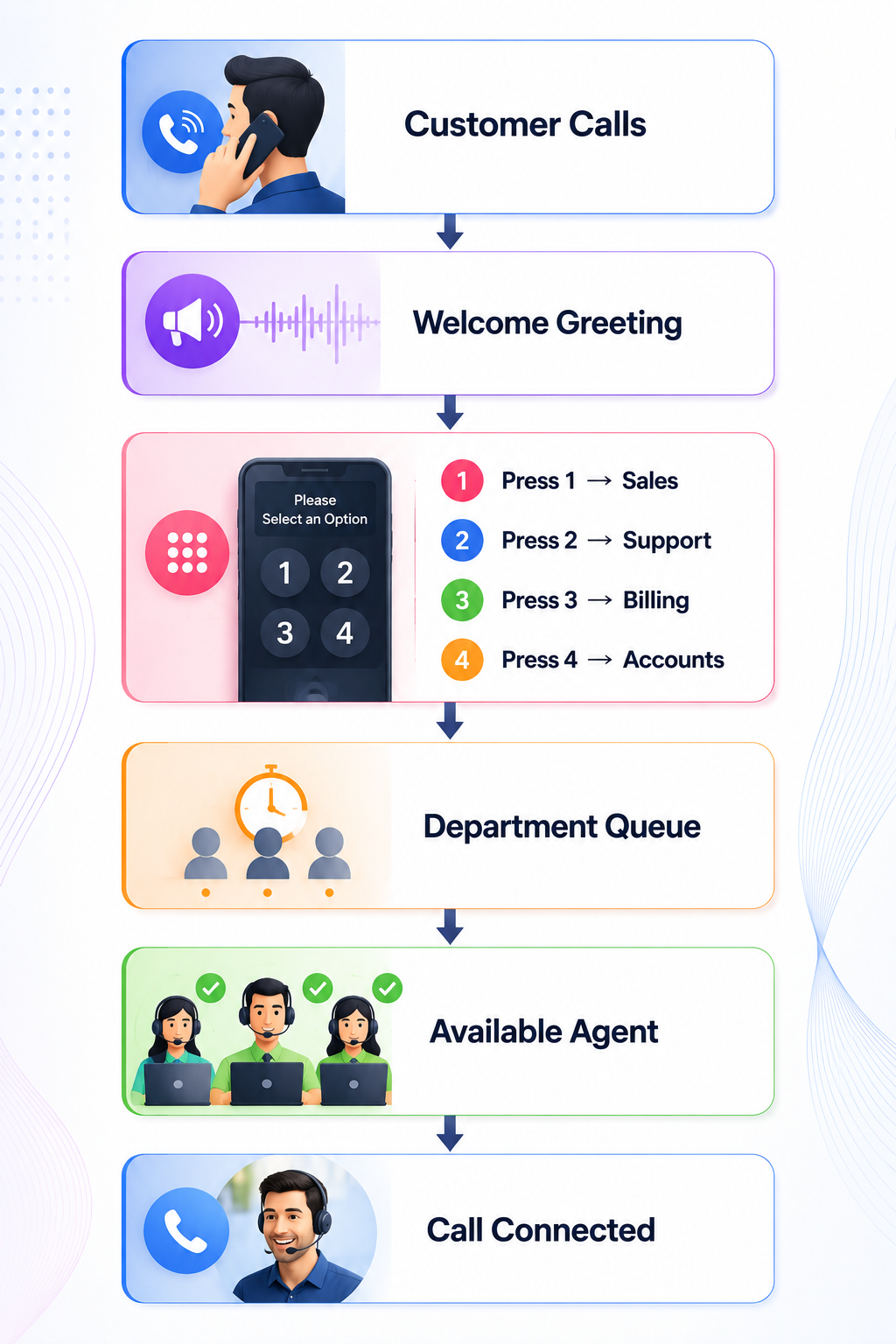
Modern providers allow you to customize this entire workflow without purchasing any hardware.
7. Set Up IVR
Interactive Voice Response (IVR) improves customer experience by automatically guiding callers.
Example:
Welcome to Oflox®.
- Press 1 for Sales.
- Press 2 for Technical Support.
- Press 3 for Billing.
Press 4 to speak with our executive.
This reduces manual call transfers and saves time for both customers and employees.
8. Configure Business Hours
You can define different call behavior for:
- Working hours
- Holidays
- Weekends
- After-office hours
Example:
During office hours:
Customer → AgentAfter office hours:
Customer → Voicemailor
Customer → Emergency mobile number9. Add Team Members
Assign incoming calls to different employees.
Example:
| Sales Team | Support Team | Billing Team |
| Agent A | Agent D | Agent F |
| Agent B | Agent E | |
| Agent C |
The system automatically distributes incoming calls based on predefined rules.
10. Test Before Going Live
Always perform a complete test.
Check:
- IVR options
- Call quality
- Routing accuracy
- Call recording
- CRM synchronization
- Mobile forwarding
- Missed call notifications
Testing helps identify issues before customers start calling.
Complete Toll-Free Setup Workflow
Key Features of a Toll-Free Number
Modern toll-free services provide much more than basic call forwarding.
1. Interactive Voice Response (IVR)
Automatically guides callers to the correct department.
2. Call Recording
Stores customer conversations for:
- Quality improvement
- Training
- Compliance
- Dispute resolution
3. Intelligent Call Routing
Routes calls based on:
- Agent availability
- Language
- Business hours
- Skill set
- Location
4. Call Analytics
Provides insights such as:
- Total calls
- Missed calls
- Peak hours
- Average handling time
- Agent performance
- Customer wait time
5. CRM Integration
Automatically displays customer information during incoming calls.
Popular CRM integrations include:
- Salesforce
- Zoho CRM
- HubSpot
- Freshsales
- LeadSquared
6. Multi-Level IVR
Allows businesses to create advanced menu structures.
Example:
| Sales | Support |
| → Product A | → Technical |
| → Product B | → Billing |
| → Warranty |
7. Call Queue Management
When all agents are busy:
Customers enter a queue instead of receiving a busy tone.8. Voicemail
Calls can automatically convert into voice messages when agents are unavailable.
9. Real-Time Dashboard
Managers can monitor:
- Live calls
- Active agents
- Queue status
- Performance metrics
10. AI Voice Assistant
Modern AI systems can:
- Answer FAQs
- Book appointments
- Capture leads
- Transfer calls
- Handle repetitive customer queries
Benefits of Using a Toll-Free Number
A toll-free number offers more than free customer calls—it helps businesses improve communication, build trust, and grow faster.
- Better Customer Experience: Customers appreciate free and easy communication.
- Higher Brand Credibility: Businesses with toll-free numbers often appear more trustworthy and professional.
- Increased Sales Opportunities: Free calls encourage potential customers to ask questions before making a purchase.
- Nationwide Reach: Customers from anywhere in India can contact your business through one dedicated number.
- Improved Team Productivity: Automation reduces repetitive manual work.
- Better Customer Insights: Analytics help improve support quality and business decision-making.
- Supports Remote Work: Employees can answer business calls from Mobile phones, Laptops, Softphones, and Home offices.
- Easy Business Expansion: As your company grows, you can simply add New departments, More agents, and Multiple branches without changing your business number
Pricing Factors
The cost of a toll-free number varies depending on several factors.
| Factor | Impact on Pricing |
|---|---|
| Number type | Premium numbers cost more |
| Monthly rental | Varies by provider |
| Included call minutes | Higher limits generally increase plan cost |
| IVR complexity | Advanced workflows may cost extra |
| Call recording | May affect storage costs |
| CRM integration | Premium integrations may require higher plans |
| AI voice features | Usually available in advanced plans |
| Support level | Enterprise support often costs more |
Tip: Compare the total cost of ownership, including rental, usage, and optional features, rather than focusing only on the advertised monthly fee.
Real-World Examples of Toll Free Number
Toll-free numbers are widely used across different industries to simplify customer communication and provide faster, more professional support.
1. E-commerce Company
A customer calls:
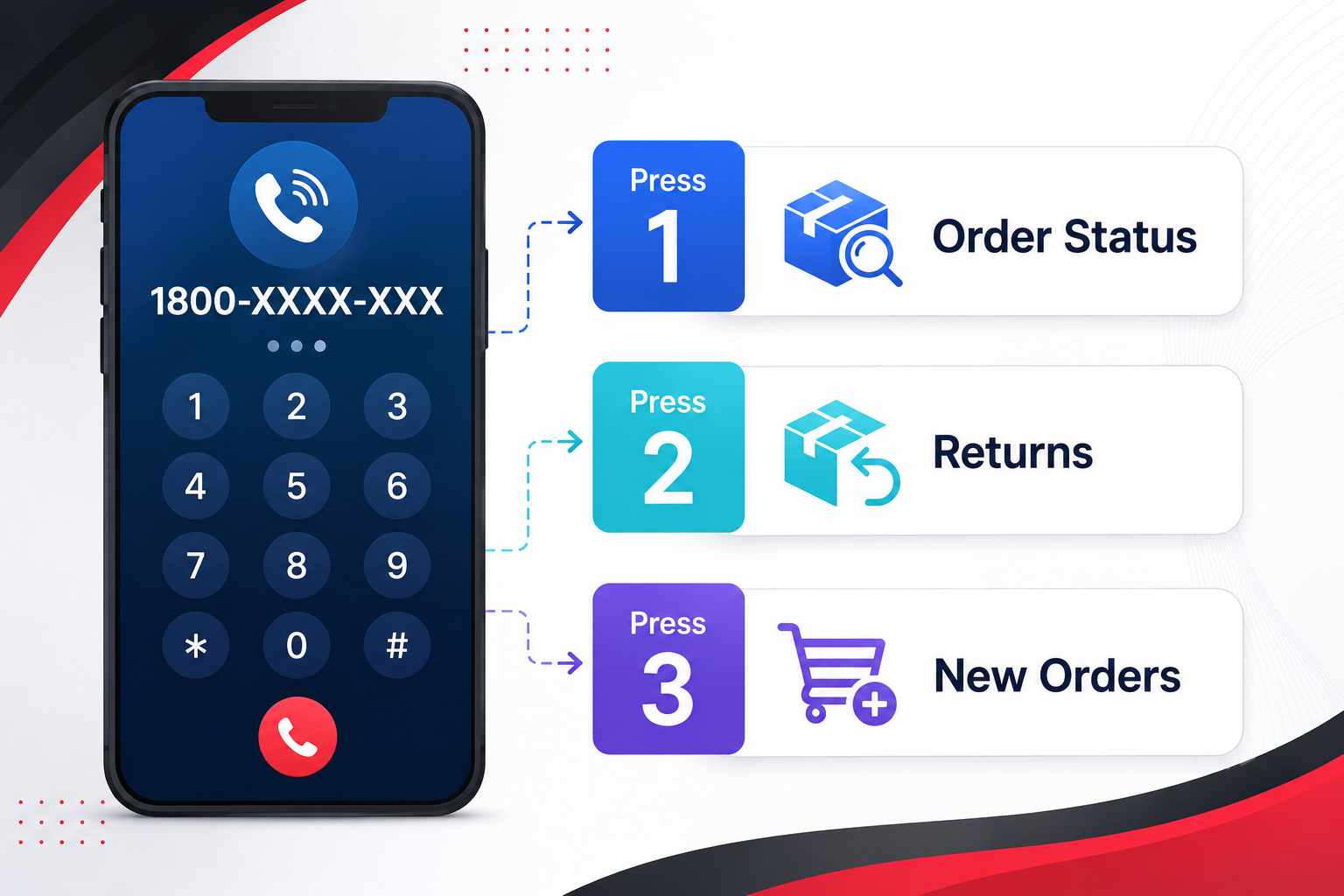
The call reaches the appropriate team instantly.
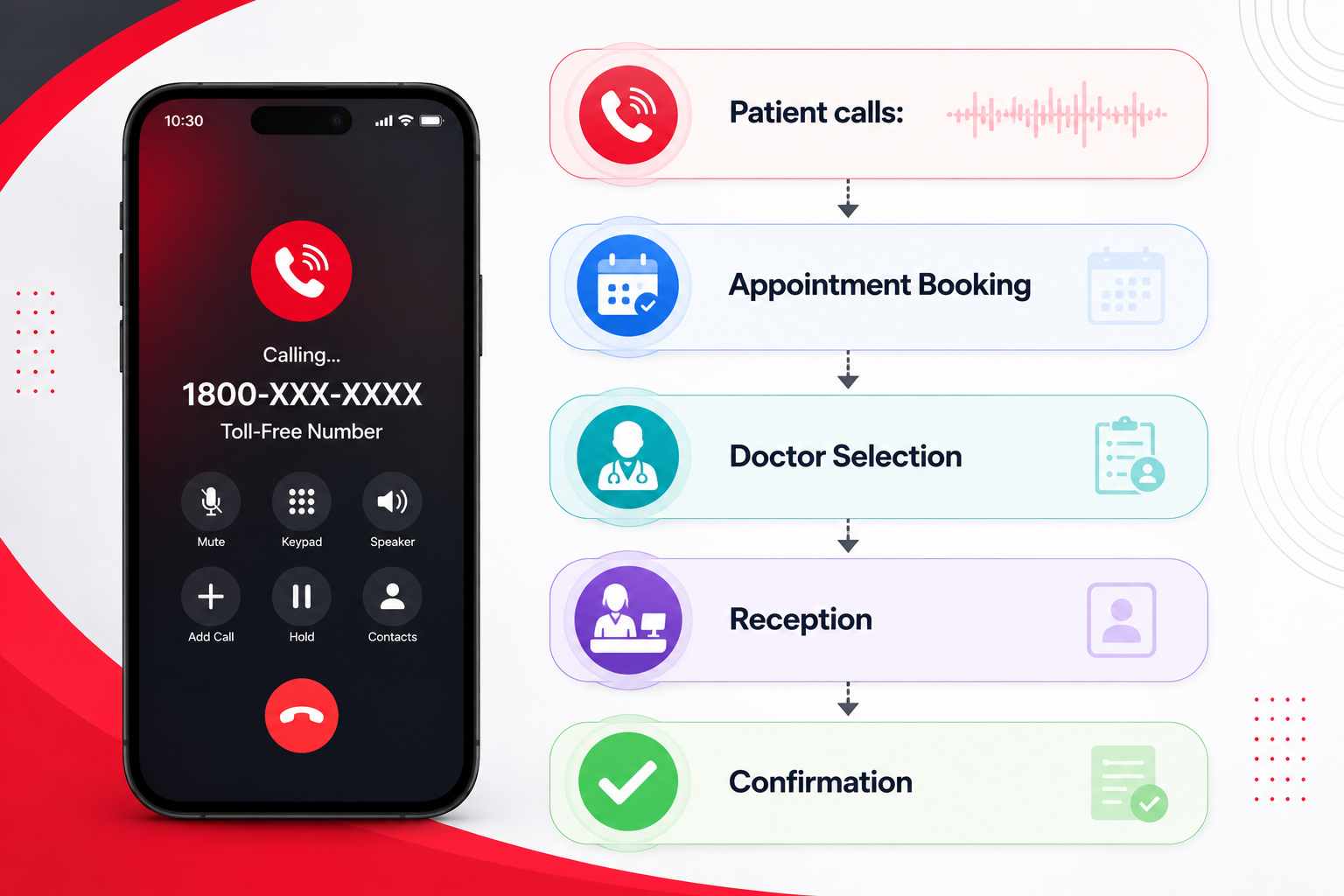
2. Hospital
3. Coaching Institute
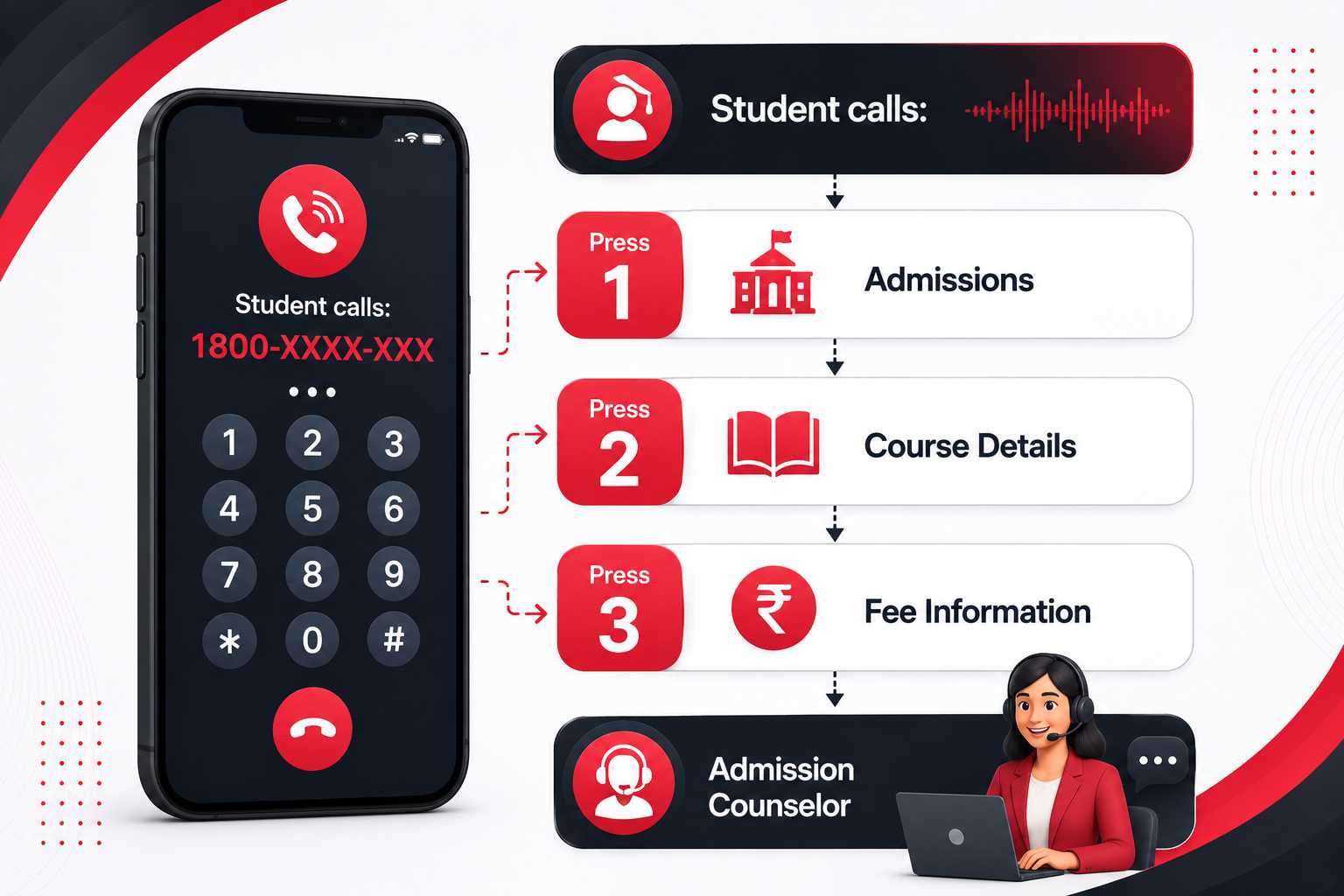
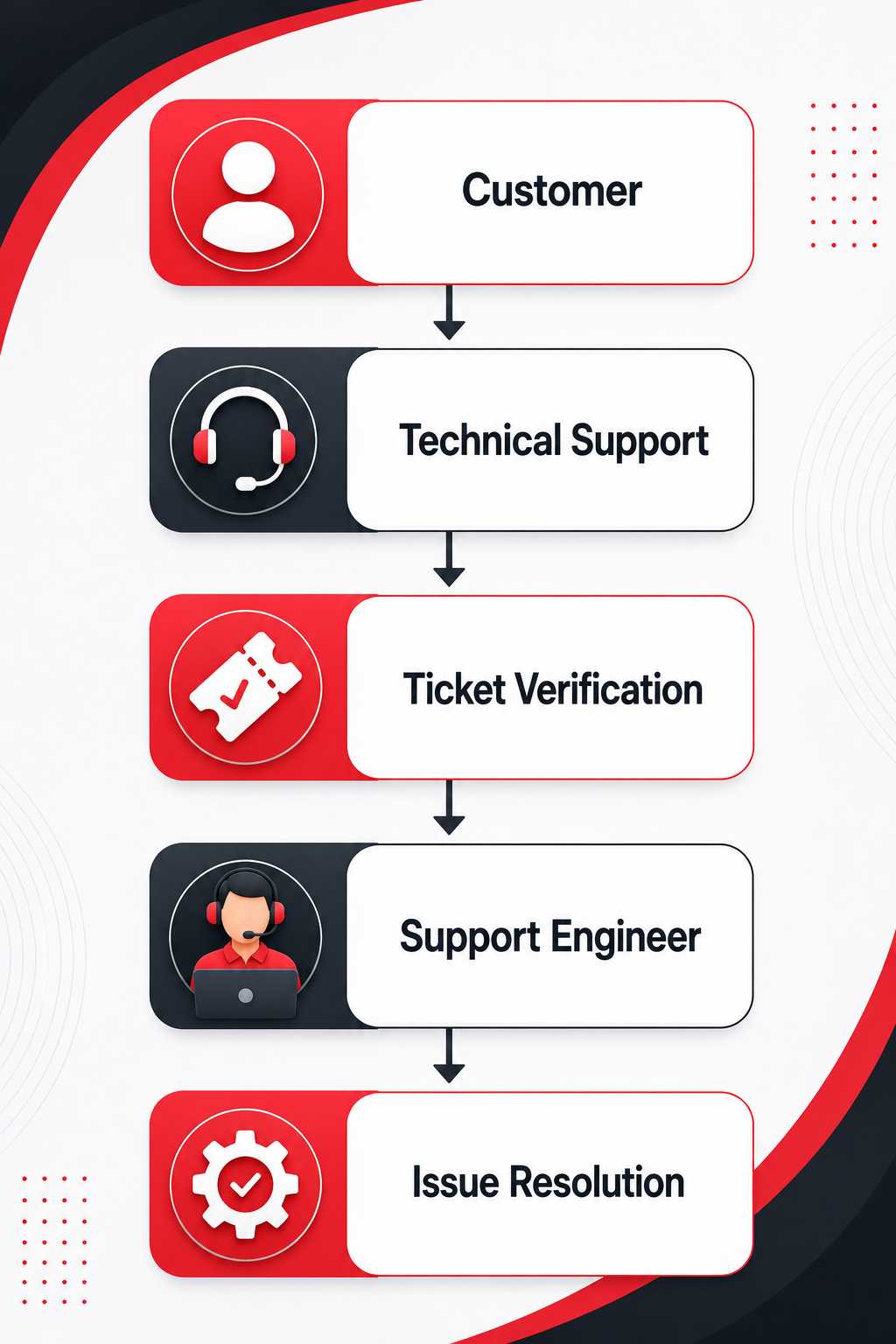
4. IT Company
Industries That Benefit Most
Almost every customer-facing business can benefit from a toll-free number, including:
- E-commerce
- SaaS companies
- IT services
- Digital marketing agencies
- Healthcare
- Hospitals
- Educational institutes
- Online coaching platforms
- Travel agencies
- Hotels
- Banks
- Insurance companies
- Logistics and courier services
- Government departments
- NGOs
- Real estate firms
- Manufacturing businesses
- Customer support centers
- Legal and consulting firms
Checklist Before You Buy a Toll-Free Number
- Understand your business communication needs.
- Estimate expected monthly call volume.
- Compare providers based on features, support, and reliability.
- Keep KYC documents ready.
- Choose a memorable number if available.
- Configure IVR and call routing carefully.
- Test the entire setup before launch.
- Review pricing, included minutes, and additional usage charges.
- Plan for future scalability as your business grows.
Common Challenges of Using a Toll-Free Number
Although toll-free numbers offer many advantages, businesses may face a few challenges if the system is not planned or managed properly.
1. Higher Operational Costs
While customers can call for free, the business is responsible for the incoming call charges. If your company receives a large volume of calls every day, communication costs can increase over time.
Solution:
- Monitor monthly call reports.
- Choose a plan that matches your expected call volume.
- Use IVR to reduce unnecessary agent interactions.
2. Long Customer Wait Times
If there are not enough support agents available, customers may experience long waiting times, leading to frustration.
Solution
- Use intelligent call routing.
- Enable callback requests.
- Increase the number of agents during peak hours.
3. Poor IVR Design
An overly complicated IVR menu can confuse callers.
Example:
Press 1
Press 2
Press 3
Press 4
Press 5
Press 6
Press 7
Customers may disconnect before reaching the right department.
Solution:
Keep the IVR simple with a maximum of 3–5 primary options.
4. Inadequate Agent Training
Even with an advanced communication system, poorly trained agents can negatively impact customer satisfaction.
Solution:
- Conduct regular training sessions.
- Review call recordings.
- Create standard response guidelines.
5. Choosing the Wrong Provider
Some businesses select a provider based only on low pricing, resulting in:
- Frequent downtime
- Poor voice quality
- Slow customer support
- Limited scalability
Solution:
Choose a provider with reliable infrastructure, transparent pricing, and responsive support.
Expert Tips for Successfully Using a Toll-Free Number
If you want to maximize the value of your toll-free number, follow these best practices.
- Choose an Easy-to-Remember Number: A memorable number improves brand recall and is easier to use in advertisements.
- Keep the IVR Short: Customers should reach the appropriate department within a few steps.
- Monitor Call Analytics Regularly: Review metrics such as Total calls, missed calls, Peak hours, Average handling time, First-call resolution, and Customer wait time. These insights help optimize staffing and improve service quality.
- Record Calls for Training: Call recordings can help identify common customer issues and improve agent performance.
- Integrate With Your CRM: Connecting your toll-free system to a CRM allows agents to view customer information instantly, reducing handling time and improving personalization.
- Use AI Voice Assistants for Repetitive Queries: AI-powered voice assistants can handle common requests like Business hours, Order status, Appointment booking, and Basic FAQs. This frees human agents to handle more complex conversations.
- Promote Your Toll-Free Number Everywhere: Display your toll-free number on websites, Landing pages, Business cards, Product packaging, Email signatures, Social media profiles, Advertisements, and Google Business Profile. Consistent visibility encourages more customer engagement.
Common Mistakes to Avoid
Many businesses fail to get the full benefit of a toll-free number because of avoidable mistakes.
- Choosing a Provider Based Only on Price: A cheaper plan may compromise call quality, support, or reliability.
- Ignoring Customer Analytics: Without reviewing reports, it is difficult to identify performance issues or opportunities for improvement.
- Not Testing the Setup: Always test IVR flows, routing, recordings, and forwarding before making the number public.
- Using Complex IVR Menus: Too many menu options can frustrate callers and increase call abandonment.
- Not Training Support Staff: Technology alone cannot provide excellent customer service. Well-trained agents remain essential.
- Ignoring Peak Call Hours: Scheduling enough staff during busy periods helps reduce wait times and improve customer satisfaction.
FAQs:)
A. A toll-free number is a business phone number that allows customers to call without paying call charges. The business pays for the incoming calls.
A. Individuals, sole proprietors, startups, partnerships, LLPs, private limited companies, educational institutions, NGOs, and large enterprises can generally apply, subject to the provider’s KYC and documentation requirements.
A. Activation usually takes 24 to 72 hours after successful document verification and configuration. Timelines may vary by provider.
A. Yes. Most cloud telephony providers allow toll-free calls to be forwarded to mobile phones, landlines, softphones, or desktop applications.
A. Yes. Calls can be received at any time, although you can configure business hours, voicemail, IVR messages, or call forwarding based on your requirements.
A. Yes. Modern cloud systems can route calls to different branches, departments, or remote teams using the same toll-free number.
A. Some providers offer WhatsApp Business integration alongside their cloud communication platform. Availability depends on the provider and chosen plan.
A. Absolutely. Affordable cloud-based plans make toll-free numbers suitable for startups, freelancers, and small businesses.
A. For business communication, a toll-free number generally offers more professional features such as IVR, call recording, analytics, and intelligent routing, making it a stronger choice for customer support.
A. In many cases, businesses may be able to migrate services, but the process and portability options depend on telecom regulations and the providers involved. Check with your provider before making a decision.
Conclusion:)
A toll-free number is no longer a feature reserved for large enterprises. Today, businesses of every size can use cloud-based toll-free solutions to provide professional customer support, strengthen brand credibility, and simplify communication.
By selecting the right provider, configuring an efficient IVR, training your team, and leveraging analytics, you can turn every customer call into an opportunity to build trust and drive growth.
Whether you operate a startup, an e-commerce store, a healthcare clinic, an educational institute, or a growing enterprise, investing in a well-managed toll-free communication system can significantly improve customer experience while supporting long-term business success.
As AI, automation, and omnichannel communication continue to advance, toll-free numbers will become even more intelligent, helping businesses deliver faster, more personalized, and more efficient customer service.
“A toll-free number is more than a contact point—it is a commitment to making customer communication simple, accessible, and trustworthy.” — Mr Rahman
Read also:)
- What Is Ticketing System? A Complete Guide for Beginners!
- What Is AI Guardrail? A Complete Beginner’s Guide!
- What Is a Knowledge Graph? A-to-Z Guide for Beginners!
Have you ever used a toll-free number for your business, or are you planning to get one? Share your experience, questions, or recommendations in the comments below—we’d love to hear from you!