This article provides a detailed guide on What is AI Agent and How It Works. Artificial Intelligence is changing how businesses, websites, apps, and digital systems work. One of the most powerful innovations in modern AI is the concept of AI agents.
Today, AI agents are being used in customer support, content generation, coding, cybersecurity, automation, business analytics, robotics, and even smart personal assistants. Companies across India and globally are investing heavily in AI agent technologies to improve productivity and automate complex tasks.
In simple words, an AI agent is an intelligent software system that can observe information, make decisions, and perform actions automatically to achieve specific goals. Unlike normal software, AI agents can learn, adapt, reason, and interact with users or systems intelligently.
This guide explores everything from AI agent basics to advanced workflows, real-world examples, tools, benefits, future trends, and practical business applications.
Let’s explore it together!
Table of Contents
What is an AI Agent?
An AI agent is a software-based intelligent system that can:
- Observe its environment
- Analyze information
- Make decisions
- Perform actions automatically
- Achieve goals with minimal human help
AI agents are designed to behave intelligently based on data, instructions, rules, and learning models.
Simple Definition:
“An AI agent is an intelligent digital system that can think, decide, and act to complete tasks automatically.” – Mr Rahman, CEO Oflox®
Real-Life Example of an AI Agent
Imagine you ask an AI assistant:
“Book a meeting with my client tomorrow and send them an email.”
An advanced AI agent may:
- Check your calendar
- Find a free time slot
- Draft an email
- Send the email
- Add the meeting to the calendar
- Remind you before the meeting
This entire workflow can happen automatically.
That is the power of AI agents.
History and Background of AI Agents
The concept of intelligent agents started in early Artificial Intelligence research.
Evolution Timeline:
| Year | Development |
|---|---|
| 1950s | Early AI theories introduced |
| 1960s | Rule-based expert systems created |
| 1980s | Intelligent automation systems emerged |
| 1990s | AI agents used in robotics and simulations |
| 2010s | Machine learning improved intelligent systems |
| 2020s | Generative AI and autonomous AI agents exploded |
Today, AI agents are powered by:
- Large Language Models (LLMs)
- Deep Learning
- Natural Language Processing (NLP)
- Machine Learning
- Cloud Computing
- APIs
- Automation systems
Why AI Agents Are Important
AI agents are becoming important because they reduce manual work and improve efficiency.
Key Reasons:
- Automation: AI agents automate repetitive tasks.
- Faster Decision Making: They analyze huge data quickly.
- 24/7 Availability: AI systems work continuously without breaks.
- Cost Reduction: Businesses save operational costs.
- Better User Experience: AI agents provide faster support and personalization.
- Increased Productivity: Teams can focus on important strategic work.
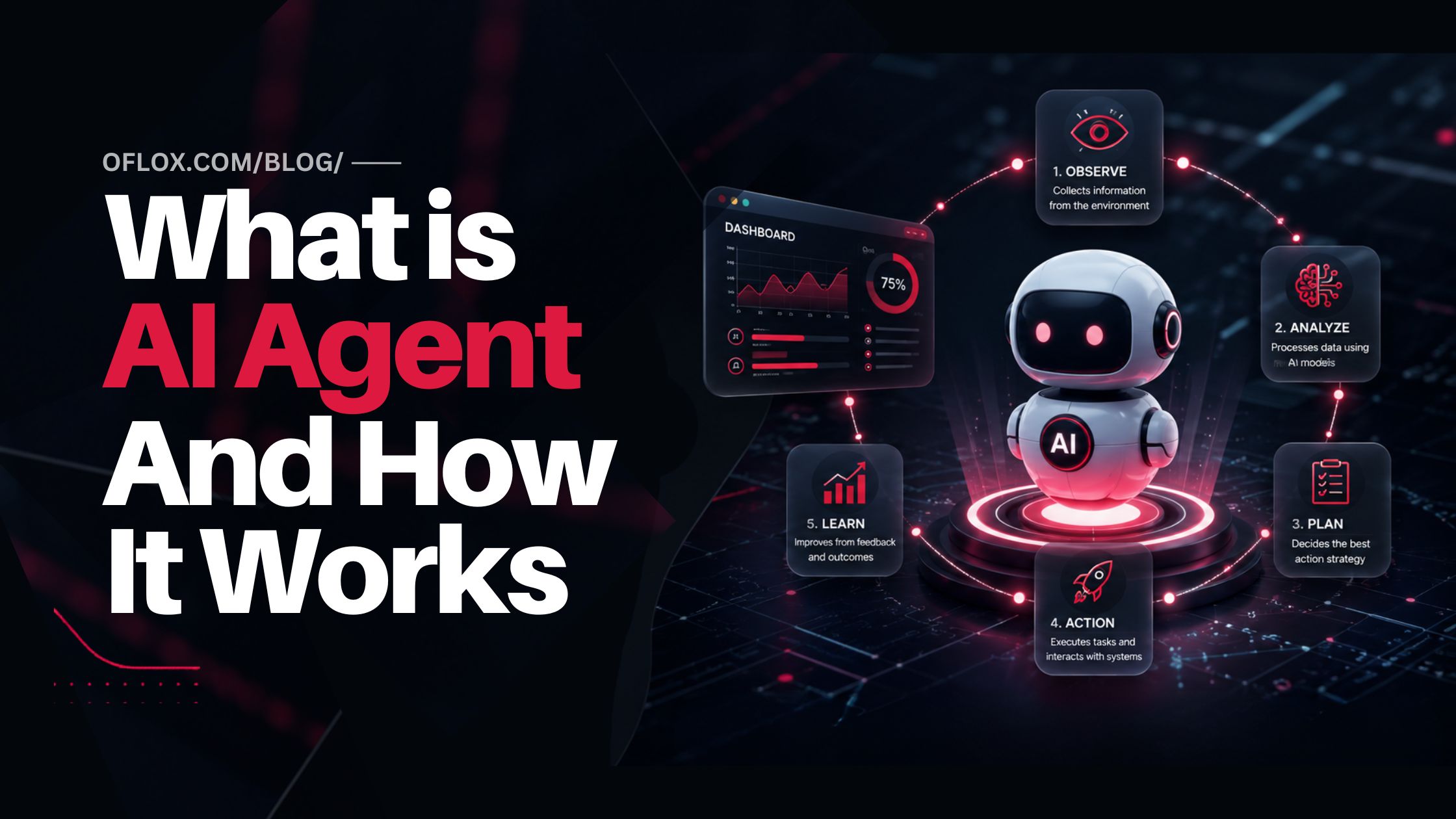
How AI Agents Work
The working process of AI agents is designed to imitate intelligent human thinking, decision-making, and problem-solving in digital environments.
1. Observe Environment
The AI agent first collects information from different sources.
Common Sources:
- Users
- APIs
- Databases
- Websites
- Sensors
- Software systems
Example:
A customer support AI agent may collect:
- Customer messages
- Order details
- Account information
This helps the AI understand the situation.
2. Process Data
After collecting data, the AI analyzes the information using AI models.
The agent tries to understand:
- What the user wants
- What problem needs solving
- Which action should happen next
Technologies Used:
| Technology | Purpose |
|---|---|
| NLP | Understand language |
| Machine Learning | Analyze patterns |
| LLMs | Generate intelligent responses |
For example, if a user says:
“Track my order.”
The AI understands the request and identifies the order details.
3. Make Decisions
The AI agent then decides the best possible action.
It uses:
- Rules
- AI reasoning
- Previous data
- Goal-based logic
Example:
An AI shopping assistant may decide:
- Which product to recommend
- Which offer to show
- Which response is most helpful
4. Take Action
After making decisions, the AI performs tasks automatically.
Actions AI Agents Can Perform:
- Send emails
- Reply to customers
- Generate reports
- Book appointments
- Automate workflows
Example:
An AI marketing agent may:
- Create ad content
- Schedule campaigns
- Analyze performance automatically
5. Learn and Improve
Advanced AI agents improve continuously from:
- User feedback
- New data
- Previous mistakes
- Successful results
This helps the AI become smarter over time.
Example:
If users frequently correct an AI chatbot, the system may improve future responses automatically.
AI Agent Workflow Explained
AI agents follow a structured workflow that helps them collect information, analyze situations, make decisions, and perform tasks automatically.
| Stage | What Happens |
|---|---|
| Input | Receives information |
| Analysis | Understands the data |
| Planning | Creates action strategy |
| Execution | Performs actions |
| Feedback | Learns from results |
Components of an AI Agent
Just like the human brain has different parts for thinking and decision-making, AI agents also have specialized components for handling tasks.
- Perception System: Collects information from the environment.
- Knowledge Base: Stores rules, memory, and information.
- Decision Engine: Analyzes data and chooses actions.
- Action Module: Performs tasks and responses.
- Learning Module: Improves future performance.
Types of AI Agents
There are several types of AI agents used in modern systems.
- Simple Reflex Agents: These agents react based on current inputs only. Example: automatic door sensors.
- Model-Based Agents: These agents maintain internal memory. Example: Self-driving systems.
- Goal-Based Agents: They work to achieve specific goals. Example: Navigation systems.
- Utility-Based Agents: These choose the best possible action. Example: Recommendation engines.
- Learning Agents: These improve over time using data. Example: ChatGPT-like systems.
Features of AI Agents
From smart decision-making to real-time automation, AI agents offer several advanced features that improve productivity and user experience.
- Intelligent Decision Making: AI agents analyze and decide automatically.
- Learning Capability: Advanced agents improve continuously.
- Automation: They reduce manual work.
- Problem Solving: AI agents solve complex tasks.
- Multi-Step Execution: They can complete workflows independently.
- Adaptability: Agents adjust according to situations.
- Communication Skills: Many AI agents understand human language.
Types of AI Agent Architectures
Different AI agent architectures are designed to handle different types of decision-making, automation, and problem-solving processes.
| Architecture | Purpose |
|---|---|
| Reactive | Immediate response |
| Deliberative | Planning-based actions |
| Hybrid | Combines both approaches |
| Autonomous | Independent operation |
| Multi-Agent | Multiple AI systems working together |
Examples of AI Agents
AI agents are now used in many industries to automate tasks, improve productivity, and deliver smarter digital experiences.
- Chatbots: Customer support systems.
- Virtual Assistants: Voice assistants and productivity tools.
- AI Coding Agents: Automated coding assistants.
- Autonomous Vehicles: Self-driving systems.
- Trading Bots: Stock market automation.
- Recommendation Systems: Netflix, YouTube, and Amazon suggestions.
- Cybersecurity Agents: Threat detection systems.
Real-World AI Agent Examples
Real-world AI agent examples help us understand how intelligent systems are transforming industries through automation and smart technology.
| Company | AI Agent Use |
|---|---|
| OpenAI | ChatGPT agents |
| AI search and assistants | |
| Microsoft | Copilot AI |
| Amazon | Alexa automation |
| Tesla | Autonomous driving |
Difference Between an AI Agent and a Chatbot
Many people confuse AI agents with chatbots, but AI agents are far more advanced and capable of handling complex tasks intelligently.
| Feature | AI Agent | Chatbot |
|---|---|---|
| Intelligence | Advanced | Basic |
| Learning | Yes | Limited |
| Automation | High | Moderate |
| Decision Making | Independent | Rule-based |
| Task Execution | Multi-step | Mostly conversation |
AI Agents vs Traditional Software
Let’s explore the key differences between AI agents and traditional software in simple and beginner-friendly language.
| Traditional Software | AI Agents |
|---|---|
| Fixed programming | Intelligent learning |
| Manual workflows | Autonomous actions |
| Limited flexibility | Adaptive systems |
| Static rules | Dynamic reasoning |
How AI Agents Use Large Language Models (LLMs)
Modern AI agents often use LLMs.
LLMs help AI agents:
- Understand language
- Generate responses
- Plan tasks
- Analyze context
- Make decisions
Popular LLM-based systems include:
- ChatGPT
- Claude
- Gemini
- Llama
5+ Best Popular AI Agent Tools in 2026
Here are some of the most popular AI agent tools in 2026.
1. OpenAI
OpenAI is one of the most popular Artificial Intelligence companies in the world and is widely known for creating advanced AI systems like ChatGPT and GPT models.
It provides powerful AI capabilities for:
- AI agents
- Content generation
- Coding assistance
- Automation
- Data analysis
- AI chat systems
Key Features:
- Advanced Large Language Models (LLMs)
- Human-like conversations
- API integration support
- AI reasoning and automation
- Multi-step task handling
Real-World Use Cases:
- AI chatbots
- AI customer support
- AI writing tools
- Coding assistants
- AI research systems
2. LangChain
LangChain is a highly popular framework used for building AI-powered applications and intelligent agent workflows.
It helps developers connect AI models with:
- APIs
- Databases
- Tools
- External applications
- Memory systems
Key Features:
- AI workflow orchestration
- Tool integration
- Memory management
- Multi-step reasoning
- LLM chaining
Best For:
- AI application development
- AI automation systems
- Custom AI agents
- Enterprise AI solutions
Why It Is Popular?
LangChain makes it easier to build advanced AI agents that can perform complex tasks automatically.
3. AutoGPT GitHub
AutoGPT is an autonomous AI agent platform that can complete tasks with minimal human input.
It is designed to:
- Think step-by-step
- Create plans
- Execute actions
- Analyze results
- Improve workflows
Key Features:
- Autonomous task execution
- Goal-oriented workflows
- AI planning systems
- Internet and tool access
- Multi-step automation
Example Use Cases:
- Automated market research
- AI business assistants
- Content automation
- Workflow management
4. CrewAI
CrewAI is a modern multi-agent AI framework where multiple AI agents work together like a team.
Each AI agent can have:
- Different roles
- Different goals
- Different responsibilities
Key Features:
- Multi-agent collaboration
- Team-based AI systems
- Workflow automation
- Task delegation
- Intelligent coordination
Best For:
- Enterprise automation
- AI team systems
- Research projects
- Business workflows
5. Microsoft Copilot
Microsoft Copilot is an AI-powered productivity assistant integrated into Microsoft products like:
- Word
- Excel
- Outlook
- Teams
- Windows
It helps users automate office and productivity tasks.
Key Features:
- AI document generation
- Smart email assistance
- Data analysis
- Productivity automation
- Meeting summarization
Best For:
- Office work
- Businesses
- Students
- Professionals
- Productivity enhancement
Common Uses:
- Writing reports
- Creating presentations
- Email drafting
- Spreadsheet analysis
6. Zapier AI
Zapier AI combines AI capabilities with workflow automation.
It allows users to connect multiple apps and automate processes without coding.
Key Features:
- AI workflow automation
- No-code automation
- App integrations
- Task automation
- Business process optimization
Best For:
- Small businesses
- Marketers
- Startups
- Workflow automation
Example:
Zapier AI can automatically:
- Receive customer form submissions
- Send emails
- Update CRM systems
- Notify teams on Slack
All without manual work.
How Businesses Use AI Agents
From customer support to marketing automation, AI agents are transforming how businesses operate in the digital era.
- Customer Support: AI agents answer customer queries instantly.
- Content Creation: Generate blogs, emails, and marketing content.
- Sales Automation: Automate lead generation and follow-ups.
- HR Management: Resume screening and interview scheduling.
- Finance: Fraud detection and analytics.
- Cybersecurity: Threat monitoring and prevention.
- Healthcare: Patient analysis and virtual assistance.
Benefits of AI Agents
Let’s explore the major benefits of AI agents and understand why these intelligent systems are becoming increasingly important in 2026 and beyond.
- Saves Time: Automates repetitive work.
- Reduces Human Error: Improves accuracy.
- Improves Productivity: Teams work faster.
- Better Customer Experience: Quick responses and personalization.
- Scalability: Businesses can grow efficiently.
- Smart Decision Making: AI analyzes huge amounts of data quickly.
Challenges of AI Agents
Understanding the challenges of AI agents is important for businesses that want to use Artificial Intelligence safely and effectively.
- High Development Cost: Advanced AI systems can be expensive.
- Data Privacy Risks: Sensitive information handling is critical.
- Security Issues: AI agents may become attack targets.
- Bias Problems: Poor training data can create unfair decisions.
- Over-Automation: Too much automation may reduce human control.
Common Mistakes Beginners Make
Many beginners make common mistakes while using AI agents, which can reduce performance, accuracy, and overall effectiveness.
- Using AI Without Clear Goals: Always define objectives first.
- Ignoring Data Quality: Poor data reduces AI accuracy.
- Overtrusting AI Outputs: Human verification is still important.
- Not Monitoring Performance: AI systems require regular updates.
- Choosing Wrong Tools: Use tools based on business needs.
Expert Tips for Using AI Agents
Experts recommend using AI agents carefully and strategically to improve productivity, automation, and overall business efficiency.
- Start Small: Begin with simple workflows.
- Focus on Automation ROI: Choose high-value tasks.
- Combine Human + AI: Human oversight improves reliability.
- Use Secure APIs: Protect user data.
- Continuously Train AI: Improve systems using feedback.
“The best AI agents are not designed to replace humans completely. They are designed to amplify human productivity.” – Mr Rahman, CEO Oflox®
AI Agent Use Cases in India
AI agents are growing rapidly in India.
Indian Industries Using AI Agents:
| Industry | Use Case |
|---|---|
| E-commerce | Customer support |
| Banking | Fraud detection |
| Education | AI tutors |
| Healthcare | Patient support |
| Marketing | AI automation |
| IT Services | Workflow automation |
AI Agents in Digital Marketing
AI agents are transforming digital marketing.
Marketing Tasks Automated by AI Agents:
- SEO analysis
- Content generation
- Email automation
- Ad optimization
- Keyword research
- Customer segmentation
- Social media scheduling
Many businesses now use AI agents to improve campaign performance and reduce marketing costs.
AI Agents in Cybersecurity
Cybersecurity systems increasingly rely on AI agents.
Security Functions:
- Threat detection
- Malware analysis
- Spam filtering
- Intrusion detection
- Fraud monitoring
AI agents can analyze threats much faster than humans.
AI Agent Lifecycle
AI agents go through multiple important stages that ensure they can perform tasks intelligently, accurately, and efficiently in real-world environments.
- Data Collection: Gather information.
- Training: AI models learn patterns.
- Stage Deployment: System becomes operational.
- Monitoring: Track performance.
- Improvement: Optimize continuously.
Multi-Agent Systems
Modern systems sometimes use multiple AI agents together.
Example:
- One AI agent may: Research information
- Another may: Write content
- Another may: Review quality
This is called a multi-agent architecture.
AI Agent Security Best Practices
Let’s explore some important AI agent security best practices that can help businesses and developers use AI systems more securely and responsibly.
- Use Strong Authentication: Protect access systems.
- Encrypt Sensitive Data: Prevent leaks.
- Monitor AI Behavior: Track suspicious actions.
- Use Trusted APIs: Avoid insecure integrations.
- Human Oversight: Keep manual review processes.
Future Trends of AI Agents (2026 & Beyond)
The future of AI agents looks extremely powerful.
- Fully Autonomous AI Workflows: Agents will complete end-to-end business operations.
- AI Personal Employees: Virtual assistants for every professional.
- Multi-Agent Collaboration: AI systems working together intelligently.
- Voice-Based AI Agents: Natural conversations with machines.
- AI + Robotics Integration: Physical robots powered by AI agents.
- AI Operating Systems: AI is becoming the main interface for computing.
- Hyper-Personalization: AI agents adapting uniquely to each user.
AI Agent vs Generative AI
Both AI agents and Generative AI use AI, but their purposes are different.
| AI Agent | Generative AI |
|---|---|
| Performs actions | Creates content |
| Goal-oriented | Output-oriented |
| Multi-step execution | Response generation |
| Autonomous workflows | Text/image generation |
Pros & Cons of AI Agents
Let’s explore the major pros and cons of AI agents in simple language.
| Pros | Cons |
|---|---|
| Automation | Privacy concerns |
| Productivity | Development cost |
| Faster workflows | Security risks |
| Better efficiency | Requires monitoring |
| Scalability | Bias issues |
Best Practices for Businesses
Following best practices can help businesses use AI agents more efficiently while reducing risks and improving overall performance.
- Define Clear Objectives: Know what problem AI should solve.
- Start with Pilot Projects: Test before scaling.
- Train Employees: Help teams adapt to AI.
- Ensure Compliance: Follow privacy laws and regulations.
- Monitor Results: Continuously improve AI performance.
FAQs:)
A. An AI agent is intelligent software that can think, decide, and perform tasks automatically.
A. They collect information, analyze data, make decisions, and perform actions using AI models.
A. No. AI agents are more advanced and can automate workflows independently.
A. Machine learning, NLP, deep learning, APIs, and large language models.
A. AI agents assist humans but human oversight remains important.
A. Healthcare, marketing, cybersecurity, banking, e-commerce, education, and IT.
A. They can be safe if businesses use proper security and monitoring practices.
A. AI agents will become more autonomous, intelligent, and integrated into daily business operations.
Conclusion:)
AI agents are becoming one of the most powerful technologies in the modern digital world. From automation and productivity to cybersecurity and customer support, AI agents are transforming how businesses and individuals work. As Artificial Intelligence continues to evolve, AI agents will become smarter, more autonomous, and more deeply integrated into everyday life.
“AI agents are not just tools of automation — they are becoming intelligent digital partners for the future.” – Mr Rahman, CEO Oflox®
Read also:)
- How to Create AI Images for Free: A-to-Z Guide for Beginners!
- 10+ Best Free AI Tool for Stock Market India (A-to-Z Guide)
- How to Make Money With Artificial Intelligence (A-to-Z Guide!)
Have you tried AI agents for your business, automation, or productivity workflows? Share your experience or ask your questions in the comments below — we’d love to hear from you!