This article provides a detailed guide on What Is a Marketing Funnel? including its stages, benefits, metrics, tools, and practical steps for turning business awareness into enquiries, customers, and repeat purchases.
Have you ever wondered why people visit your website, browse your services, and then leave without contacting you?
Imagine running a website development company in Dehradun. A shop owner discovers your Instagram post, reads your website pricing guide, checks your portfolio, and contacts you a week later. After discussing the requirements, they accept your proposal.
That customer did not move from discovery to purchase in one action. They needed information, confidence, and a suitable next step at different points.
A marketing funnel helps you plan for those needs.
However, a funnel is more than an advertisement followed by a landing page. It connects your audience, content, offers, follow-up process, sales experience, and customer support.
Whether you manage a small business, an e-commerce store, a SaaS product, or a digital marketing agency, understanding the funnel can help you identify what is working and where potential customers need more help.
Let’s explore it together!
Table of Contents
What Is a Marketing Funnel?
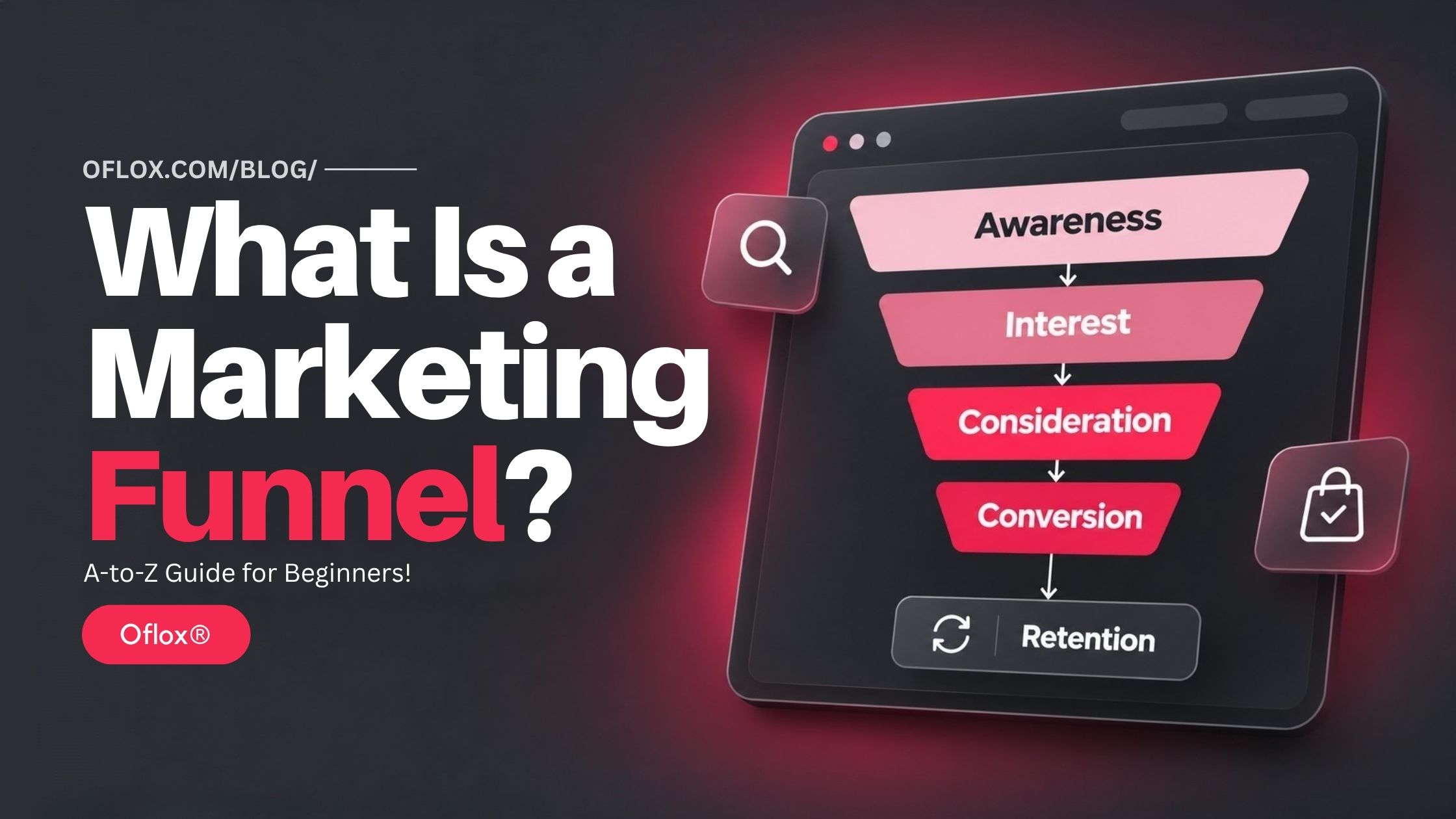
A marketing funnel is a model that describes how people move from discovering a business to considering its offer and becoming customers. Businesses use it to match content, messages, and actions to customer needs at each stage. Extended funnels also include onboarding, retention, and advocacy after the first purchase.
It is called a funnel because a business usually reaches more people than eventually buy. Some people are unsuitable, some are still researching, and others choose another option.
For example, an online clothing store may attract many product visitors, receive fewer cart additions, and complete fewer purchases.
The model helps the business ask useful questions:
- Are the right people visiting?
- Do they understand the product?
- What prevents interested shoppers from completing checkout?
- What helps customers return?
A funnel is a planning and measurement model, not a rule that every customer must follow. Someone may arrive through a recommendation and buy immediately. Another person may compare options for several months.
A Brief Background: From AIDA to Customer Lifecycle Marketing
The funnel connects with older advertising frameworks such as AIDA:
- Attention: Get noticed by the relevant audience.
- Interest: Help people understand the offer.
- Desire: Build preference by explaining relevant value.
- Action: Make the next step clear.
Digital marketing made these steps easier to observe through page visits, enquiries, purchases, and repeat orders. Businesses could connect campaign activity with measurable behaviour rather than only counting exposure.
Modern models often extend beyond acquisition to include customer success, renewals, referrals, and long-term relationships.
There is no single compulsory list of funnel stages. Salesforce, for example, describes an acquisition framework that includes awareness, interest, consideration, conversion, and onboarding. Your stage definitions should fit how your customers buy.
Why Is a Marketing Funnel Important?
Here are the key reasons a marketing funnel matters for attracting suitable leads and turning interest into sales.
- It Makes Your Messaging More Relevant: A beginner researching “how to start an online store” needs different information from someone comparing development proposals. The beginner may need an explanation of products, payments, shipping, and website requirements. The buyer comparing proposals needs details on scope, delivery expectations, and evidence of relevant work. Match the answer to the question they are trying to resolve.
- It Reveals Where Opportunities Are Lost: If visitors submit enquiries but few attend consultations, the problem may involve scheduling, slow replies, or unclear expectations. Increasing website traffic alone won’t fix that issue. Funnel analysis helps you investigate the transition where suitable customers stop progressing.
- It Improves Marketing and Sales Coordination: Marketing can define what a qualified enquiry looks like, while sales records whether the person is suitable, what they need, and why the opportunity progressed or ended. This creates a shared understanding of lead quality.
- It Supports Better Budget Decisions: A campaign producing cheap leads may generate few customers. Another may produce fewer leads but more profitable sales. Funnel reporting helps reveal the difference.
- It Includes the Experience After Purchase: Acquisition has limited value if customers cannot use the product, receive poor support, or cancel before receiving value. Retention deserves its own plan and measurement.
Marketing Funnel Stages Explained
For this guide, we will use six stages. Interest sits within consideration, while onboarding sits within retention. You can separate them when your business needs more detail.
| Stage | Customer question | Useful content or action | Example measurement |
|---|---|---|---|
| Awareness | What is my problem, and who can help? | Educational article, video, local discovery | Relevant reach and visits |
| Consideration | Which approach or provider suits me? | Comparison, portfolio, demonstration | Relevant return visits and enquiries |
| Conversion | Am I ready to take the main action? | Proposal, checkout, booking | Customers and purchase rate |
| Onboarding and retention | How do I get value and continue? | Setup guidance, support, reminders | Activation, renewals, repeat purchases |
| Loyalty | Is this a business I prefer? | Consistent service and useful communication | Cohort repeat behaviour |
| Advocacy | Would I recommend this business? | Review invitation, referral process | Genuine referrals and reviews |
1. Awareness
At the awareness stage, people discover a problem, a possible solution, or your brand.
A restaurant owner might search “why is my restaurant not showing on Google?” They may not yet be looking for an SEO agency.
Useful awareness content includes:
- Beginner guides.
- Short educational videos.
- Practical checklists.
- Explanations of common problems.
- Relevant local business information.
The purpose is to help the right audience recognise a need and understand it.
A suitable call to action might be “Read the local SEO checklist.” A demand to purchase an annual package may be premature.
Measure whether you attract relevant people. Large impression numbers have limited value when most viewers are outside your service area or customer profile.
2. Consideration
People now investigate options, compare providers, and evaluate whether your solution fits their situation.
The restaurant owner may review local SEO services, compare agency proposals, or ask whether they can manage the work internally.
Useful assets include service pages, transparent pricing explanations, case studies, sample deliverables, demonstrations, and comparisons.
Address practical concerns:
- What is included?
- Who handles the work?
- What does the customer need to provide?
- What affects the cost?
- What happens if requirements change?
An enquiry is a signal of interest, but it does not automatically establish readiness to buy. Someone downloading a checklist may still be learning.
3. Conversion
Conversion means completing a defined action. In a customer acquisition funnel, the main conversion is usually a purchase, paid subscription, or signed agreement.
Other actions, such as form submissions or demo bookings, are intermediate conversions. Track them separately so a growing enquiry count does not get mistaken for growing sales.
At this stage, remove uncertainty with clear scope, accurate prices, understandable payment terms, accessible support, and a reliable transaction process.
A service business should explain what happens after a proposal is accepted. An online store should disclose delivery charges before the customer reaches the final payment step.
4. Onboarding and Retention
After purchase, help the customer achieve the result they expected.
For SaaS, this might mean completing account setup and using a key feature. For an agency, it might mean collecting access, agreeing on responsibilities, and confirming the project schedule.
For a clothing store, it includes accurate delivery updates, care instructions, and responsive handling of genuine product issues.
Measure meaningful value: completed setup, continued usage, repeat orders, or renewals.
Sending a welcome email is an activity; successful onboarding is an outcome.
5. Loyalty
Loyalty develops when customers repeatedly receive useful service and prefer your business over alternatives.
It can be supported through consistent quality, relevant recommendations, recognition, and dependable problem resolution.
Avoid assuming every repeat purchase indicates strong loyalty. A discount, convenience, or lack of alternatives may explain the behaviour. Review customer feedback alongside transaction data.
6. Advocacy
Advocacy happens when customers voluntarily recommend your business, share their experience, or refer suitable buyers.
Ask for honest reviews at an appropriate time. Make referrals simple, and explain any referral benefit clearly.
A customer may recommend your business without buying again, especially for infrequent services such as website development. Advocacy and loyalty can overlap rather than occurring in a fixed sequence.
What Are TOFU, MOFU, and BOFU?
These abbreviations describe broad sections of an acquisition funnel.
| Term | Meaning | Main purpose | Example |
|---|---|---|---|
| TOFU | Top of the funnel | Build relevant awareness | “What is local SEO?” article |
| MOFU | Middle of the funnel | Support evaluation | Local SEO checklist and case study |
| BOFU | Bottom of the funnel | Support a buying decision | Scope discussion and proposal |
These labels describe intent, not permanent content categories. A video can introduce a problem, demonstrate a product, or answer a final buying objection.
Similarly, SEO, email, and social media can support several stages. Assign a channel its role based on the audience and message.
For example, an email delivering a beginner checklist serves a different purpose from an email answering questions about a proposal.
Marketing Funnel vs Sales Funnel vs Customer Journey
These concepts overlap, but they answer different questions.
| Concept | Main question | Typical focus |
|---|---|---|
| Marketing funnel | How do we attract and develop suitable demand? | Awareness, education, evaluation, conversion support |
| Sales funnel | How do specific opportunities become customers? | Qualification, discovery, proposals, negotiation, closing |
| Customer journey | What does this person experience across interactions? | Touchpoints, expectations, emotions, service |
In an e-commerce business, the marketing and sales process may happen mostly through the website. In a B2B agency, a salesperson may guide the final decision.
The customer journey also includes experiences a funnel report cannot fully describe: a friend’s recommendation, confusion about a contract, or reassurance from a helpful support conversation.
Google’s research describes buying as repeated exploration and evaluation within a “messy middle.” This supports using funnels as useful simplifications while recognising that actual journeys are often nonlinear.
How to Build a Marketing Funnel?
Start with one audience, one offer, and one main business outcome. A focused funnel is easier to understand and improve.
1. Define the Audience and Buying Problem
Describe the customer in practical terms. “Small businesses” is too broad for most campaigns.
A more useful definition might be:
“Independent retailers in Dehradun who need their first online store and have a clear product catalogue.”
Identify their goal, main concern, preferred communication channel, decision-makers, and typical buying timescale.
Use actual enquiry conversations and customer feedback wherever possible.
2. Choose the Outcome and Qualification Rules
Decide what success means:
- A paid order.
- A qualified consultation.
- An accepted proposal.
- An activated subscription.
For a service business, define a qualified lead using relevant criteria such as service fit, location, requirements, and realistic timing.
If you use MQL and SQL labels, document them.
A marketing-qualified lead meets your agreed marketing criteria. A sales-qualified lead has been assessed as suitable for a sales conversation.
Definitions vary between businesses, so agreement within your team matters more than copying another company’s labels.
3. Map Customer Questions
List what people need to know before taking the next step.
For website development, these questions might include:
- How much will the website cost?
- How long will development take?
- Who handles maintenance?
- Can customers make online payments?
- Who owns the finished website?
Turn repeated questions into articles, FAQs, comparison tables, demonstration videos, and service explanations. Prioritise information that helps buyers assess fit.
4. Create a Relevant Entry Point
Choose a discovery channel based on customer behaviour: organic search, local discovery, referrals, useful social content, or paid advertising.
Keep the message consistent from the first interaction to the landing page. An advertisement promising e-commerce development should lead to information about that service.
Avoid sending every campaign to a generic homepage when a relevant page would answer the visitor’s question more directly.
5. Build the Next Action
Give each important page a clear primary action:
- View examples.
- Request scope details.
- Book a consultation.
- Start a trial.
- Purchase a product.
For lead forms, request the information needed to respond properly. Explain what happens next and provide an alternative contact route where useful.
A WhatsApp button click shows contact intent; it does not prove that a conversation or qualified enquiry occurred. Record those outcomes separately.
6. Plan Useful Follow-Up
Follow-up should answer the next likely question rather than repeat the same sales message.
An illustrative service sequence could:
- Deliver a requested checklist.
- Explain major cost factors.
- Share a relevant example.
- Invite a requirements discussion.
Match the timing to the buying process.
Separate requested service communication from optional marketing subscriptions, respect preferences, and stop irrelevant automated messages after purchase or rejection.
7. Define the Sales Handover
Assign responsibility for new enquiries and agree on response expectations during working hours.
Record the requirement, source, stage, next action, and owner. Include reasons for lost opportunities, such as unsuitable scope, postponed timing, or choosing another provider.
These records often reveal improvements that website analytics cannot: unclear proposals, unavailable services, or repeated misunderstandings about price.
8. Connect Purchase With Onboarding
Decide what the customer receives immediately after paying or signing.
Provide confirmation, contact details, next steps, and realistic timelines. Define an early success milestone, such as completing account setup or approving a project brief.
Retention works better when responsibilities are clear from the beginning.
9. Measure and Improve
Track the transition between meaningful stages. Use consistent definitions, suitable time windows, and customer cohorts.
Choose one suspected bottleneck, investigate it, and test a focused improvement. For example, explain delivery charges earlier if customer feedback suggests surprise costs are preventing checkout completion.
Keep an experiment record with the hypothesis, change, dates, main metric, and business outcome.
Marketing Funnel Metrics: A Worked Example
The figures below are hypothetical teaching examples, not Oflox® client results or industry benchmarks.
Suppose a service business follows one group of 1,000 relevant website visitors for 60 days.
During that period:
- 50 submit enquiries.
- 20 meet the qualification criteria.
- Five become customers.
Assume ₹20,000 in campaign advertising expenditure. Other acquisition costs are excluded from this simplified calculation.
| Metric | Calculation | Result |
|---|---|---|
| Visitor-to-enquiry rate | 50 ÷ 1,000 × 100 | 5% |
| Enquiry qualification rate | 20 ÷ 50 × 100 | 40% |
| Qualified-lead-to-customer rate | 5 ÷ 20 × 100 | 25% |
| Overall visitor-to-customer rate | 5 ÷ 1,000 × 100 | 0.5% |
| Advertising cost per enquiry | ₹20,000 ÷ 50 | ₹400 |
| Advertising cost per acquired customer | ₹20,000 ÷ 5 | ₹4,000 |
The ₹4,000 figure is not fully loaded customer acquisition cost.
Broader CAC should use an explicitly defined set of acquisition expenses, potentially including relevant staff, agency, creative, and software costs.
The basic progression formula is:
Stage conversion rate = people progressing to the next stage ÷ people in the current stage × 100.
For a fixed sequential cohort, stage drop-off rate is 100% minus the progression rate.
If the five customers generate ₹1,00,000 in attributable revenue, advertising ROAS is 5:1. That does not establish profit. Delivery costs, refunds, overheads, and other expenses still matter.
Also track time to conversion, repeat purchase or renewal rate, and contribution margin. For subscriptions, monitor activation and churn using clearly defined customer cohorts.
Avoid dividing this month’s new enquiries by this month’s customers when those customers came from earlier months. Compare groups with enough time to complete their buying cycle.
How to Track a Funnel in Practice
Begin with an event map that connects actions to outcomes.
For e-commerce, a simple sequence might include:
- Product view.
- Cart addition.
- Checkout start.
- Confirmed purchase.
For services, it might include:
- Service-page visit.
- Successful enquiry.
- Qualified conversation.
- Proposal.
- Won agreement.
Google Analytics 4 offers funnel exploration to examine ordered steps and drop-offs. An open funnel permits entry at different steps; a closed funnel requires entry at the first step. Configuration changes what the report counts.
Test events before relying on them. A purchase should reflect verified order success, and refreshing a confirmation page should not create duplicate revenue.
Use campaign tags consistently, and connect website enquiries with CRM outcomes when appropriate. Keep personal contact details out of analytics URLs and event parameters.
Website reports, advertising dashboards, and CRM records may disagree because they use different attribution rules and observation windows. Reconcile them rather than adding platform-reported conversions together.
Attribution allocates credit; it does not prove that a campaign caused an additional sale. Where feasible, use controlled comparisons to investigate incremental impact.
Practical Marketing Funnel Examples
These are illustrative business scenarios, not reported case studies.
1. A Local School Admissions Funnel
A parent discovers an educational video, visits the admissions page, reviews classes and facilities, and requests a campus visit.
The admissions team confirms availability, answers questions, conducts the visit, and supports the application process.
Track:
- Suitable enquiries.
- Booked visits.
- Attended visits.
- Applications.
- Confirmed admissions.
If many parents enquire about unavailable classes, improve targeting and explain availability earlier.
If visits are booked but rarely attended, investigate reminders, location information, scheduling, and whether parents understand what the visit includes.
2. An Indian Clothing Store Funnel
A shopper discovers a styling post, opens a product page, checks measurements, adds an item to the cart, and completes payment.
Delivery updates and responsive support then influence satisfaction and repeat purchases.
If shoppers abandon after viewing sizing information, investigate clarity and product fit before offering another discount.
If orders are returned frequently, acquisition conversion alone gives an incomplete picture. Review completed orders, returns, customer feedback, and repeat purchases together.
3. A SaaS Subscription Funnel
A business owner reads a guide, explores the software, starts a trial, completes setup, uses a valuable feature, and upgrades.
Track trial activation separately from trial registration.
Many sign-ups with little meaningful usage may indicate onboarding problems or a mismatch between the promise and product.
Renewal depends on continued value, so include product usage, support feedback, and subscription retention in the reporting process.
5+ Tools for Managing a Marketing Funnel
Choose tools around the job you need to perform. Plan limits, integrations, and prices can change, so verify them before purchasing.
| Tool | Useful role | Practical application |
|---|---|---|
| Google Analytics 4 | Website funnel analysis | Inspect ordered events and drop-offs |
| HubSpot CRM | Contact and lead management | Keep enquiry records and follow-up activity together |
| Zoho CRM | Lead and sales management | Record qualification and opportunity progress |
| Brevo | Email communication and automation | Deliver requested resources and suitable follow-ups |
| Microsoft Clarity | Heatmaps and session recordings | Investigate possible navigation or usability friction |
| Spreadsheet | Small-scale operational tracking | Maintain source, stage, owner, and next action |
HubSpot and Zoho document lead management capabilities, while Brevo supports automated email steps. Microsoft Clarity provides heatmaps and session recordings for investigating website interactions.
A small business can begin with a spreadsheet, reliable forms, and consistent follow-up. More software becomes useful when coordination or reporting exceeds what that setup can handle.
Heatmaps and recordings suggest questions to investigate; they do not reveal a visitor’s thoughts. Configure masking and consent controls appropriately before using behavioural tools.
Common Challenges and Practical Solutions
| Challenge | What to investigate | Practical response |
|---|---|---|
| Traffic without enquiries | Audience fit, intent, offer clarity | Align discovery content with a relevant next step |
| Many unsuitable leads | Targeting and qualification | Explain scope, availability, and suitability |
| Leads stop responding | Timing, reply quality, repeated contact | Set a clear next action and respect preferences |
| Proposals rarely close | Value, scope, trust, buying process | Review lost reasons and clarify deliverables |
| Checkout abandonment | Unexpected costs and technical failures | Test mobile checkout and payment confirmation |
| Customers do not return | Product suitability and experience | Improve delivery, onboarding, and support |
| Conflicting reports | Attribution and duplicate events | Agree on definitions and reconcile records |
Not every exit needs to be prevented.
A visitor discovering that your service is unsuitable can be a healthy outcome. Focus on helping suitable customers progress without pressuring everyone to convert.
Also consider operational capacity. If your team cannot respond to existing enquiries or fulfil current orders reliably, increasing acquisition spending may create more dissatisfied customers.
Expert Tips and Common Mistakes
Before scaling your marketing efforts, review these tips and common mistakes to identify gaps in your funnel.
- Start With Customer Evidence: Review enquiries, support conversations, and lost opportunities. Build content around actual uncertainties rather than assumptions about what buyers should want. A frequently asked question about maintenance may deserve more attention than another broad promotional post.
- Match the Offer to Readiness: A checklist can support learning; a scope discussion can support evaluation. Offer a direct purchase route when someone is ready, even if they skipped your educational sequence. Customers should not have to complete unnecessary steps to buy.
- Use Genuine Proof: Show relevant work samples and explain the context of results. Avoid invented testimonials, fabricated dashboards, guaranteed outcomes, and false urgency. When publishing a case study, explain the starting situation, work completed, measurement period, and limitations.
- Improve the Weakest Meaningful Transition: Do not automatically optimise the stage with the largest percentage drop. Consider lead quality, expected revenue, cost, and operational capacity before choosing a priority. A smaller improvement in a high-value stage may matter more than a large increase in low-quality submissions.
- Test Changes With a Business Outcome: A shorter form may increase submissions while reducing qualification. Evaluate completed sales or suitable enquiries alongside the immediate conversion rate. Record unexpected effects, including customer confusion or increased support work.
Common Mistakes to Avoid:
- Treating every visitor as ready to purchase.
- Calling every form submission a qualified lead.
- Sending disconnected advertisements and landing-page messages.
- Optimising clicks while ignoring customer quality and profitability.
- Changing several major elements and attributing the result to one.
- Continuing irrelevant automation after a customer has bought.
- Treating a small sample or a short sales window as conclusive.
- Ignoring delivery capacity while increasing acquisition spending.
FAQs:)
A. A marketing funnel explains how people discover a business, evaluate its offer, and become customers. Extended versions also cover keeping customers and encouraging recommendations.
A. Common stages include awareness, consideration, and conversion. Many businesses add onboarding, retention, loyalty, and advocacy. Choose definitions that reflect your buying process.
A. They overlap. Marketing usually supports discovery and demand development, while sales manages specific opportunities through qualification, proposals, and purchase decisions.
A. No. Begin with a clear offer, relevant pages, dependable contact options, a spreadsheet or CRM, and consistent follow-up. Add tools when they solve a specific problem.
A. There is no universal rate. Results depend on the offer, audience, price, traffic source, stage definition, and buying cycle. Compare consistent internal cohorts and business outcomes.
A. A basic setup may take days or weeks, depending on existing assets and tracking. Reliable performance evaluation usually needs more time and enough completed customer journeys.
A. Yes. Educational content can support discovery, comparisons can support evaluation, and relevant product or service pages can support buying decisions. Search intent determines the role.
A. Funnel leakage describes people leaving before the intended next step. Some exits reflect problems, while others reflect poor fit, delayed decisions, or normal research behaviour.
A. No. It helps organise marketing and identify improvements, but demand, competition, pricing, trust, product quality, and execution all affect results.
Conclusion:)
Understanding what a marketing funnel is helps you connect marketing activity with the decisions your customers need to make.
Start with a clear audience and offer. Answer questions at each stage, provide a suitable next action, follow up responsibly, and measure verified outcomes.
Improve the points where suitable customers face confusion or friction, and continue supporting them after purchase.
At Oflox®, the practical lesson is straightforward: a useful funnel helps people make informed decisions while giving your business a clearer way to evaluate growth.
“A strong marketing funnel answers the customer’s next question and makes the next useful step easier.” — Mr Rahman, Oflox®
Read also:)
- What Is a Pillar Page? A-to-Z Guide for Beginners!
- 5+ Best Listicle Link Building Services: A Complete Guide!
- 5+ Best Looker Studio Alternatives: A-to-Z Guide for Beginners!
Which stage needs the most attention in your business: attracting the right audience, converting enquiries, or retaining customers? Share your experience in the comments below.